[Corrigendum] Hispolon inhibits breast cancer cell migration by reversal of epithelial‑to‑mesenchymal transition via suppressing the ROS/ERK/Slug/E‑cadherin pathway
Zhao Zhao, Yi-Sheng Sun, Wei Chen, Long-Xian Lv, Yong-Quan Li

Abstract
Genes, proteins, chemicals, diseases, species, mutations and cell lines named across the full text — each resolved to its canonical identifier and authoritative record.
Click any figure to enlarge with its caption.
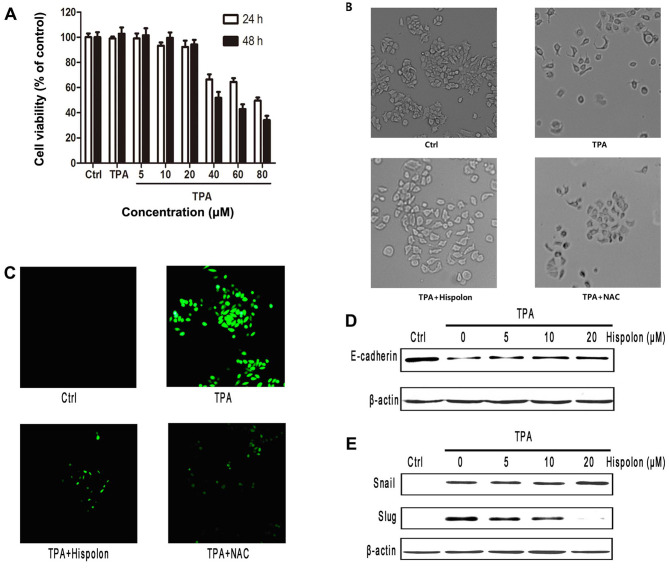 Figure 1
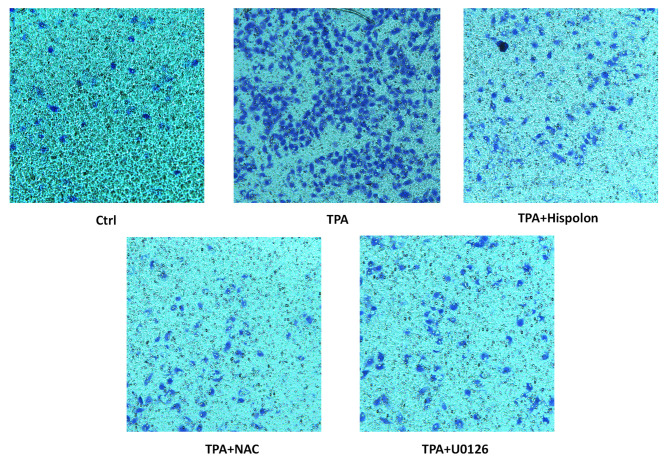 Figure 2
Peer Reviews
No public reviews on file for this paper yet. If you reviewed it on a platform where reviews are public (OpenReview, ICLR, NeurIPS, ICML), you can paste yours below so the community can read it here.
Videos
No videos yet. Explain this paper in a talk, walkthrough, or lecture? Add one.
Taxonomy
TopicsMechanisms of cancer metastasis · Wnt/β-catenin signaling in development and cancer · Cancer Mechanisms and Therapy
Oncol Rep 35: 896–904, 2016; DOI: 10.3892/or.2015.4445
Subsequently to the publication of the above paper, an interested reader drew to the authors' attention that, with the cell migration assay data shown in Fig. 7 on p. 901, the “TPA” and “TPA + U0126” panels were strikingly similar, such that data which were intended to show the results from differently performed experiments had apparently been derived from the same original source. In addition, it was noted that the “TPA + hispolon” and “TPA + NAC” data panels in Fig. 4B on p. 899 contained overlapping sections. Thirdly, a data panel was shared between Figs. 1 and 4, although this was intentional on the part of the authors as the same experiment was being portrayed in these figures.
The authors were able to re-examine their original data files, and realized that errors were made in asssembling Figs. 4B and 7. The revised versions of Figs. 4 and 7, now containing the correct data for the “TPA + NAC” experiment in Fig. 4B and the Control (“Ctrl”) experiment in Fig. 7, are shown on the next two pages. The authors wish to emphasize that the corrections made to these figures do not affect the overall conclusions reported in the paper, and they are grateful to the Editor of Oncology Reports for allowing them the opportunity to publish this corrigendum. All the authors agree to the publication of this corrigendum, and also apologize to the readership for any inconvenience caused.