In memory of Professor Henry Wilde, MD, FACP: infectious disease physician, clinical and public health investigator, and educator

Abstract
Genes, proteins, chemicals, diseases, species, mutations and cell lines named across the full text — each resolved to its canonical identifier and authoritative record.
Click any figure to enlarge with its caption.
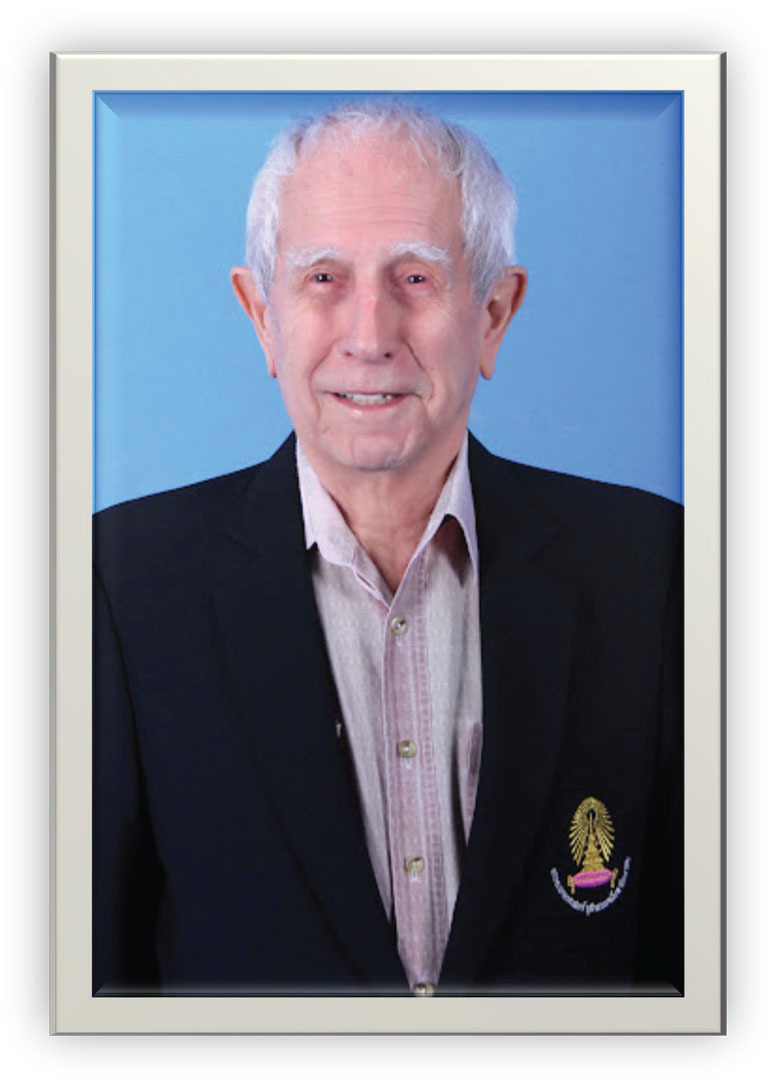 Figure 1
Peer Reviews
No public reviews on file for this paper yet. If you reviewed it on a platform where reviews are public (OpenReview, ICLR, NeurIPS, ICML), you can paste yours below so the community can read it here.
Videos
No videos yet. Explain this paper in a talk, walkthrough, or lecture? Add one.
Taxonomy
TopicsRabies epidemiology and control · Viral Infections and Outbreaks Research · Viral Infections and Vectors
Born in Prague in 1927, during the Second World War, Professor Henry Wilde had been imprisoned by the Gestapo when he was 17 years old, as a suspected member of the Czech resistance movement. In 1945, after the Second World War, Professor Wilde settled in Alaska, in the United States, where he had his formal education and became a physician; he practiced in Alaska for many years.
Professor Wilde qualified as a general internist and infectious disease physician. He joined the US Government services in 1960 as a commissioned US foreign service officer. He has been assigned to many parts of the world, including West Africa, Viet Nam, Lebanon, Yugoslavia, and Thailand.
Professor Wilde retired from US Government service in 1984, with the rank of Minister-Counselor in the US Foreign Service. He became a fulltime faculty member of the Faculty of Medicine, at Chulalongkorn University, and an active member of the research team at the Thai Red Cross Society, where his work focused on tropical diseases research and control, including rabies control in humans and animals [1], [2], [3], [4], [5], [6], [7], [8], [9], [10], other infectious and neglected tropical diseases [11], [12], [13], [14], [15], [16], animal bites and toxins [17, 18], travel medicine [19], [20], [21], [22], ethics in clinical research and medical practices [23], [24], [25], [26], [27], [28], and medical education [29], [30], [31], among others.
Professor Wilde qualified as Diplomate in the American Board of Internal Medicine; Fellow of the American College of Physicians (FACP); Fellow of the Royal College of Tropical Medicine (UK); and a Member of the Medical Council of Thailand. Because of his credentials and being a good researcher and a clinician with an inquisitive mind, Professor Wilde served well as an excellent educator. He helped students, residents, and faculties in transforming clinical and research data into scientific publications. He was a Co-Editor of Asian Biomedicine Journal, which is currently indexed by PubMed Central. He had an active medical licensure in Alaska, England, and Thailand and had previously practiced in Canada, Washington DC, Lebanon, States of Washington, and Oregon. He held many positions, including Professor of Medicine, at Chulalongkorn University, and as a member of the World Health Organization (WHO) Collaborating Centre for Research and Training in Viral Zoonoses, at the Thai Red Cross Society. He served as a member of several WHO committees. He had about 200 publications in scientific peer-review journals. His awards and decorations include the National Resistance Medal, Czech Republic (for service as messenger during World War II); Senior Service Awards, US Foreign Service, 1971 and 1983; Commander, Order of White Elephant, Thailand, 1960; Knight Commander of the Crown, Thailand, 1995; and Lifetime Achievement Award for leadership and outstanding contributions in rabies control, India, 2012.
Professor Wilde passed away on June 6, 2024. We would like to convey our heartfelt gratitude to him, who worked tirelessly to make the world a better place for individuals and organizations. His ideas, ideals, and friendships had served as a tremendous example of a tireless colleague who tried to make science the cornerstone of education, ethical standards, disease prevention, and control.
The reference list from the paper itself. Each links out to its DOI / PubMed record.
- 1Wilde H Lumlertdacha B Meslin FX Ghai S Hemachudha T Worldwide rabies deaths prevention – A focus on the current inadequacies in postexposure prophylaxis of animal bite victims Vaccine 20163418792662621110.1016/j.vaccine.2015.11.036 · doi ↗ · pubmed ↗
- 2Denis M Knezevic I Wilde H Hemachudha T Briggs D Knopf L An overview of the immunogenicity and effectiveness of current human rabies vaccines administered by intradermal route Vaccine 201937 Suppl 1A 991063055198510.1016/j.vaccine.2018.11.072 · doi ↗ · pubmed ↗
- 3Fooks AR Cliquet F Finke S Freuling C Hemachudha T Mani RS Rabies Nat Rev Dis Primers 201731709110.1038/nrdp.2017.9129188797 · doi ↗ · pubmed ↗
- 4Wilde H Ghai S Hemachudha T Rabies: still a silent killer targeting the poor Vaccine 201735229342834377810.1016/j.vaccine.2017.03.001 · doi ↗ · pubmed ↗
- 5Wilde H Equine antirabies serum treatment during an epizootic outbreak in the city of Ribeirão Preto, Brazil Trans R Soc Trop Med Hyg 199993106 author reply 106.10.1016/s 0035-9203(99)90200-610492805 · doi ↗ · pubmed ↗
- 6Bronnert J Wilde H Tepsumethanon V Lumlertdacha B Hemachudha T Organ transplantations and rabies transmission J Travel Med 200714177801743747410.1111/j.1708-8305.2006.00095.x · doi ↗ · pubmed ↗
- 7Suwansrinon K Jaijareonsup W Wilde H Benjavongkulchai M Sriaroon C Sitprija V Sex- and age-related differences in rabies immunoglobulin hypersensitivity Trans R Soc Trop Med Hyg 200710120681680633210.1016/j.trstmh.2006.04.009 · doi ↗ · pubmed ↗
- 8Wilde H Khawplod P Khamoltham T Hemachudha T Tepsumethanon V Lumlerdacha B Rabies control in South and Southeast Asia Vaccine 200523228491575561210.1016/j.vaccine.2005.01.030 · doi ↗ · pubmed ↗