Determining Split Renal Function in Children With Ureteropelvic Junction Stenosis: Technetium-99m Mercaptoacetyltriglycine (Tc-99m MAG-3) or Technetium-99m Dimercaptosuccinic Acid (Tc-99m DMSA)?
Hale Özdemir, İlknur Girişgen, Olga Yaylalı, Tülay Becerir, Özkan Herek, Hande Şenol, Selçuk Yüksel

TL;DR
This study compares two imaging techniques for assessing kidney function in children with a common urinary tract condition, finding that one method tends to give higher readings.
Contribution
The study provides new evidence on the comparative accuracy of Tc-99m MAG-3 and Tc-99m DMSA in evaluating split renal function in UPJS patients.
Findings
Tc-99m DMSA showed higher differential renal function values compared to Tc-99m MAG-3 in UPJS patients.
A strong correlation was found between Tc-99m MAG-3 and Tc-99m DMSA results in the affected kidney.
Tc-99m DMSA showed a higher rate of supranormal function measurements in UPJS-affected kidneys.
Abstract
Background Ureteropelvic junction stenosis (UPJS) is the most common cause of clinically significant antenatal hydronephrosis. We compared separate renal function results obtained using technetium-99m-mercaptoacetyltriglycine (Tc-99m MAG-3) and technetium-99m-dimercaptosuccinic acid (Tc-99m DMSA) in pediatric patients with UPJS to evaluate the adequacy of Tc-99m MAG-3 scintigraphy and the necessity of additional Tc-99m DMSA scintigraphy during follow-up. Methodology Patients diagnosed with hydronephrosis in the Pediatric Nephrology Department of Pamukkale University Faculty of Medicine over a period of 10 years (2012-2022) were evaluated retrospectively. Patients who had been diagnosed with UPJS and underwent both Tc-99m MAG-3 and Tc-99m DMSA scintigraphy during follow-up were included in the study. Technetium-99m-labeled MAG-3 and DMSA scans were re-evaluated for all patients by the…
Genes, proteins, chemicals, diseases, species, mutations and cell lines named across the full text — each resolved to its canonical identifier and authoritative record.
Click any figure to enlarge with its caption.
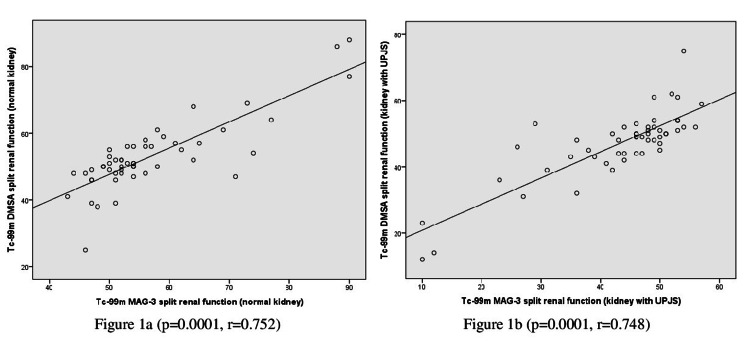 Figure 1
Peer Reviews
No public reviews on file for this paper yet. If you reviewed it on a platform where reviews are public (OpenReview, ICLR, NeurIPS, ICML), you can paste yours below so the community can read it here.
Videos
No videos yet. Explain this paper in a talk, walkthrough, or lecture? Add one.
Taxonomy
TopicsPediatric Urology and Nephrology Studies · Urological Disorders and Treatments · Urinary and Genital Oncology Studies