Development of tonality and consonance categorization ability and preferences in 4- to 6-year-old children
Johanna Karoline Will, Christina Roeske, Franziska Degé

TL;DR
This study explores how young children develop preferences for musical consonance and tonality, showing that these abilities and preferences emerge with age and musical exposure.
Contribution
The study introduces a child-focused method to separately assess perception and preference in consonance and tonality categorization.
Findings
Children aged 6 can categorize tonal and atonal melodies, and only those who can do so show a preference for tonality.
Preferences for consonance appear as early as age 4, but only when consonant and dissonant sounds are clearly distinct.
Tonality and consonance preferences develop with increasing categorization ability and exposure to Western musical culture.
Abstract
Consonance perception has been extensively studied in Western adults, but it is less clear how this perception develops in children during musical enculturation. We investigated how this development occurs in 4- to 6-year-old children by examining two complex musical skills (i.e., consonance and tonality preferences). Accordingly, we developed a child-focused approach to understand the underlying developmental processes of tonality and consonance preferences in 4- to 6-year-old children using a video interview format. As previous studies have confounded preference with perception, we examined each concept separately and measured perceptual abilities as categorization. For tonality, the ability to categorize tonal and atonal melodies developed by the age of 6 years. It is noteworthy that only children who could categorize successfully showed a preference for tonality at the age of 6. For…
Genes, proteins, chemicals, diseases, species, mutations and cell lines named across the full text — each resolved to its canonical identifier and authoritative record.
Click any figure to enlarge with its caption.
 Figure 1
 Figure 2
 Figure 3
 Figure 4
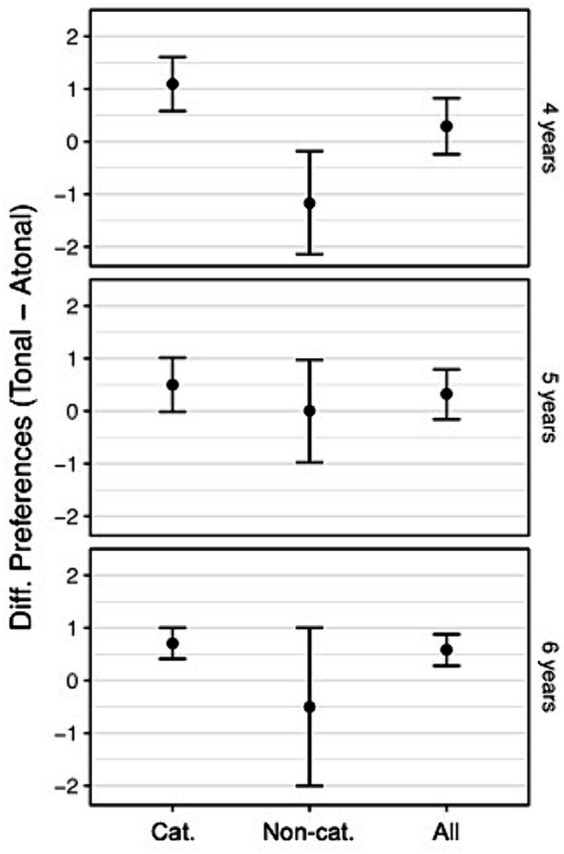 Figure 5
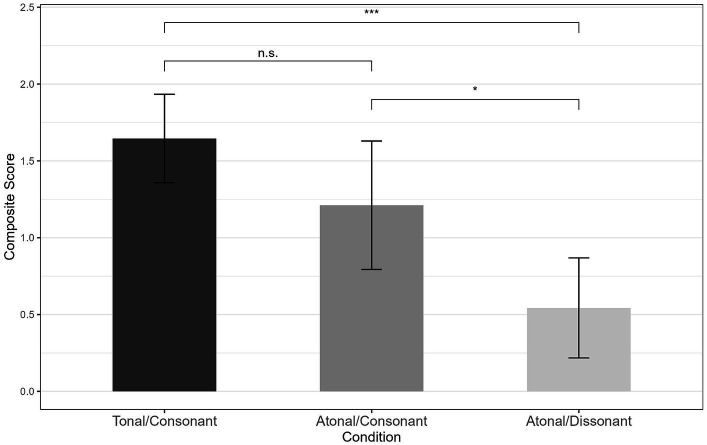 Figure 6
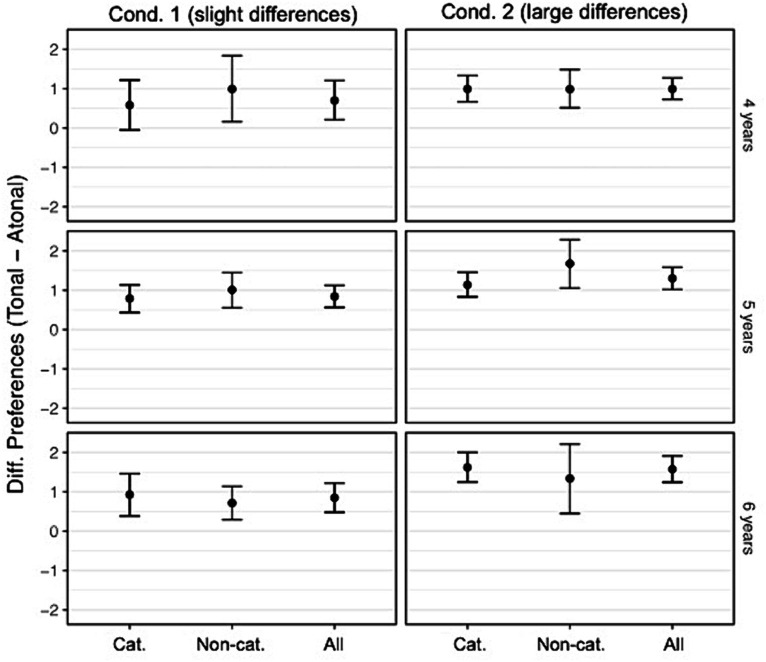 Figure 7
Peer Reviews
No public reviews on file for this paper yet. If you reviewed it on a platform where reviews are public (OpenReview, ICLR, NeurIPS, ICML), you can paste yours below so the community can read it here.
Videos
No videos yet. Explain this paper in a talk, walkthrough, or lecture? Add one.
Taxonomy
TopicsNeuroscience and Music Perception · Multisensory perception and integration · Hearing Loss and Rehabilitation