Outcome of endoscopic transsphenoidal surgery for acromegaly: Comparison of using and not using the floor standing pneumatic powered endoscope-holder system
Masahiko Tosaka, Rei Yamaguchi, Kazuhiko Horiguchi, Atsushi Ozawa, Shunichi Matsumoto, Fumiaki Honda, Yohei Hokama, Takaaki Yoshida, Mitsuko Okano, Akihiro Tsukada, Shogo Ishiuchi, Masanobu Yamada, Yuhei Yoshimoto

TL;DR
This study compares surgical outcomes for acromegaly using two endoscopic techniques and finds similar remission rates, with preoperative factors predicting success.
Contribution
The study evaluates the effectiveness of a single-surgeon endoscope-holder system in acromegaly surgery compared to a two-surgeon approach.
Findings
Remission rates were 65.0% for PE/2S and 82.4% for PE/1S+H, with no significant difference.
Low preoperative GH levels and lower Knosp grades predict better surgical outcomes.
Revised Knosp grading showed higher sensitivity but lower specificity compared to conventional grading.
Abstract
Endoscopic transsphenoidal surgery can be performed by two surgeons, including an endoscopist (PE/2S), and by a single surgeon with an endoscope-holder system (PE/1S + H). We analyzed the surgical outcome, and outcome predictors in acromegaly patients in endoscopic transsphenoidal surgery using floor standing pneumatic endoscope-holder system. Endoscopic transsphenoidal surgery was performed with PE/1S+H (n = 51) and PE/2S (n = 20). Postoperative remission was evaluated by the 2010 consensus criteria for acromegaly. We compared the surgical results of PE/2S style and PE/1S+H style, and investigated the factors associated with favorable surgical outcomes. There was no difference in clinical background between the PE/2S and the PE/1S + H groups. The remission rates for PE/2S and PE/1S+H were 65.0% and 82.4%, respectively, with no significant difference (p = 0.128). In consecutive 71…
Genes, proteins, chemicals, diseases, species, mutations and cell lines named across the full text — each resolved to its canonical identifier and authoritative record.
Click any figure to enlarge with its caption.
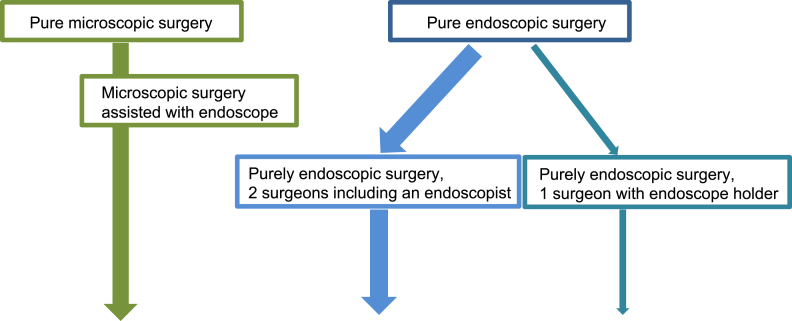 Figure 1
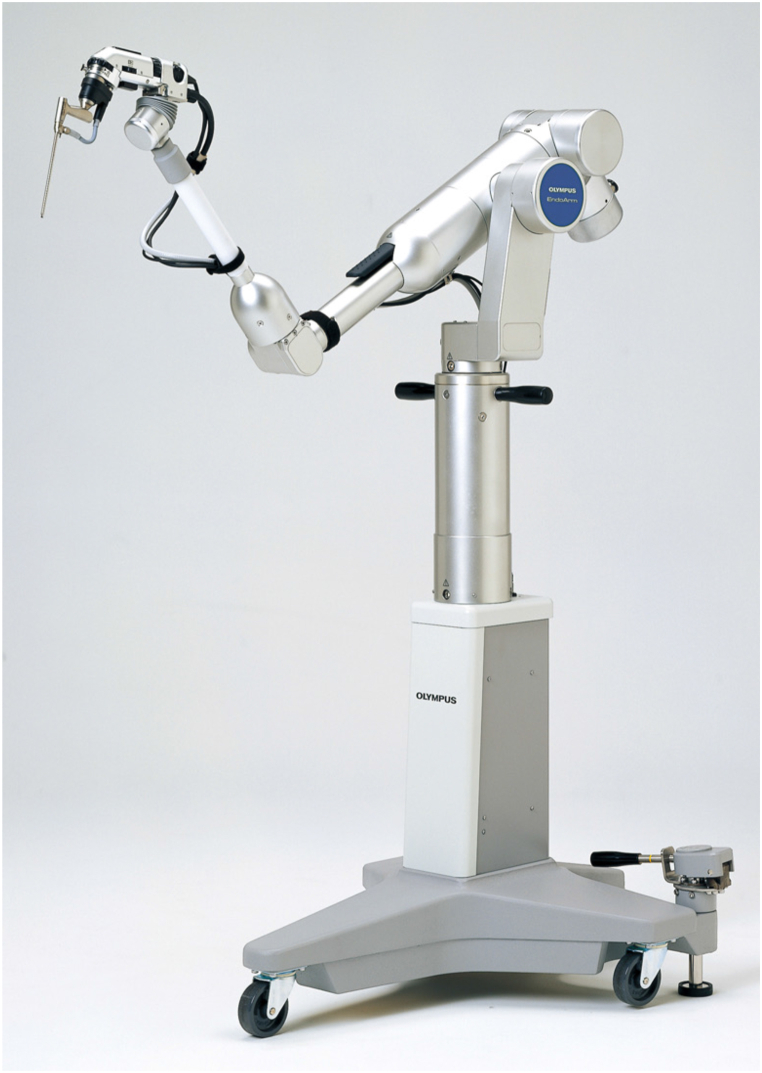 Figure 2
 Figure 3
 Figure 4
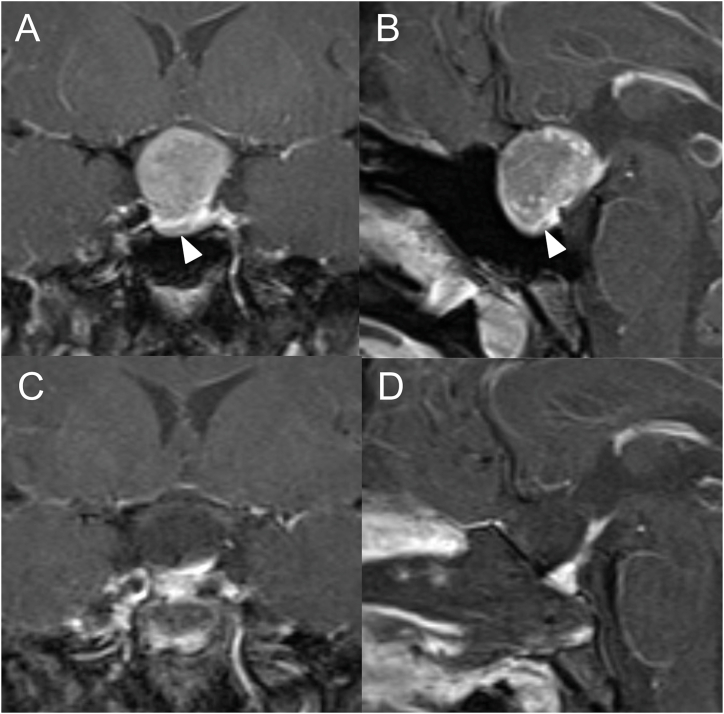 Figure 5
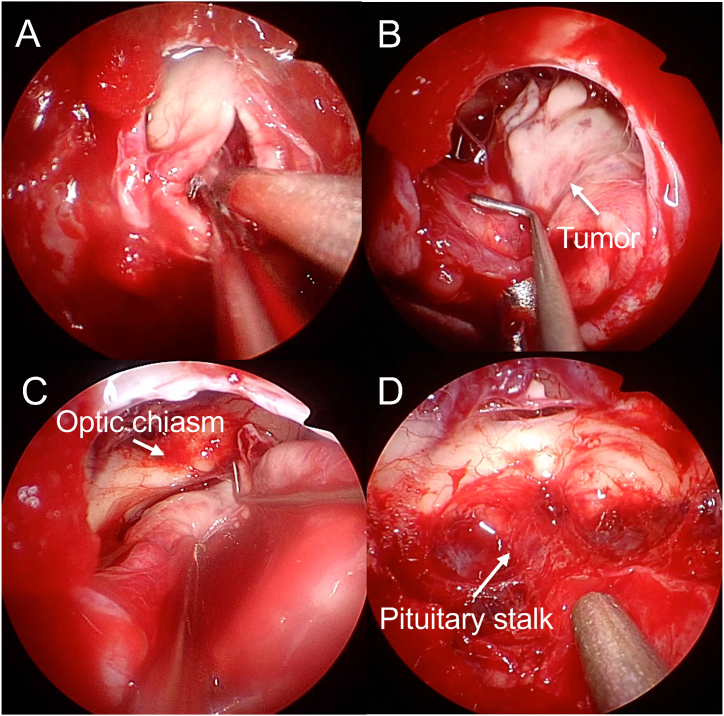 Figure 6
Peer Reviews
No public reviews on file for this paper yet. If you reviewed it on a platform where reviews are public (OpenReview, ICLR, NeurIPS, ICML), you can paste yours below so the community can read it here.
Videos
No videos yet. Explain this paper in a talk, walkthrough, or lecture? Add one.
Taxonomy
TopicsPituitary Gland Disorders and Treatments · Growth Hormone and Insulin-like Growth Factors · Meningioma and schwannoma management