Solitary humpback whales manufacture bubble-nets as tools to increase prey intake
A. Szabo, L. Bejder, H. Warick, M. van Aswegen, A. S. Friedlaender, J. Goldbogen, J. M. Kendall-Bar, E. M. Leunissen, M. Angot, W. T. Gough

TL;DR
Solitary humpback whales create bubble-nets to catch more prey efficiently without increasing energy use.
Contribution
The study reveals how humpback whales control bubble-net structures to enhance foraging efficiency.
Findings
Bubble-nets consist of internally tangential rings controlled by the whales.
Whales regulate net size and depth to increase prey intake sevenfold.
Increased prey density does not raise energetic expenditure.
Abstract
Several animal species use tools for foraging; however, very few manufacture and/or modify those tools. Humpback whales, which manufacture bubble-net tools while foraging, are among these rare species. Using animal-borne tag and unoccupied aerial system technologies, we examine bubble-nets manufactured by solitary humpback whales (Megaptera novaeangliae) in Southeast Alaska while feeding on krill. We demonstrate that the nets consist of internally tangential rings and suggest that whales actively control the number of rings in a net, net size and depth and the horizontal spacing between neighbouring bubbles. We argue that whales regulate these net structural elements to increase per-lunge prey intake by, on average, sevenfold. We measured breath rate and swimming and lunge kinematics to show that the resulting increase in prey density does not increase energetic expenditure. Our results…
Genes, proteins, chemicals, diseases, species, mutations and cell lines named across the full text — each resolved to its canonical identifier and authoritative record.
Click any figure to enlarge with its caption.
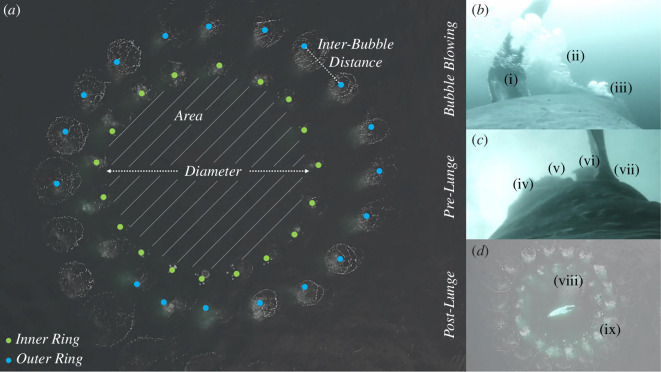 Figure 1
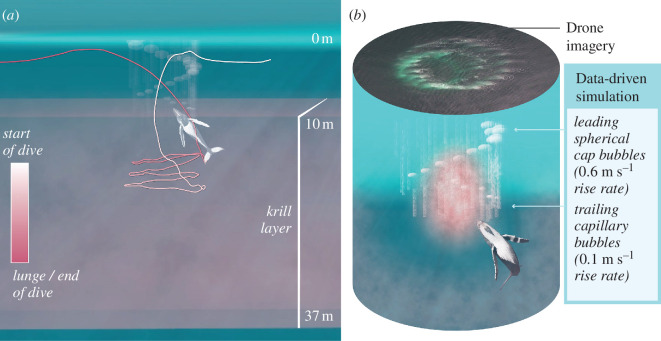 Figure 2
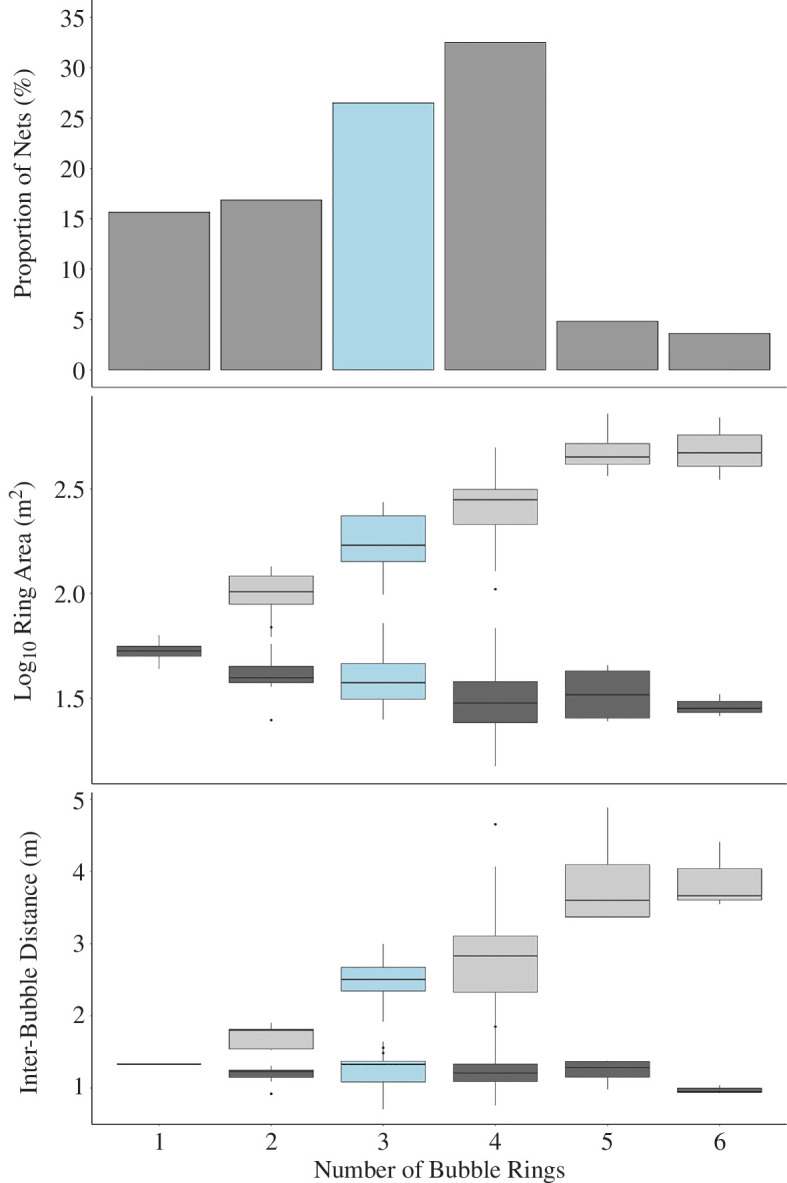 Figure 3
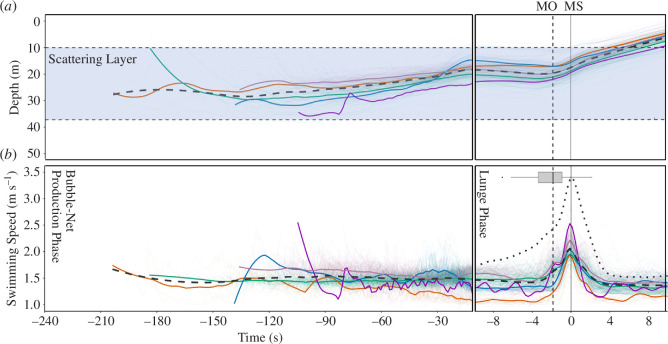 Figure 4
Peer Reviews
No public reviews on file for this paper yet. If you reviewed it on a platform where reviews are public (OpenReview, ICLR, NeurIPS, ICML), you can paste yours below so the community can read it here.
Videos
No videos yet. Explain this paper in a talk, walkthrough, or lecture? Add one.
Taxonomy
TopicsRegional Development and Management Studies · Environmental Science and Water Management