Characterizing phenotypic data of Peromyscus leucopus compared to C57BL/6J Mus musculus and diversity outbred (DO) Mus musculus
Lauren A. Wimer, Asia Davis-Castillo, Sofiya Galkina, Serban Ciotlos, Cavan Patterson, Leandro Prado, Maria Castro Munoz, Nicolas Martin, Sharon Epstein, Nicholas Schaum, Simon Melov

TL;DR
This study compares the white-footed deer mouse to common lab mice to assess its usefulness in aging research, highlighting differences in body composition and cardiovascular traits.
Contribution
The paper introduces the white-footed deer mouse as a potential aging model, identifying unique physiological traits and challenges in its use.
Findings
P. leucopus shows distinct body composition with reduced muscle force and unique fat metabolism.
Cardiovascular changes in P. leucopus challenge assumptions about aging-related phenotypes.
Behavioral and anatomical differences complicate phenotyping and require adapted protocols.
Abstract
Translational research is commonly performed in the C57B6/J mouse strain, chosen for its genetic homogeneity and phenotypic uniformity. Here, we evaluate the suitability of the white-footed deer mouse (Peromyscus leucopus) as a model organism for aging research, offering a comparative analysis against C57B6/J and diversity outbred (DO) Mus musculus strains. Our study includes comparisons of body composition, skeletal muscle function, and cardiovascular parameters, shedding light on potential applications and limitations of P. leucopus in aging studies. Notably, P. leucopus exhibits distinct body composition characteristics, emphasizing reduced muscle force exertion and a unique metabolism, particularly in fat mass. Cardiovascular assessments showed changes in arterial stiffness, challenging conventional assumptions and highlighting the need for a nuanced interpretation of aging-related…
Genes, proteins, chemicals, diseases, species, mutations and cell lines named across the full text — each resolved to its canonical identifier and authoritative record.
Click any figure to enlarge with its caption.
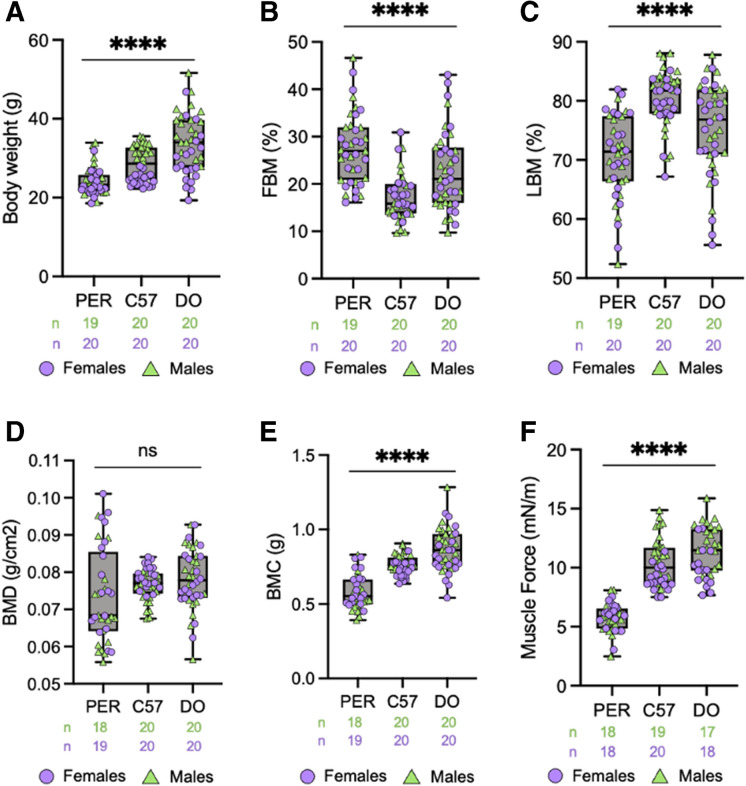 Figure 1
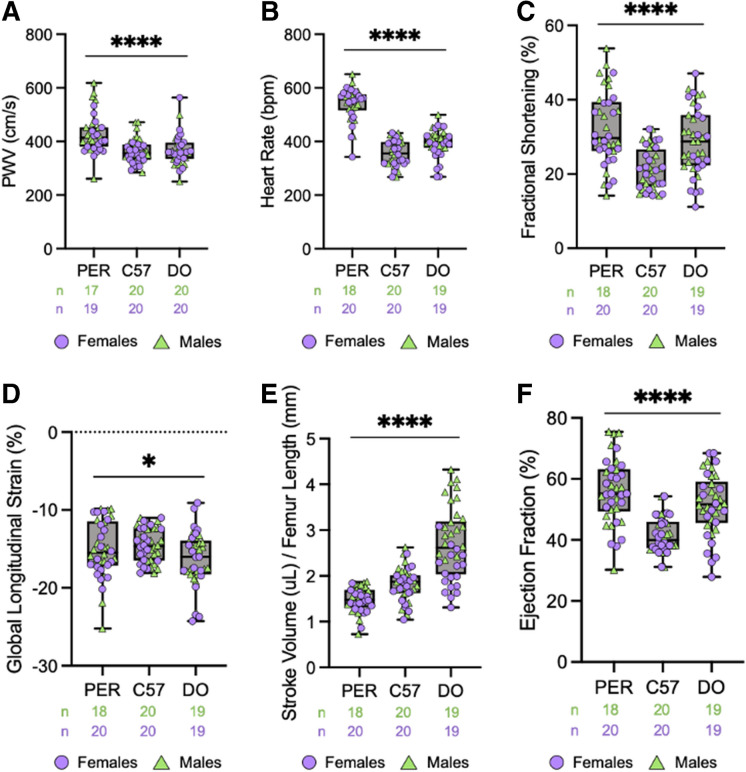 Figure 2
Peer Reviews
No public reviews on file for this paper yet. If you reviewed it on a platform where reviews are public (OpenReview, ICLR, NeurIPS, ICML), you can paste yours below so the community can read it here.
Videos
No videos yet. Explain this paper in a talk, walkthrough, or lecture? Add one.
Taxonomy
TopicsPhysiological and biochemical adaptations · Genetics, Aging, and Longevity in Model Organisms · Bat Biology and Ecology Studies