The first-in-class pro-apoptotic peptide PEP-010 is effective in monotherapy and in combination with paclitaxel on resistant ovarian adenocarcinoma cell models
Aline Lacroix, Rayan Farhat, Aude Robert, Catherine Brenner, Joëlle Wiels, Diego Germini

TL;DR
A new peptide, PEP-010, effectively kills resistant ovarian cancer cells and enhances the effectiveness of paclitaxel chemotherapy.
Contribution
PEP-010 is a first-in-class pro-apoptotic peptide that disrupts a key protein interaction to restore apoptosis in resistant ovarian cancer cells.
Findings
PEP-010 induces cell death in 55% of resistant ovarian adenocarcinoma cells as a monotherapy.
Combining PEP-010 with paclitaxel increases apoptosis to 87% and reduces paclitaxel's IC50 by 2.2 times.
PEP-010 shows potential for clinical use in treating resistant ovarian adenocarcinoma.
Abstract
Ovarian adenocarcinoma is the gynecological malignancy with the worst prognosis and the highest mortality rate. In the first stages of treatment, chemotherapy results effective, but its prolonged use and high doses lead to the appearance of resistance to treatments and relapse in most patients, representing a major challenge for clinicians. We developed PEP-010, a cell penetrating proapoptotic peptide disrupting the protein-protein interaction between caspase-9 and protein phosphatase 2A, thereby leading to the recovery of their activity in the apoptotic pathway. MTT assay or Annexin-V/Propidium Iodide staining and flow cytometry analysis were used to assess sensitivity to chemotherapies and apoptosis after treatment with PEP-010 in monotherapy or in combination with paclitaxel in ovarian carcinoma cell lines. DNA damage was assessed by immunofluorescence using γH2AX marker. We show…
Genes, proteins, chemicals, diseases, species, mutations and cell lines named across the full text — each resolved to its canonical identifier and authoritative record.
Click any figure to enlarge with its caption.
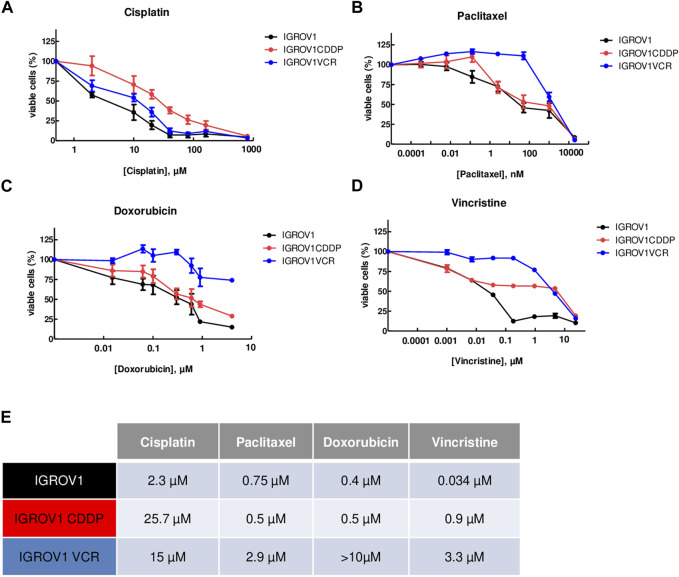 Figure 1
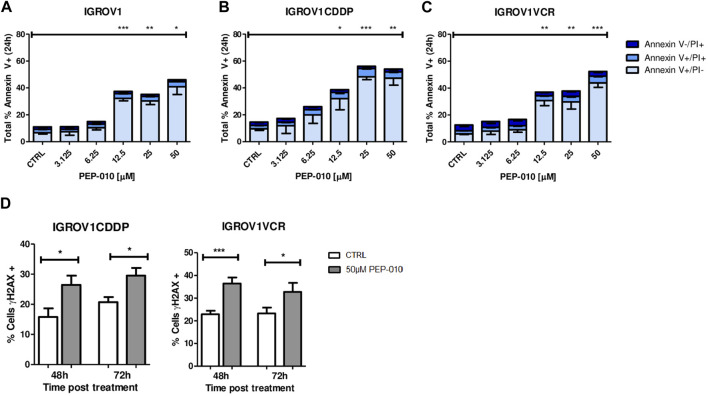 Figure 2
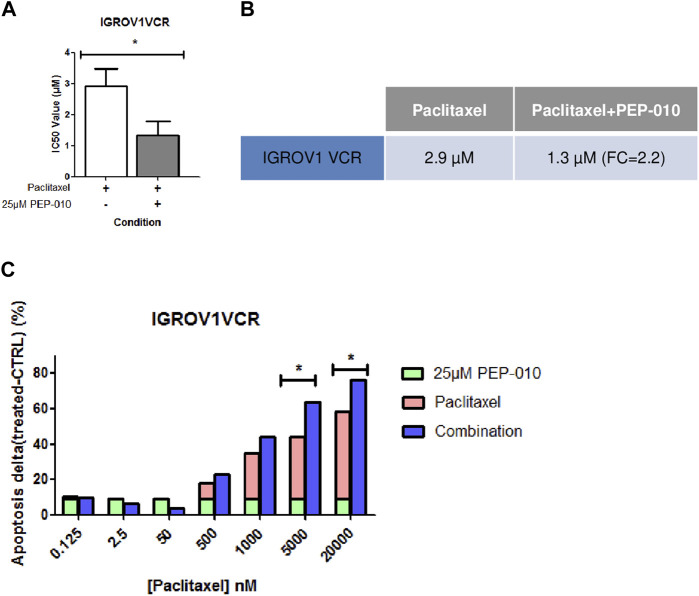 Figure 3
Peer Reviews
No public reviews on file for this paper yet. If you reviewed it on a platform where reviews are public (OpenReview, ICLR, NeurIPS, ICML), you can paste yours below so the community can read it here.
Videos
No videos yet. Explain this paper in a talk, walkthrough, or lecture? Add one.
Taxonomy
TopicsArchaeological and Geological Studies · Archaeological and Historical Studies · Archaeology and Cultural Heritage