The risk and risk factors of chikungunya virus infection and rheumatological sequelae in a cohort of U.S. Military Health System beneficiaries: Implications for the vaccine era
Simon Pollett, Hsing-Chuan Hsieh, Dan Lu, Melissa Grance, Stephanie Richard, Gosia Nowak, Charlotte Lanteri, David Tribble, Timothy Burgess

TL;DR
This study found that chikungunya virus infection in U.S. military personnel and their families is rare but can lead to significant rheumatic complications, with no clear risk factors for these outcomes.
Contribution
The study provides the first analysis of CHIKV rheumatic sequelae risk in a large U.S. military population using real-world healthcare data.
Findings
32% of CHIKV cases had rheumatic complications like arthritis, compared to 20% of controls.
Patients with rheumatic complications had a median of 7 healthcare encounters, with some having over 15.
No demographic, clinical, or occupational factors were linked to post-CHIKV rheumatic complications.
Abstract
Understanding the risk of chikungunya virus (CHIKV) infection and rheumatic sequelae across populations, including travelers and the military, is critical. We leveraged healthcare delivery data of over 9 million U.S. Military Health System (MHS) beneficiaries to identify cases, and sampled controls, to estimate the risk of post-CHIKV rheumatic sequelae. MHS beneficiary CHIKV infections diagnosed 2014–2018 were identified from the Disease Reporting System internet, TRICARE Encounter Data Non-Institutional, and Comprehensive Ambulatory/Professional Encounter Record systems. Non-CHIKV controls were matched (1:4) by age, gender, beneficiary status, and encounter date. The frequency of comorbidities and incident rheumatic diagnoses through December 2018 were derived from International Classification of Diseases codes and compared between cases and controls. Poisson regression models…
Genes, proteins, chemicals, diseases, species, mutations and cell lines named across the full text — each resolved to its canonical identifier and authoritative record.
Click any figure to enlarge with its caption.
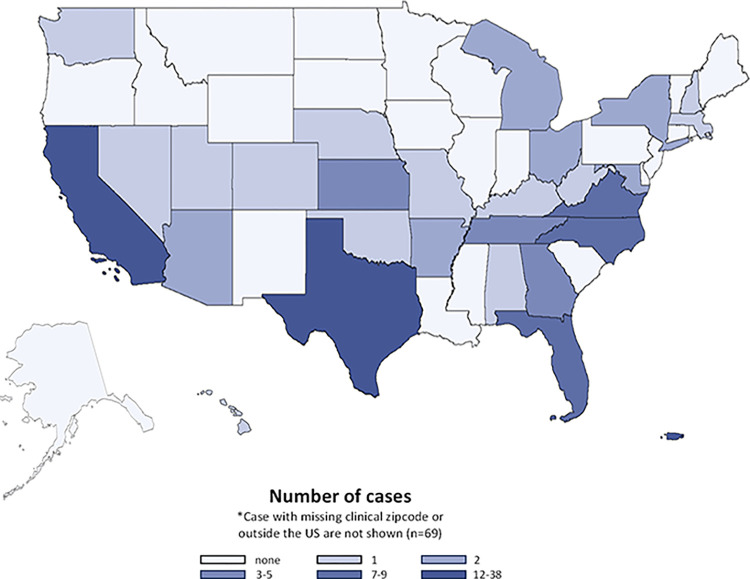 Figure 1
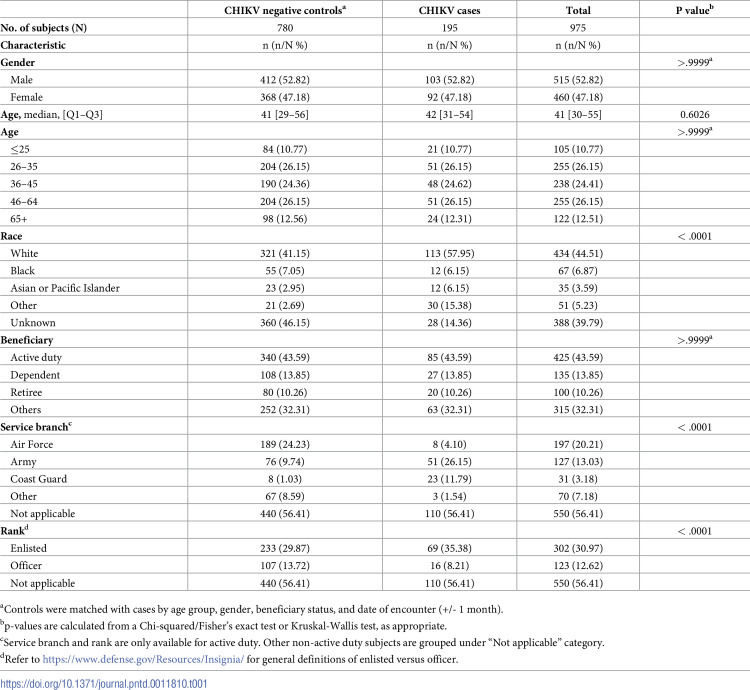 Figure 2
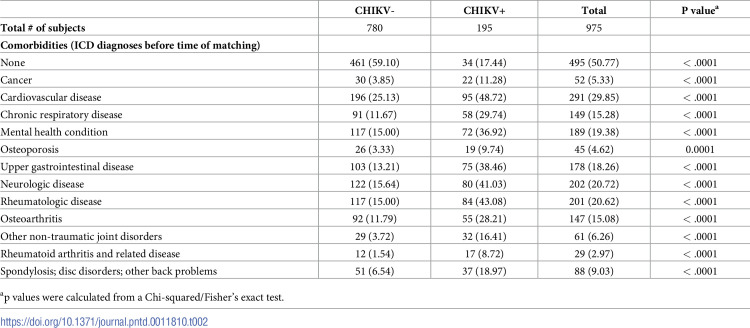 Figure 3
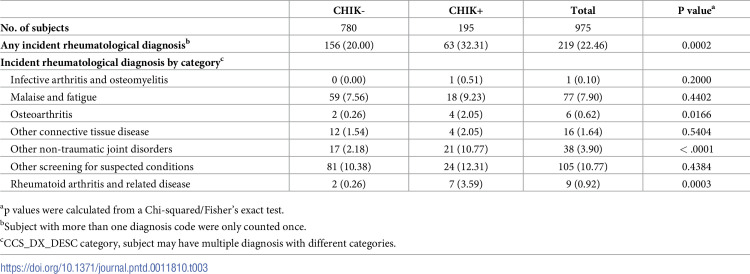 Figure 4
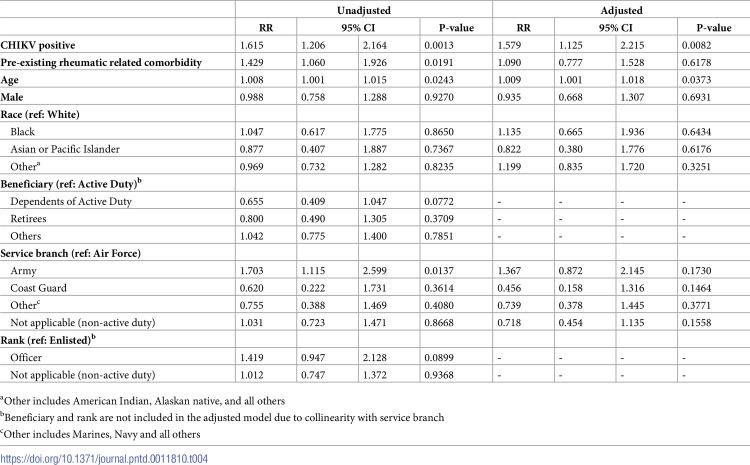 Figure 5
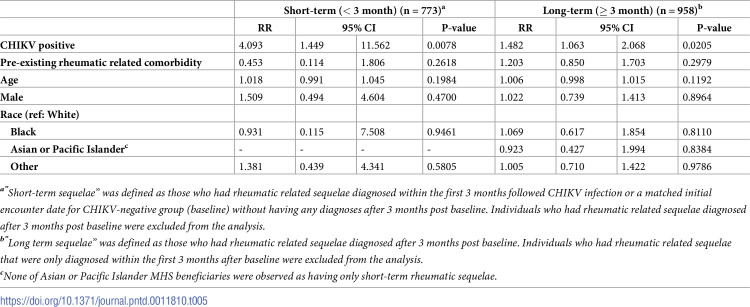 Figure 6
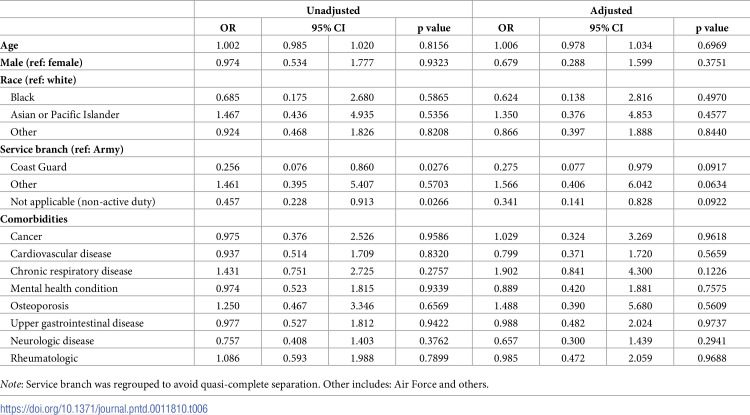 Figure 7
Peer Reviews
No public reviews on file for this paper yet. If you reviewed it on a platform where reviews are public (OpenReview, ICLR, NeurIPS, ICML), you can paste yours below so the community can read it here.
Videos
No videos yet. Explain this paper in a talk, walkthrough, or lecture? Add one.
Taxonomy
TopicsCultural, Media, and Literary Studies