Hermansky-Pudlak Syndrome: A Rare Congenital Disorder With Interstitial Lung Disease
Sreeja Sanampudi, Aashna Vajramani, Kiran Batra

TL;DR
This case report describes a rare genetic disorder called Hermansky-Pudlak Syndrome and its associated lung disease, highlighting unique imaging features and multi-systemic effects.
Contribution
The report emphasizes distinguishing lung disease features in Hermansky-Pudlak Syndrome from other interstitial lung diseases.
Findings
Pulmonary imaging in HPS shows traction bronchiectasis and reticulations similar to idiopathic pulmonary fibrosis.
HPS lung disease has unique features that differentiate it from other interstitial lung diseases.
The case highlights the multisystemic nature of Hermansky-Pudlak Syndrome beyond lung disease.
Abstract
Hermansky-Pudlak syndrome (HPS) is a genetic multisystemic disorder with oculocutaneous albinism, granulomatous colitis, bleeding diathesis, and pulmonary fibrosis. Multiple subtypes of HPS exist, with certain types having higher predilection for pulmonary fibrosis. This case report focuses on the demonstration of pulmonary imaging findings seen in a patient. Several imaging features overlap with idiopathic pulmonary fibrosis including traction bronchiectasis, pleural and peribronchovascular thickening, and reticulations. This case report highlights the differences seen in lung disease associated with HPS compared to other interstitial lung diseases, in addition to the multi-systemic features of HPS.
Genes, proteins, chemicals, diseases, species, mutations and cell lines named across the full text — each resolved to its canonical identifier and authoritative record.
Click any figure to enlarge with its caption.
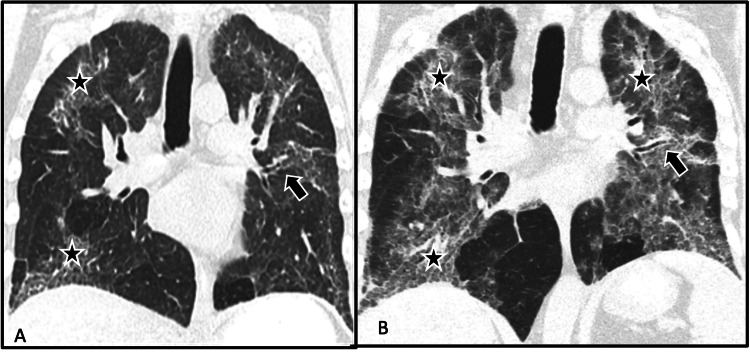 Figure 1
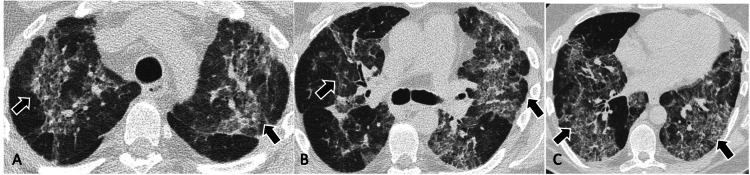 Figure 2
Peer Reviews
No public reviews on file for this paper yet. If you reviewed it on a platform where reviews are public (OpenReview, ICLR, NeurIPS, ICML), you can paste yours below so the community can read it here.
Videos
No videos yet. Explain this paper in a talk, walkthrough, or lecture? Add one.
Taxonomy
TopicsAllergic Rhinitis and Sensitization · melanin and skin pigmentation · Mast cells and histamine