Affinity purification mass spectrometry characterisation of the interactome of receptor tyrosine kinase proline-rich motifs in cancer
Christopher M. Jones, Arndt Rohwedder, Kin Man Suen, Safoura Zahed Mohajerani, Antonio N. Calabrese, Sabine Knipp, Mark T. Bedford, John E. Ladbury

TL;DR
This study explores how proline-rich motifs in receptor tyrosine kinases interact with other proteins in cancer cells, revealing new signaling pathways that may contribute to cancer progression.
Contribution
The paper identifies a novel RTK proline-rich motif interactome in cancer cells using affinity purification mass spectrometry.
Findings
490 unique proteins were identified as interactors of RTK proline-rich motifs.
Interactors included proteins involved in metabolism, homeostasis, and migration.
RTK PRM interactions may contribute to cancer progression and drug resistance.
Abstract
Receptor tyrosine kinase (RTK) overexpression is linked to the development and progression of multiple cancers. RTKs are classically considered to initiate cytoplasmic signalling pathways via ligand-induced tyrosine phosphorylation, however recent evidence points to a second tier of signalling contingent on interactions mediated by the proline-rich motif (PRM) regions of non-activated RTKs. The presence of PRMs on the C-termini of >40 % of all RTKs and the abundance of PRM-binding proteins encoded by the human genome suggests that there is likely to be a large number of previously unexplored interactions which add to the RTK intracellular interactome. Here, we explore the RTK PRM interactome and its potential significance using affinity purification mass spectrometry and in silico enrichment analyses. Peptides comprising PRM-containing C-terminal tail regions of EGFR, FGFR2 and HER2…
Genes, proteins, chemicals, diseases, species, mutations and cell lines named across the full text — each resolved to its canonical identifier and authoritative record.
Click any figure to enlarge with its caption.
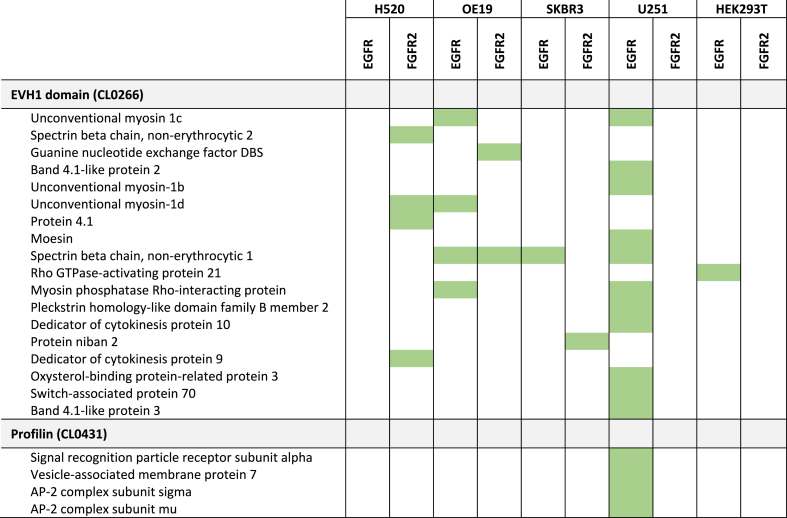 Figure 1
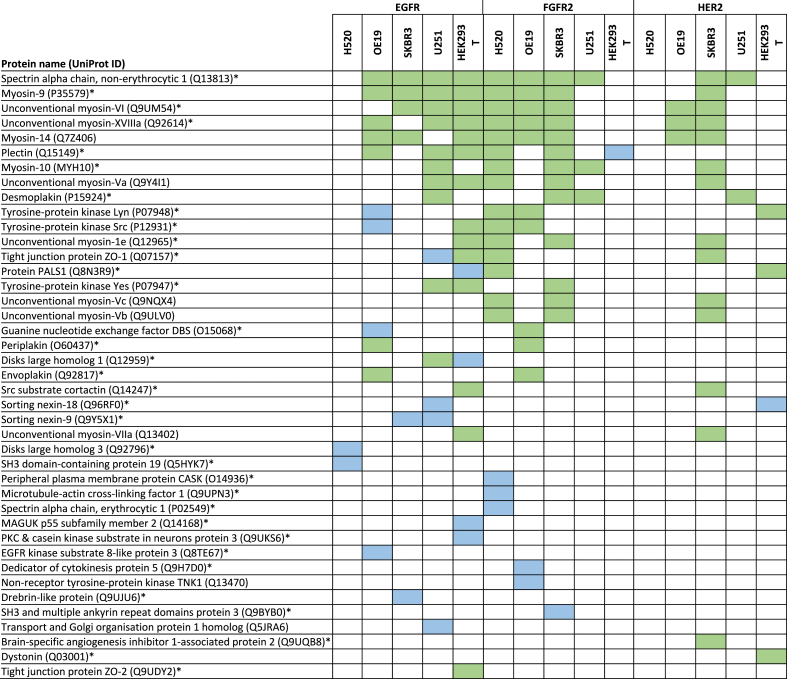 Figure 2
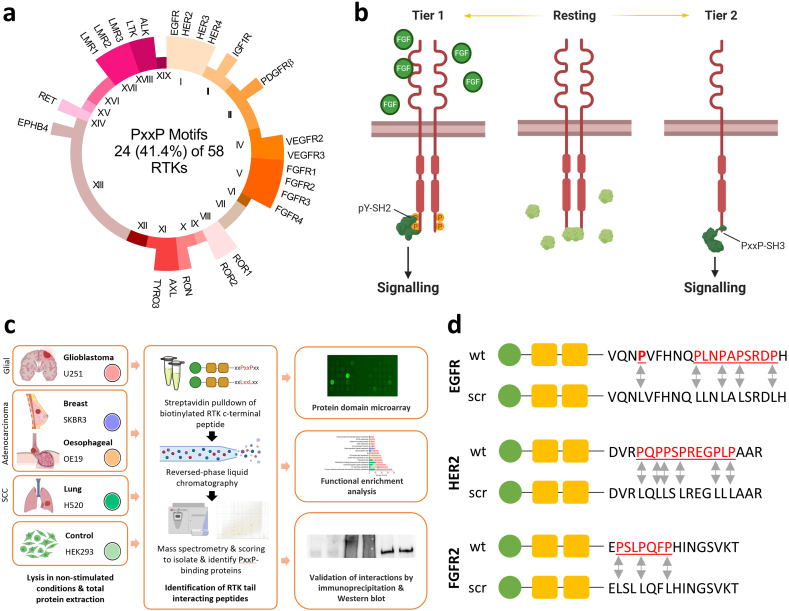 Figure 3
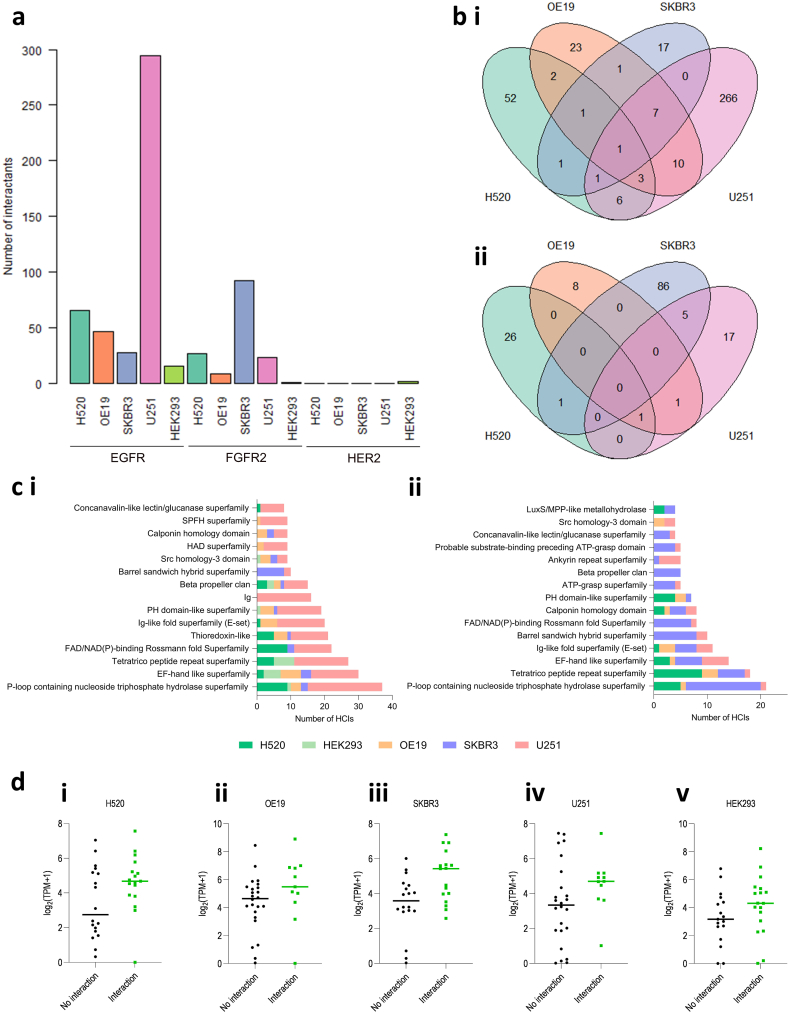 Figure 4
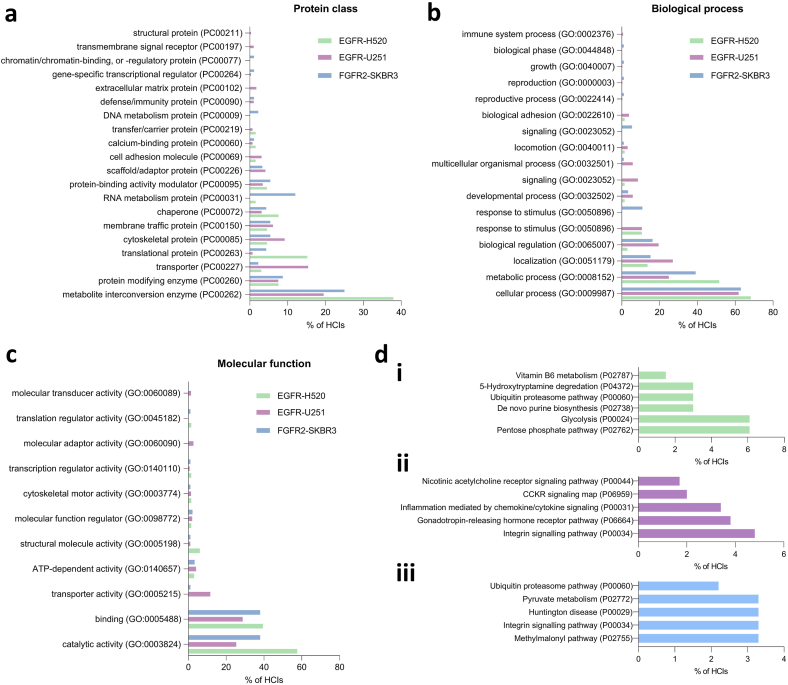 Figure 5
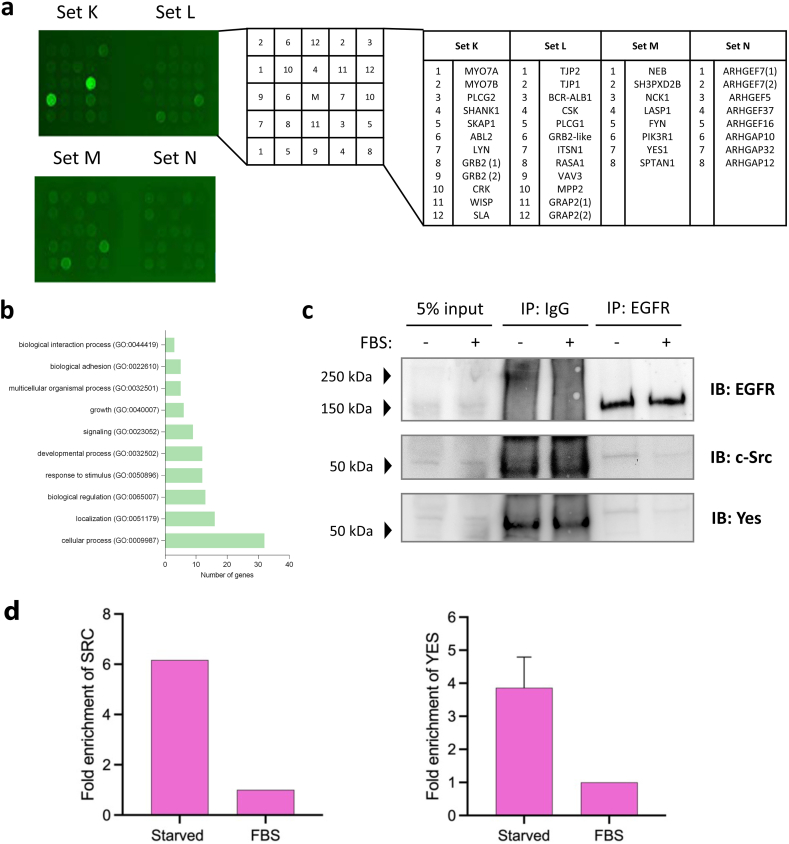 Figure 6
Peer Reviews
No public reviews on file for this paper yet. If you reviewed it on a platform where reviews are public (OpenReview, ICLR, NeurIPS, ICML), you can paste yours below so the community can read it here.
Videos
No videos yet. Explain this paper in a talk, walkthrough, or lecture? Add one.
Taxonomy
TopicsGlycosylation and Glycoproteins Research · Monoclonal and Polyclonal Antibodies Research · Advanced Proteomics Techniques and Applications