Physiology, fast and slow: bacterial response to variable resource stoichiometry and dilution rate
Logan M. Peoples, Jana Isanta-Navarro, Benedicta Bras, Brian K. Hand, Frank Rosenzweig, James J. Elser, Matthew J. Church

TL;DR
This study explores how bacteria adjust their physiology in response to different nutrient limitations and growth rates, revealing distinct strategies for survival.
Contribution
The paper reveals how Pseudomonas putida adapts to C, N, and P stress through physiological and gene expression changes at different dilution rates.
Findings
At slow dilution rates, P and C stress altered growth efficiency and oxygen consumption.
Differential gene expression of terminal oxidases was observed under stress conditions.
Fast dilution rates led to biofilm formation, possibly aiding survival in favorable conditions.
Abstract
Microorganisms grow despite imbalances in the availability of nutrients and energy. The biochemical and elemental adjustments that bacteria employ to sustain growth when these resources are suboptimal are not well understood. We assessed how Pseudomonas putida KT2440 adjusts its physiology at differing dilution rates (to approximate growth rates) in response to carbon (C), nitrogen (N), and phosphorus (P) stress using chemostats. Cellular elemental and biomolecular pools were variable in response to different limiting resources at a slow dilution rate of 0.12 h−1, but these pools were more similar across treatments at a faster rate of 0.48 h−1. At slow dilution rates, limitation by P and C appeared to alter cell growth efficiencies as reflected by changes in cellular C quotas and rates of oxygen consumption, both of which were highest under P- and lowest under C- stress. Underlying…
Genes, proteins, chemicals, diseases, species, mutations and cell lines named across the full text — each resolved to its canonical identifier and authoritative record.
Click any figure to enlarge with its caption.
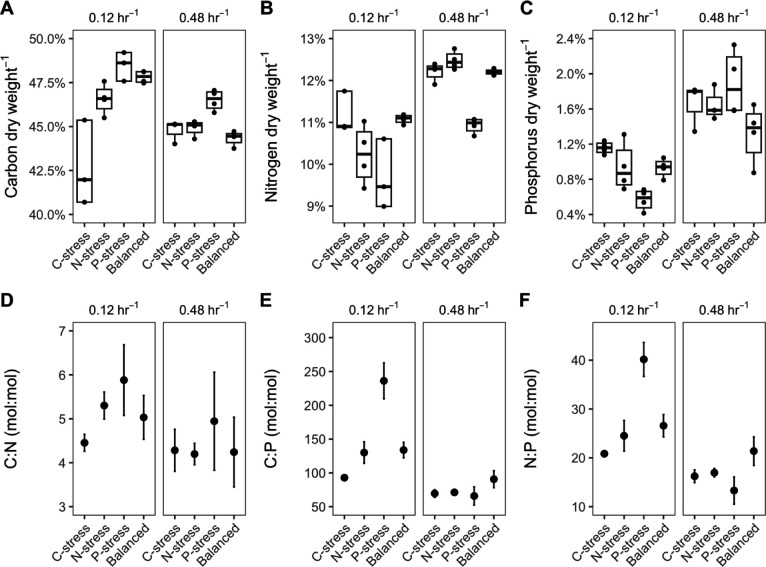 Figure 1
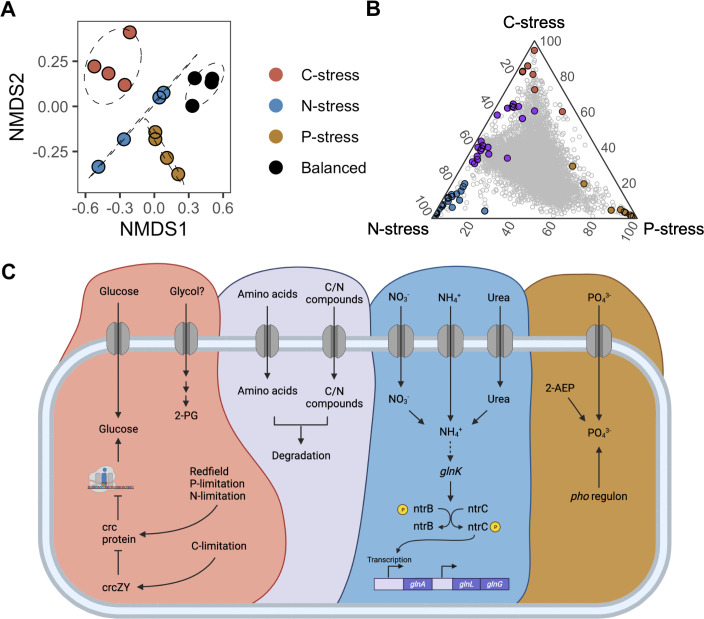 Figure 2
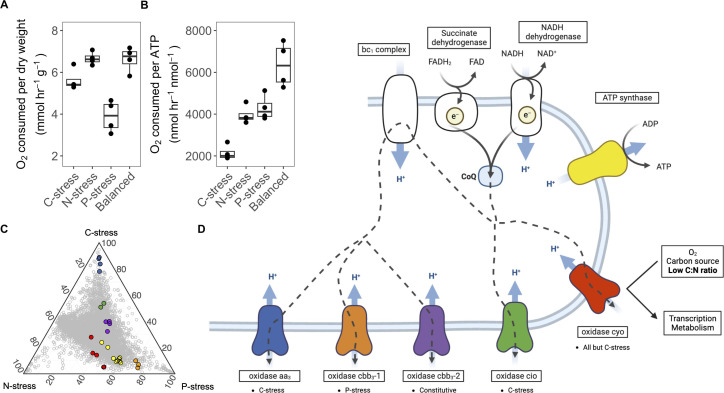 Figure 3
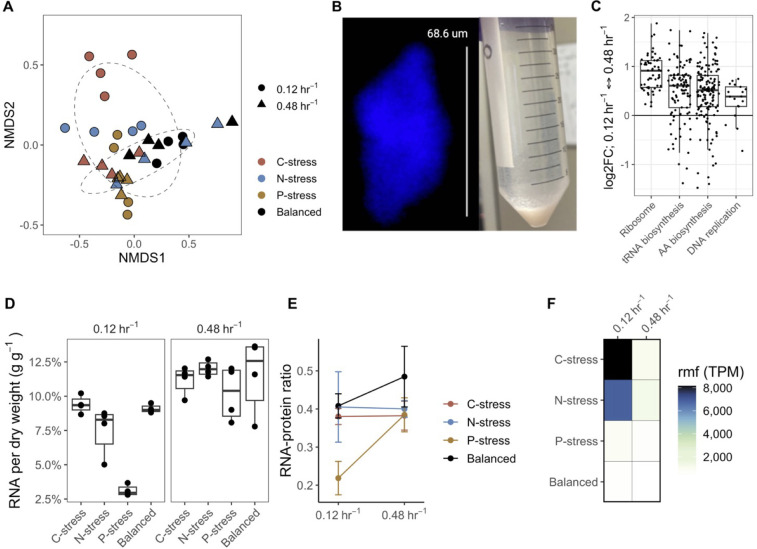 Figure 4
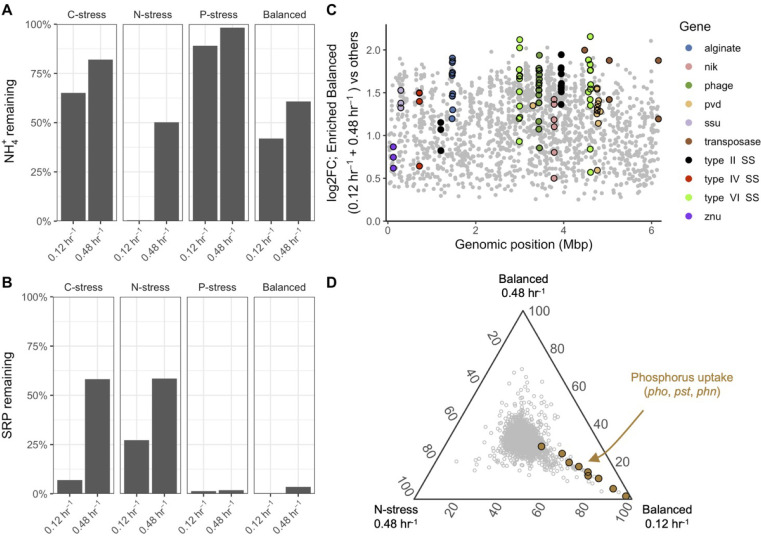 Figure 5
Peer Reviews
No public reviews on file for this paper yet. If you reviewed it on a platform where reviews are public (OpenReview, ICLR, NeurIPS, ICML), you can paste yours below so the community can read it here.
Videos
No videos yet. Explain this paper in a talk, walkthrough, or lecture? Add one.
Taxonomy
TopicsVibrio bacteria research studies · Bacterial Genetics and Biotechnology · Gut microbiota and health