Enhanced depletion of MLL-fusion proteins in acute leukemia: potential for improved therapeutic outcomes
Noelia Che, Sandra Cantilena, Remi Looi-Somoye, Danesh Sundar, Kent Fung, Jasper de Boer, Owen Williams

TL;DR
This study shows that combining two FDA-approved drugs can effectively target and eliminate MLL-fusion proteins in leukemia cells, improving treatment outcomes.
Contribution
The study identifies niclosamide as a new drug for depleting MLL-fusion proteins and shows enhanced efficacy when combined with disulfiram.
Findings
Niclosamide depletes MLL-fusion proteins in both AML and ALL leukemia cells.
Combining disulfiram and niclosamide enhances MLL-fusion protein depletion and inhibits leukemogenic programs.
The drug combination has minimal impact on normal hematopoietic progenitor cells.
Abstract
Rearrangements of the MLL (KMT2A) locus are associated with aggressive leukaemia of both myeloid and lymphoid lineages, that present profound therapeutic challenges in pediatric and adult patient populations. MLL-fusion genes resulting from these rearrangements function as driving oncogenes and have been the focus of research aimed at understanding mechanisms underlying their leukemogenic activity and revealing novel therapeutic opportunities. Inspired by the paradigm of depleting the PML-RARA fusion protein in acute promyelocytic leukemia using all-trans retinoic acid and arsenic trioxide, we conducted a screen to identify FDA-approved drugs capable of depleting MLL-fusion protein expression in leukemia cells. Previously, we reported potent anti-leukemia effects of disulfiram (DSF), identified through this screen. In the present study, we demonstrate that another hit compound,…
Genes, proteins, chemicals, diseases, species, mutations and cell lines named across the full text — each resolved to its canonical identifier and authoritative record.
Click any figure to enlarge with its caption.
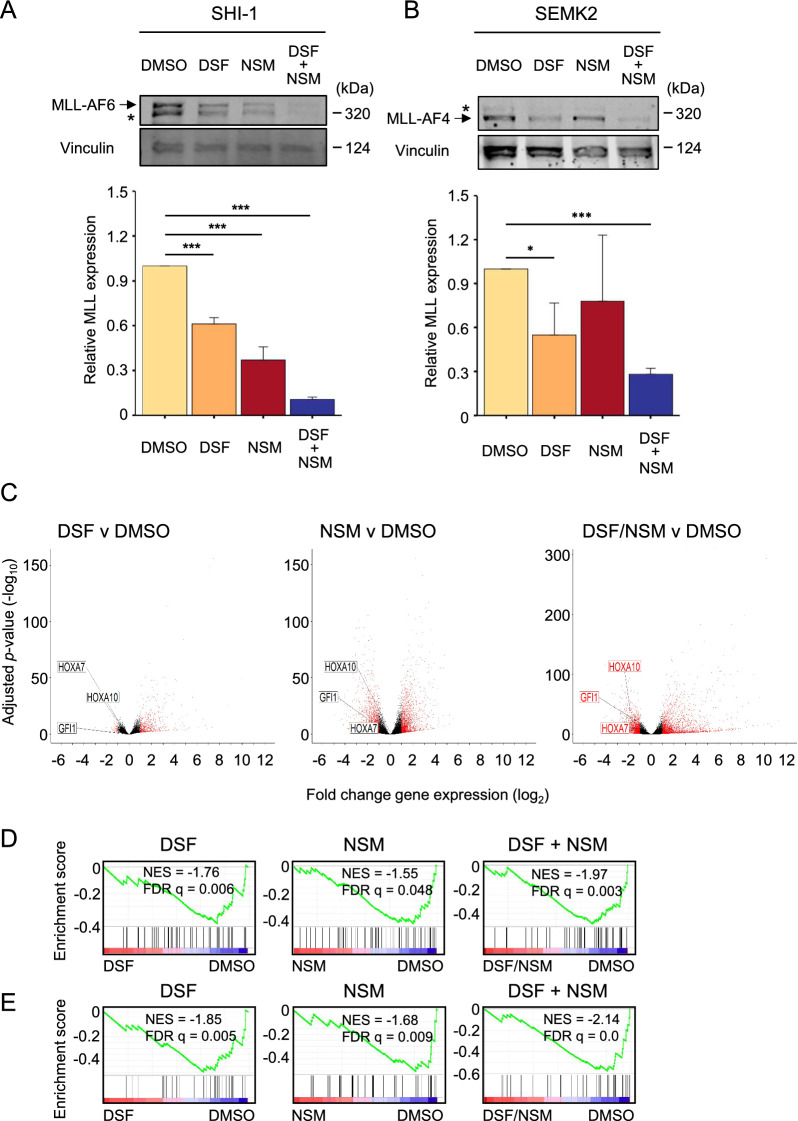 Figure 1
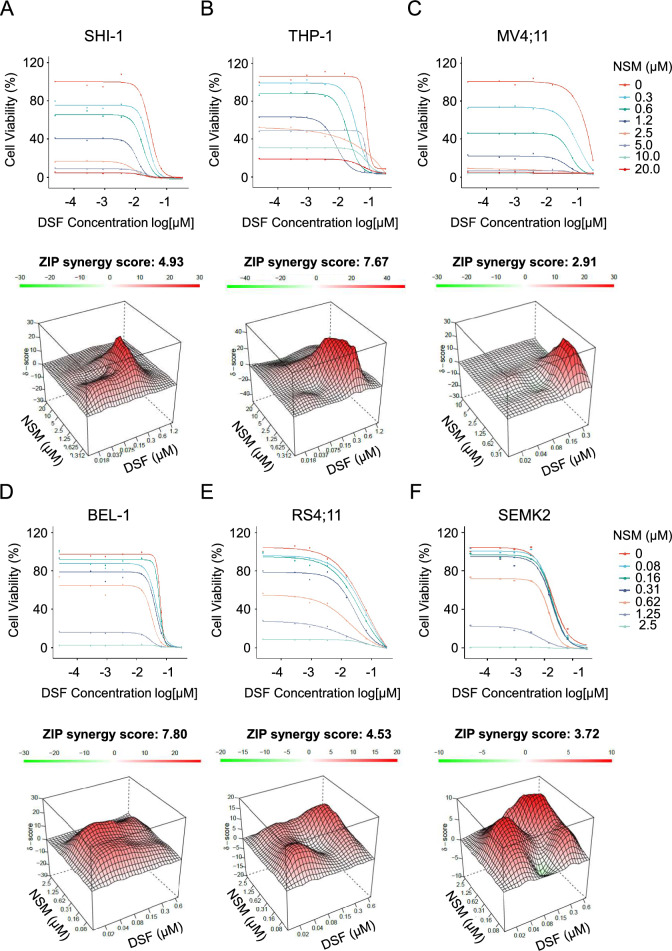 Figure 2
- —http://dx.doi.org/10.13039/501100000317Action Medical Research
- —http://dx.doi.org/10.13039/501100019256NIHR Great Ormond Street Hospital Biomedical Research Centre
Peer Reviews
No public reviews on file for this paper yet. If you reviewed it on a platform where reviews are public (OpenReview, ICLR, NeurIPS, ICML), you can paste yours below so the community can read it here.
Videos
No videos yet. Explain this paper in a talk, walkthrough, or lecture? Add one.
Taxonomy
TopicsAcute Myeloid Leukemia Research · Protein Degradation and Inhibitors · Chronic Lymphocytic Leukemia Research
To the editor,
MLL(KMT2A)-rearranged leukaemias represent a significant clinical challenge, with infant MLL-rearranged acute leukemia having a particularly dim prognosis [1, 2]. Given that encoded MLL-fusion proteins are essential for leukemia survival and progression [3, 4], targeting them offers a promising therapeutic strategy. Indeed, significantly higher cancer response rates and longer progression-free survival were seen by inhibiting fusions versus non-fusions [5]. However, direct targeting of MLL-fusion proteins has been elusive.
We previously developed a screen to identify compounds that deplete MLL-fusion proteins in leukemia cells, leading to identification of disulfiram (DSF) as a candidate for repurposing in MLL-rearranged leukemia therapy. DSF disrupts MLL-fusion protein binding to DNA by specifically targeting the N-terminal CXXC domain, crucial for its DNA interaction, resulting in MLL-fusion protein depletion and consequent silencing of leukemia-promoting transcriptional pathways [6]. Among several promising compounds identified in this screen, Niclosamide (NSM) demonstrated the most significant depletion of MLL-AF9 (Fig. S1A) [6]. NSM showed broad efficacy, reducing expression of various MLL fusion proteins in both acute myeloid leukemia (AML) and acute lymphoblastic leukemia (ALL) cells (Fig. S1B-E). In all cases, reduced expression of the fusion protein was accompanied by depletion of the N-terminal MLL fragment expressed from the non-rearranged allele (Fig. S1B-E).
Exposure of MLL-rearranged cells to NSM led to inhibition of global translation, accompanied by increased eIF2α phosphorylation (Fig. S2A-E), in concordance with recent reports [7, 8]. NSM induced depletion of MLL-fusion proteins was reversible upon overexpression of a non-phosphorylatable eIF2α mutant, confirming the specific role of eIF2α phosphorylation in this pathway (Fig. S2E). These data are consistent with the effect of NSM on MLL-fusion protein expression being the result of a global inhibition of protein translation and thus not an effect that is specific to MLL-rearranged leukemia cells. NSM has pleiotropic effects on leukemia cells and has been shown to kill leukemia cells via different mechanisms [7]. However, given the susceptibility of MLL-fusion proteins to NSM, we explored whether NSM could enhance depletion of MLL-fusion proteins when combined with DSF. Indeed, combination of NSM and DSF, using concentrations that induced sub-optimal MLL-fusion protein depletion, enhanced the depletion of different MLL-fusion proteins in AML and ALL cells (Fig. 1A, B and Fig. S3A-B), in comparison to either drug alone. Each drug alone and in combination also induced depletion of the N-terminal MLL fragment expressed from the non-rearranged allele (Fig. S3C).Fig. 1A, B Western blot examples (top panels) and quantification (lower panels) of the indicated MLL-fusion protein expression in A SHI-1 and B SEMK2 cells after 16 h exposure to DSF (0.15 µM DSF/1 µM Cu), NSM (A: 5 µM; B: 2.5 µM) or combined DSF + NSM. An (*) indicates the N-terminal wild type MLL band. Bars and error bars are means and SD of n = 3 independent experiments. Data are normalised to vinculin loading control and to DMSO treated control. *P < 0.05; ***P < 0.001, one sample t-test. C Volcano plots of RNA-seq analysis showing log_2_ fold gene expression changes versus adjusted p-value (−log_10_) in SHI-1 cells following 16 h treatment with DSF (0.3 µM DSF/1 µM Cu), NSM (5 µM) or combined DSF + NSM versus DMSO control, from n = 3 independent experiments. Expression changes greater than 1 (log_2_) are shown in red. D, E GSEA demonstrating negative enrichment of MLL-fusion target gene expression, defined as the overlap between MLL-AF9 target genes identified in THP-1 cells [9] and genes downregulated by inhibition of D MLL-AF9 [10] or E MLL-ENL and MLL-AF9 [11], in DSF, NSM and combined DSF + NSM induced gene expression changes
To determine whether this would result in more effective suppression of downstream transcriptional programs, RNA-sequencing was performed in MLL-AF6^+^ SHI-1 cells following 16-h exposure to NSM and DSF alone and in combination (Fig. 1C). Drug combination resulted in an increased number of significant gene expression changes, among which enhanced suppression of MLL-fusion target genes was evident, for example HOXA7, HOXA10 and GFI1 (Fig. 1C and Fig. S3D). Importantly, KMT2A expression was not decreased by any of the drug treatments (Fig. S3E). GSEA analysis of these global gene expression changes was then performed, using MLL-fusion target gene sets (Supplementary Table S1). The overlap between MLL-AF9 target genes identified in THP-1 cells [9] and genes downregulated by inhibition of MLL-AF9 [10] or MLL-ENL and MLL-AF9 [11] in mouse leukemia cells were used. Both genesets were negatively enriched in SHI-1 cells treated with NSM or DSF, combination treatment with NSM and DSF resulting in more significant negative enrichment (Fig. 1D, E). Our study demonstrates that the combination of NSM and DSF significantly suppresses key transcriptional pathways driven by MLL-fusion proteins, suggesting that such combination therapies could redefine treatment paradigms in leukemia characterized by MLL rearrangements.
Next, we assessed whether the synergistic effects of NSM and DSF translate into enhanced anti-leukemic activity. Exposure of MLL-rearranged AML and ALL cells to NSM and DSF led to an additive loss in cell viability in all cell lines (Fig. 2). This was consistent with an increase in cell death resulting from exposure to the drug combination (Fig. S4). In contrast, the NSM/DSF combination had no significant effect on colony formation by normal CD34^+^ cord blood cells (Fig. S5), although the long-term consequences of combination drug exposure would have to be examined in future clinical trials.Fig. 2. Viability (top panels) of A SHI-1, B THP-1, C MV4;11, D BEL-1, E RS4;11 and F SEMK2 cells following 72 h treatment with indicated concentrations of DSF (with 1 µM Cu) and NSM. Data are normalised to DMSO-treated cells. Graphs points are means of n = 3 independent experiments. 3D synergy maps and ZIP synergy scores (lower panels) of data calculated with SynergyFinder (version 2.0)
In conclusion, our study demonstrates that the antihelminthic drug NSM enhances the activity of DSF in depleting MLL-fusion proteins, suppressing downstream transcriptional pathways and eradicating MLL-rearranged leukaemia cells [6]. Both NSM and DSF are clinically relevant, each with an excellent safety profile, supporting their potential for rapid clinical translation. A limitation of our study is that it is based on in vitro experiments only, given the difficulty in using DSF in mouse models in vivo [6]. However, DSF is under investigation in several different types of cancers, including metastatic breast cancer (NCT03323346), gastric cancer (NCT05667415) and refractory sarcomas (NCT05210374), and NSM is currently in clinical trial for relapsed and refractory paediatric AML (NCT05188170). Our findings position NSM and DSF as promising agents for the repurposing in the treatment of MLL-rearranged leukemia. Future clinical trials are warranted to comprehensively assess their efficacy and safety in patient populations.
Supplementary Information
Additional file 1.