ESforRPD2: Expert System for Rice Plant Disease Diagnosis
Fahrul Agus, Muh. Ihsan, Dyna Marisa Khairina, Krishna Purnawan Candra, Yi Fang, Fahrul Agus

TL;DR
This paper introduces an expert system to help Indonesian farmers diagnose rice plant diseases early using expert knowledge and surveys.
Contribution
The novel contribution is the development of ESforRPD2, an expert system for rice plant disease diagnosis with 87.5% accuracy.
Findings
ESforRPD2 detects 48 symptoms and 8 rice plant diseases with 87.5% accuracy.
The system was developed using expert knowledge from East Kalimantan rice experts.
The system is designed to assist farmers in early disease diagnosis.
Abstract
One of the factors causing rice production disturbance in Indonesia is the lack of knowledge of farmers on early symptoms of rice plant diseases. These diseases are increasingly rampant because of the lack of experts. This study aimed to overcome this problem by providing an Expert System that helps farmers to make early diagnosis of rice plant diseases. Data of rice plant pests and diseases in 2016 were taken from Samarinda, East Kalimantan, Indonesia using an in-depth survey, and rice experts from the Department of Food Crops and Horticulture of East Kalimantan Province were recruited for the project. The Expert System for Rice Plant Disease Diagnosis, ESforRPD2, was developed based on the pest and disease experiences of the rice experts, and uses a Waterfall Paradigm and Unified Modelling Language. This Expert System can detect 48 symptoms and 8 types of diseases of rice plants from…
Genes, proteins, chemicals, diseases, species, mutations and cell lines named across the full text — each resolved to its canonical identifier and authoritative record.
Click any figure to enlarge with its caption.
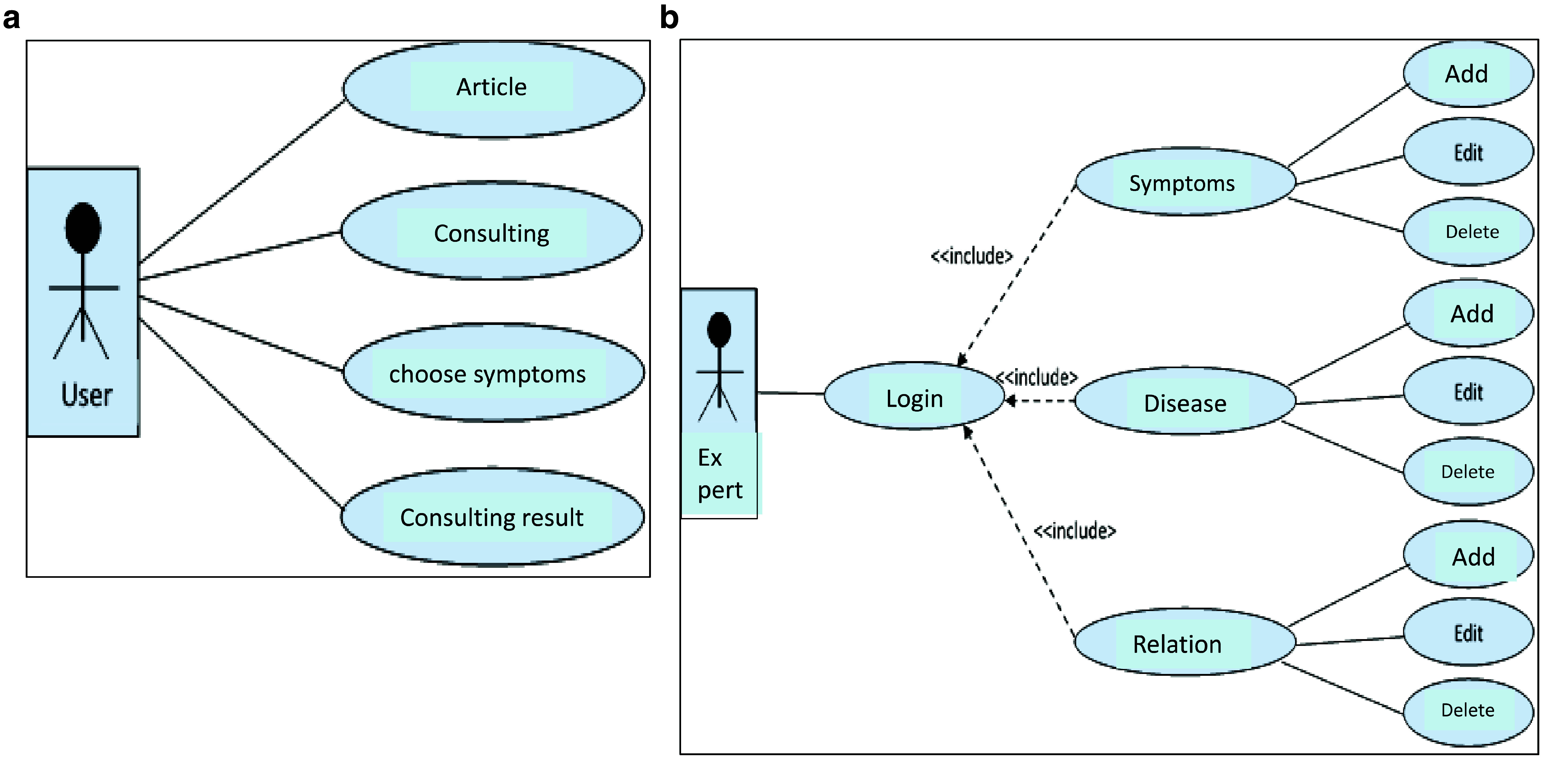 Figure 1
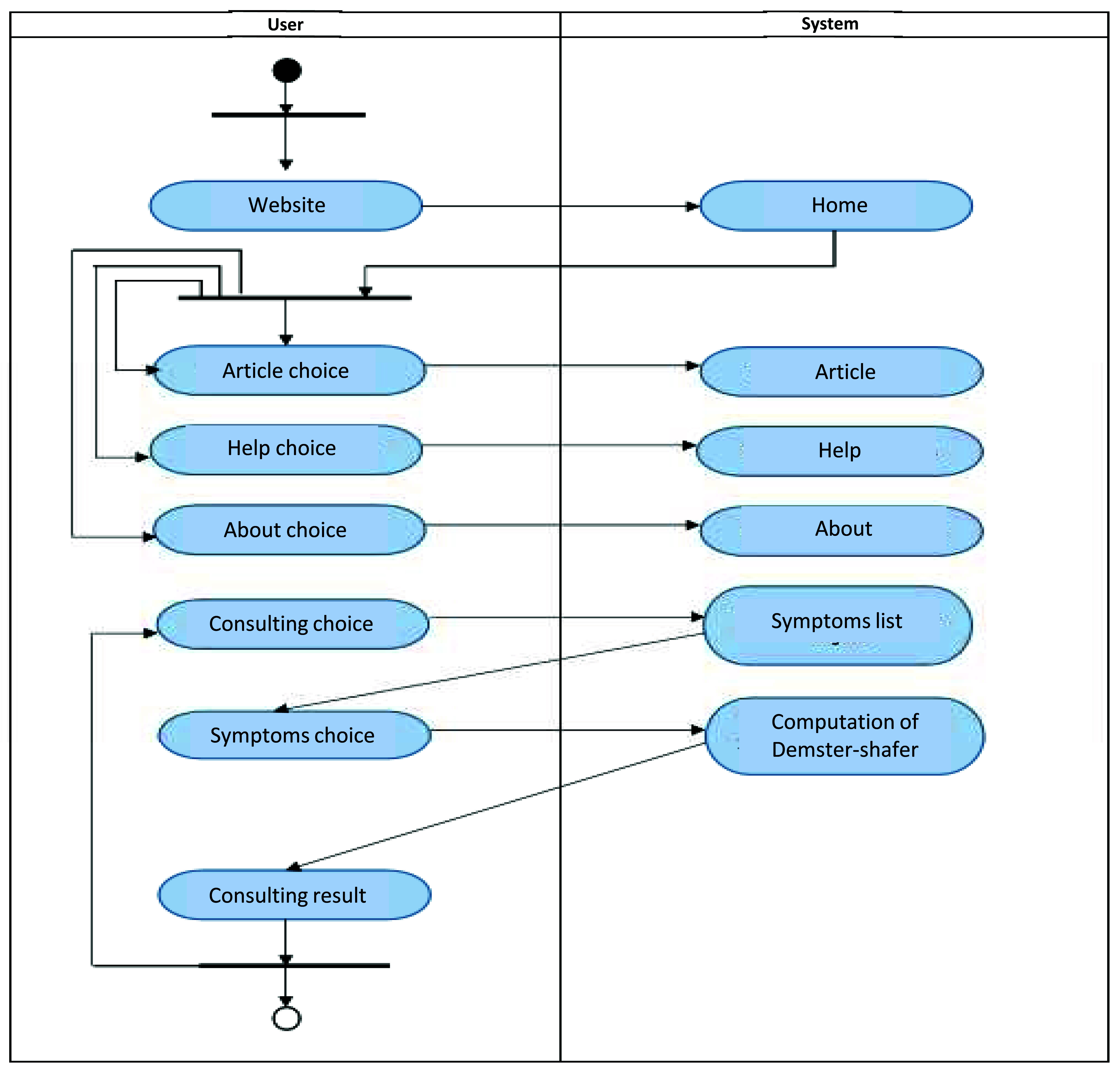 Figure 1c
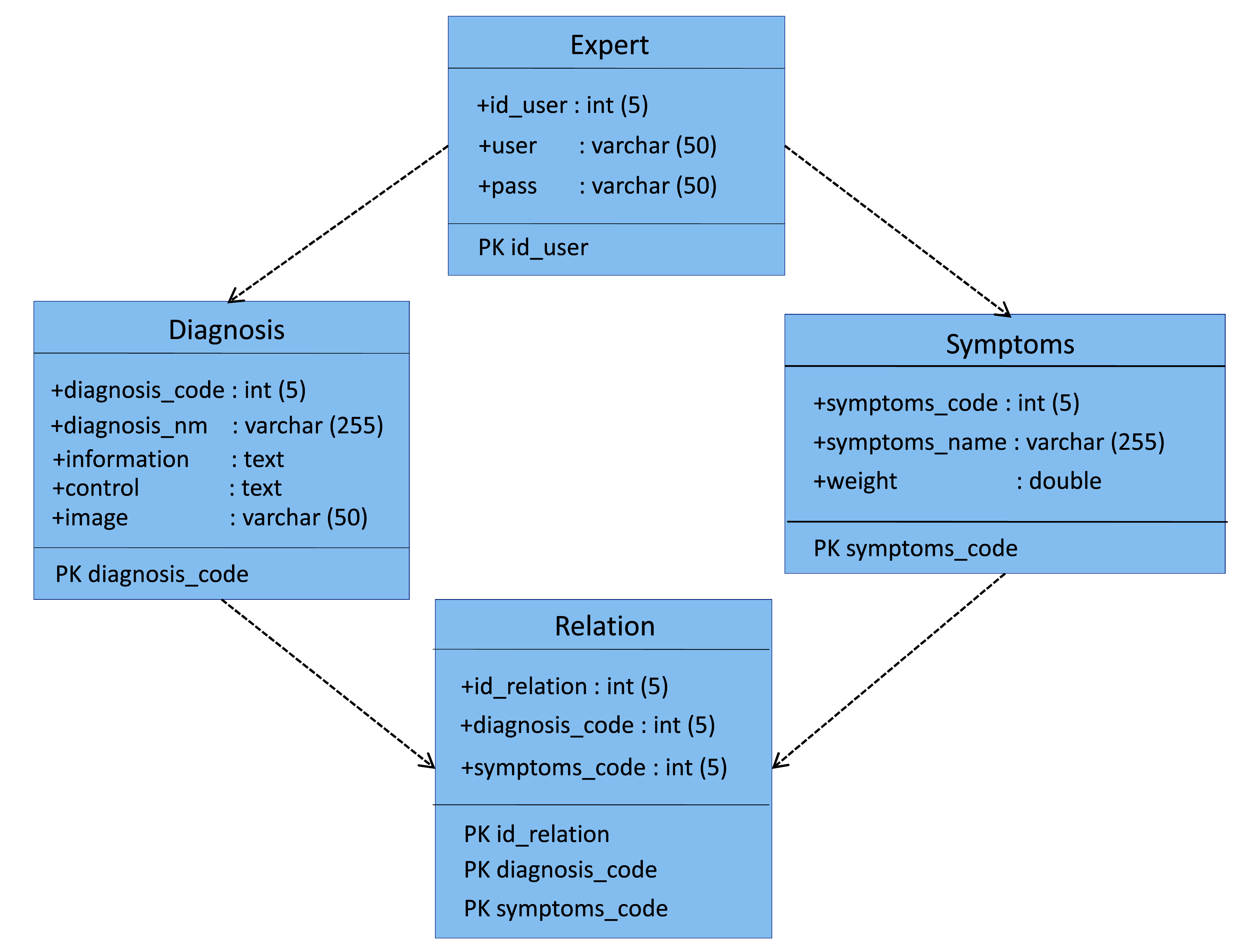 Figure 1d
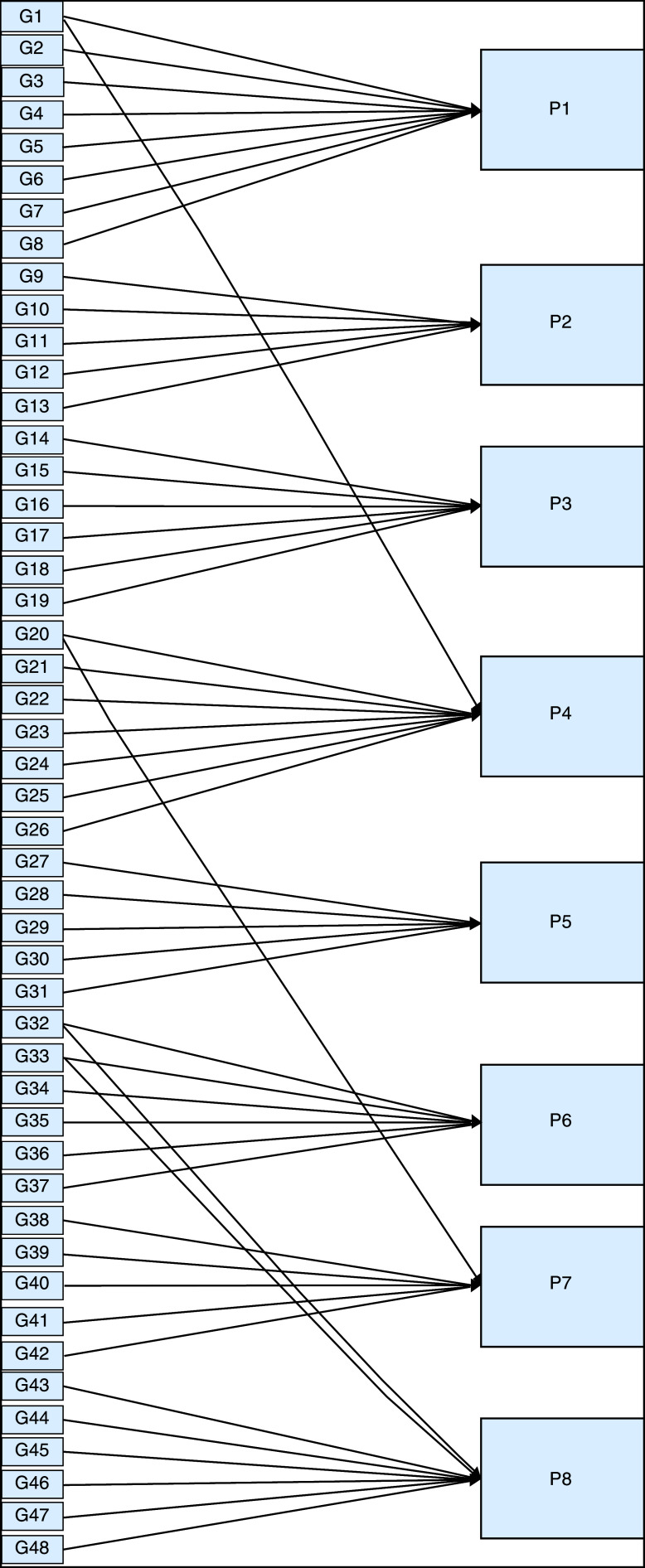 Figure 2
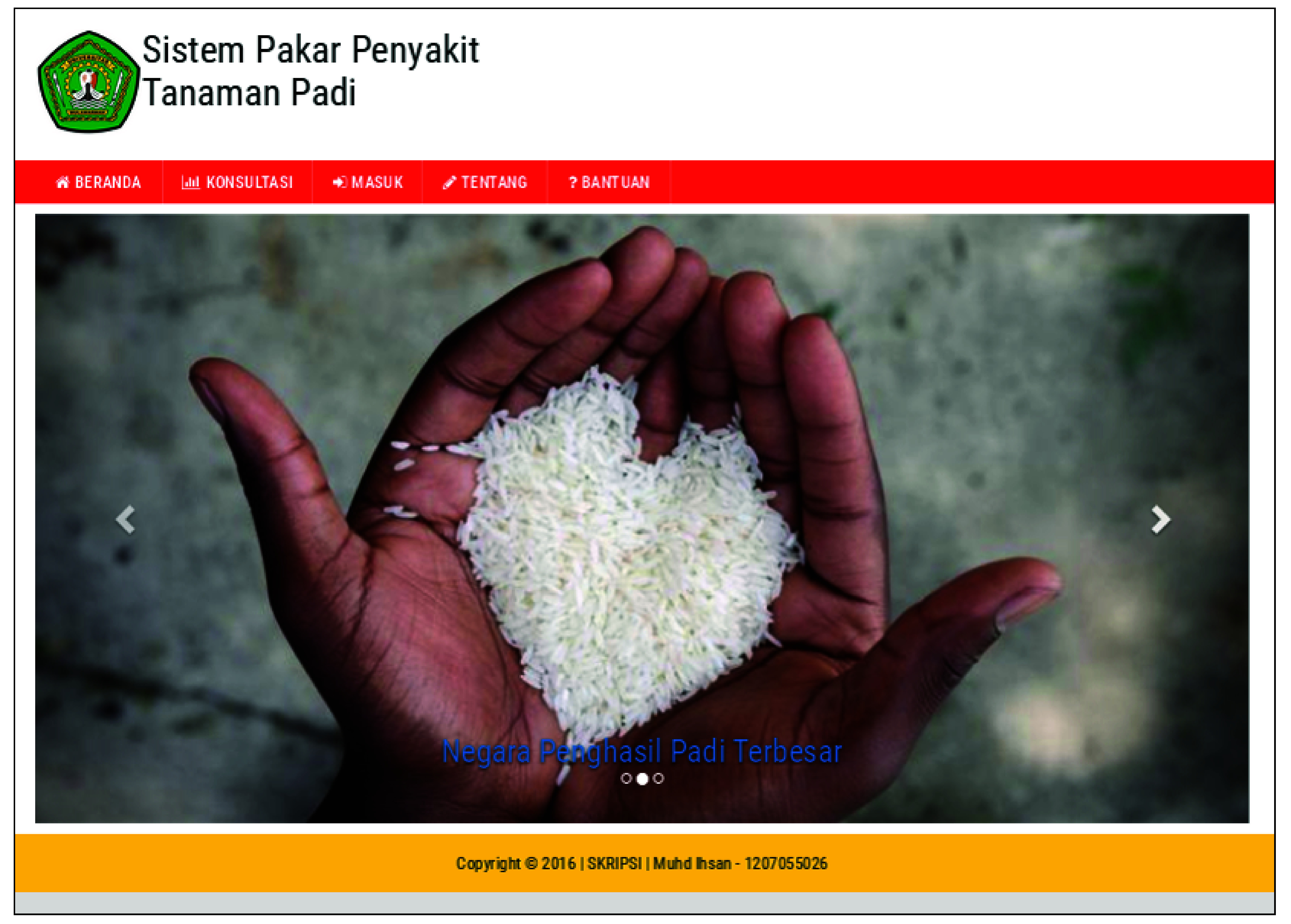 Figure 3a
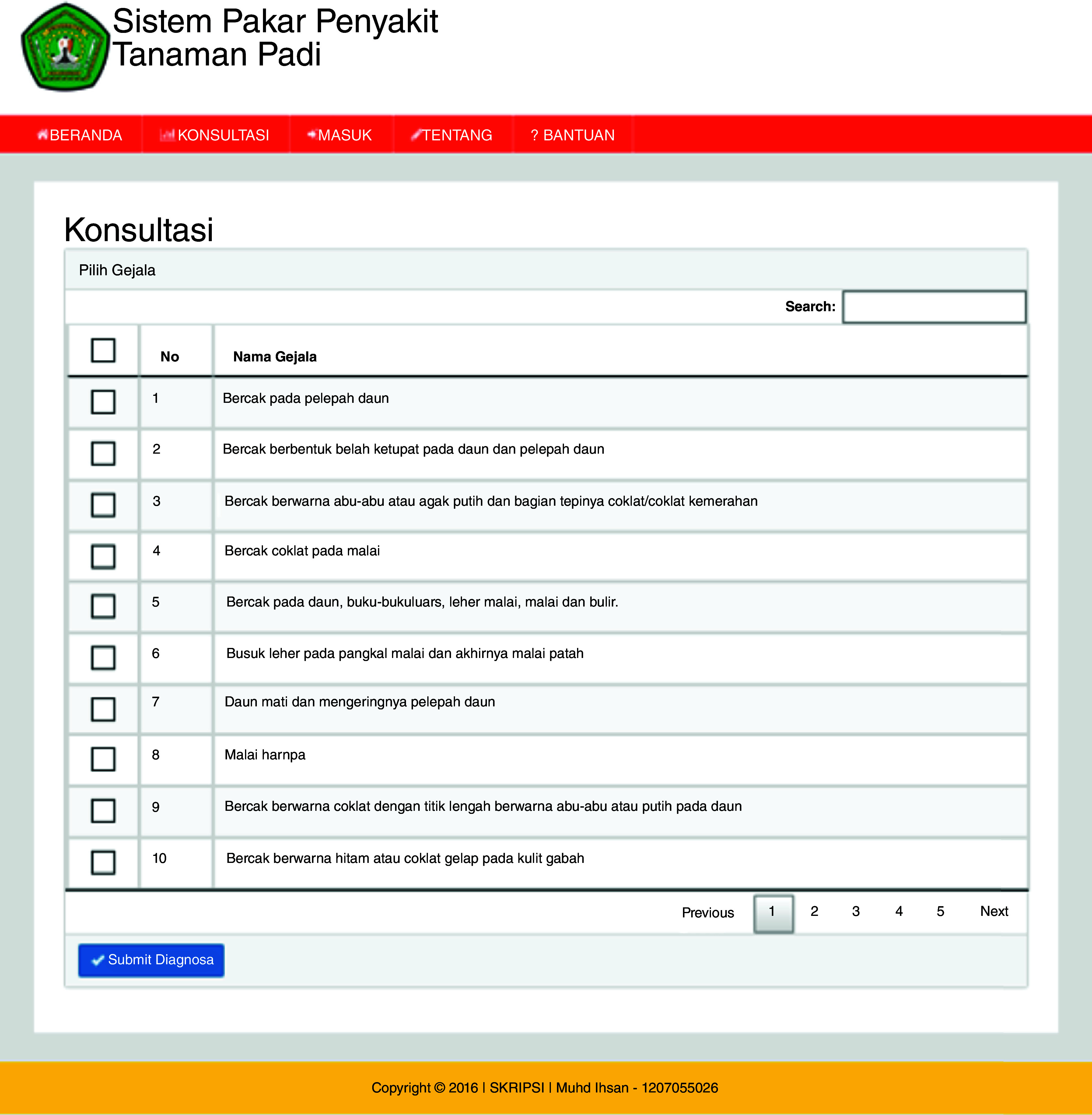 Figure 3b
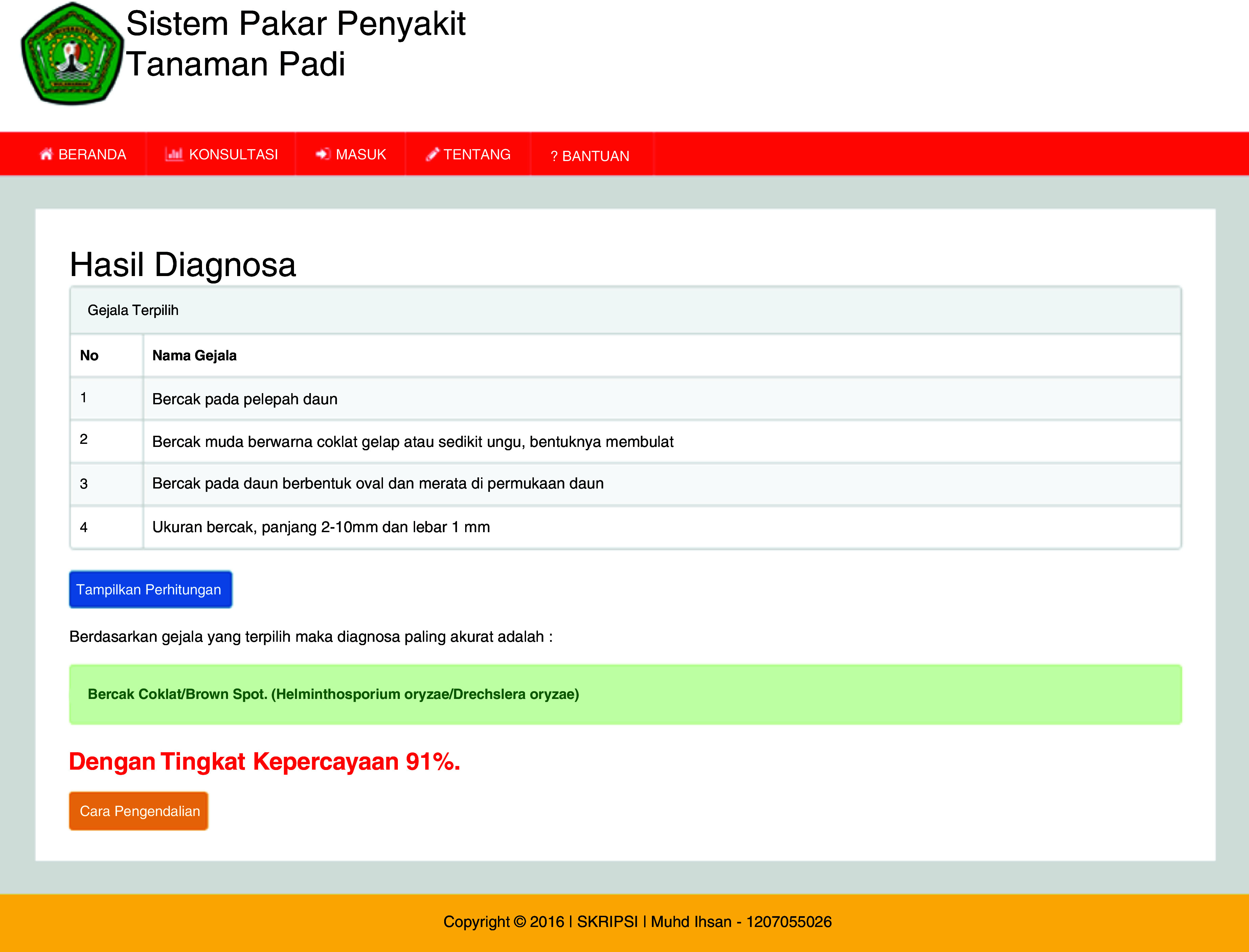 Figure 3c
| Test No. | Experts Justification (English/Indonesian) | Results Diagnosis of ESforRPD2
| Results |
|---|---|---|---|
| 1 | Blast/Blas | Blas/Blast | Suitable |
| 2 | Brown Spot (
| Brown Spot (
| Suitable |
| 3 | Narrow Brown Spot (
| Narrow Brown Spot (
| Suitable |
| 4 | Sheath Bligh (
| Sheath Bligh (
| Suitable |
| 5 | False Smut (
| False Smut (
| Suitable |
| 6 | Grassy Stunt (
| Grassy Stunt (
| Suitable |
| 7 | Bacterial leaf blight (
| Bacterial leaf blight (
| Suitable |
| 8 | Tungro (
| Tungro (
| Suitable |
| 9 | Blast (
| Blast (Blas) | Suitable |
| 10 | Brown Spot (
| Brown Spot (
| Suitable |
| 11 | Narrow Brown Spot (
| Blas/
| Unsuitable |
| 12 | Sheath Bligh (
| Blast/
| Unsuitable |
| 13 | False Smut (
| False Smut (
| Suitable |
| 14 | Grassy Stunt (
| Grassy Stunt (
| Suitable |
| 15 | Bacterial leaf blight (
| Bacterial leaf blight (
| Suitable |
| 16 | Tungro (
| Tungro (
| Suitable |
Peer Reviews
No public reviews on file for this paper yet. If you reviewed it on a platform where reviews are public (OpenReview, ICLR, NeurIPS, ICML), you can paste yours below so the community can read it here.
Videos
No videos yet. Explain this paper in a talk, walkthrough, or lecture? Add one.
Taxonomy
TopicsData Mining and Machine Learning Applications · Edcuational Technology Systems · Information Retrieval and Data Mining
Introduction
Correct diagnosis of symptoms in rice plant diseases, caused by bacteria, nematodes, fungi, phythoplasmal and viruses ^ 1– 4 ^, is very critical in supporting the productivity of rice plants. However, many regions in Indonesia have a huge problem because of a limited number of rice plant pathologists. The large plantation area of rice plants is also a problem due to logistical issues when visiting these sites, leading to difficulty obtaining disease evidence.
Along with other rapid technological developments, a technology known as Expert System (ES) ^ 5– 8 ^ has been developed to solve health ^ 9– 12 ^, education ^ 13 ^, and business ^ 14 ^, including agriculture ^ 15, 16 ^, problems. ES is usually designed for a specific condition, i.e. variables of climate in cases of agriculture. This article proposes a new software based on ES for the diagnosis of disease in rice plants in the Samarinda region, Indonesia. Waterfall Paradigm applied in designing this ES. The prototype, Expert System for Rice Plant Disease Diagnosis (ESforRPD2) is available at: http://esforrpd2.blog.unmul.ac.id.
Methods
Data collection and ES development
The ES of rice plant disease diagnosis was designed to help farmers and agricultural officials to diagnose rice plant diseases occurring in the Samarinda region, East Kalimantan province, Indonesia. Rice plant experts were recruited from the Seed Technology Development Division at the Department of Food Crops and Horticulture of East Kalimantan Province and from the Department of Agro-eco-technology of Agricultural Faculty of Mulawarman University (one expert from each). The experts were the primary source for information on rice plant symptoms and diseases. The two rice plant experts have experience in diagnosing rice plant disease in the region of East Kalimantan Province for 20 years. Symptoms, diseases and their relationships (and their ranked importance) were derived from the experts by questionnaire (Supplementary File 1). This information was then used to construct the knowledge base for building the ES software.
The ES software was developed using the Waterfall paradigm as recommended by Sommerville ^ 17 ^ using five stages, i.e. (i) planning and requirement, (ii) analysis and software design, (iii) implementation and unit testing, (iv) integration and (v) system testing and operation and maintenance. ES architecture consists of three parts, namely the user interface, the inference engine and the knowledge base as proposed by Lucas and van der Gaag ^ 7 ^. The user interface is used as a consulting interface in order to obtain knowledge and advice from the ES, which would be like consulting an expert. In this ES, the inference engine works as a consultation system in processing input data to build a diagnosis based on the knowledge base developed.
Implementation
The implementation of the ESforRPD2 application is based on Unified Modelling Language ( Figure 1) as proposed by Sommerville ^ 17 ^, which consists of use case diagrams, activity diagrams, and class diagrams.
a. Use case diagram of user. b. Use case diagram of expert.
Activity diagram of ESforRPD2 system application.
Class diagram of ESforRPD2 system application.
We constructed two types of “Use case diagram”, namely “Use case for user” consisting of four cases (Article, Consulting, Choose Symptoms and Consulting Result); and “Use case for expert” consisting of three cases (Symptoms, Diseases, and Relation). The use case describes the functions of the ES interacting with user and expert. The activity diagram illustrates the flow of various activities being designed in the ES, i.e. how the flow starts, the decision that might occur, and the flow end. The activity diagram also describes parallel processes that might occur in some executions. In this ES, we build four data stores (Expert, Symptoms, Relation, and Diagnosis) in the class diagram. The ESforRPD2 application uses four datasets, namely disease- and symptoms-data, knowledge base, and symptoms-disease-weight relationships table (Dataset 2). The construction of decision trees and forward-chaining tracing for diagnosing of rice plant diseases in the ES is shown in Figure 2.
Decision tree and forward chaining tracing.
ESforRPD2 is the first version of ES (only in Indonesian) to make it user-friendly for Indonesian users. Users use a consultation page to choose the symptoms of the rice plant. The ES performs the calculation process to obtain the trust level using the Dempster-Shafer method ^ 18 ^. The user page ( Figure 3a) is the main web page for users without logging in. In the user page, there is also a home menu that displays articles about ES, rice plant diseases, and the Dempster-Shafer method. The consultation page starts the user consultation about the disease of rice plants ( Figure 3b). The ES will provide an output as a display showing the symptoms, diagnosis of disease and the confidence level ( Figure 3c).
User main page.
Consultation page.
Diagnosis results page.
Operation
The ESforRPD2 application is developed using CPU with specifications of Intel Core i3, 4GB RAM, and 300GB HDD. The same specification of CPU is needed to operate this application.
Uses case
The ESforRPD2 application was tested applying symptom-data inputs by clicking the symptoms selected (Figure 5b). In a single test using the case of four symptom-data inputs selected, namely (i) Spots on leaf midrib, (ii) Little spots are dark brown or slightly purple rounded shape, (iii) Spots on oval-shaped leaves and evenly distributed on the leaf surface, (iv) The size of spots is 2–10 mm long and 1 mm wide, a display of diagnosis page ( Figure 3c) will appear following clicking of the “submit diagnose” button. The diagnosis page shows the confidence level. In this case test, the ES gave the accuracy of disease type detection of 91%.
16 tests in row were conducted using randomly selected symptoms by user in the ES. The results were approved by the two experts. In total, 14 diagnosis (87.5%) of the 16 results showed by the ES were justified by the two experts ( Table 1).
Discussion
The ESforRPD2 application is showing good reliability. By applying 16 tests, the ESforRPD2 showed a level of performance of 87.5% ( Table 1) following justification to two rice plants diseases experts. The performance of the ESforRPD2 during validation was the expected high-performance level of plant diseases diagnosis by the expert system. This performance is much higher than the performance of ES for Chili pepper pest diagnosis invented by Agus et al. ^ 16 ^. However other Expert System could show excellent performance of 98.38% ^ 19 ^, this evidence advice that the performance of ESforRPD2 could be improved in the next study.
Currently, ESforRPD2 has only been tested with data from the Samarinda region. In a future study, we will use data from other regions of East Kalimantan, which have the same climate (tropical rainforest) and soil character as the Samarinda region. In addition, we will test data from other regions in Indonesia, which have a different climate. Newbery et al. ^ 20 ^ showed that different climate conditions affect symptoms of arable crop disease; therefore, the ESforRPD2 will need continuous evaluation because climate change effects ^ 21 ^.
Consent
Written informed consent was obtained from the two experts for participation in the study.
Software availability
Software application is available from: http://esforrpd2.blog.unmul.ac.id.
Source code: https://github.com/fahrulagus/paper.
Archived source code as at time of publication: https://doi.org/10.5281/zenodo.1490641 ^ 22 ^
License: GNU GPL v3.0
Data availability
Underlying data
Zenodo: Knowledge base for rice plant disease diagnosis, https://doi.org/10.5281/zenodo.1490658 ^ 23 ^
Extended data
Zenodo: Dataset for rice plant diseases expert interview, http://doi.org/10.5281/zenodo.1953383 ^ 24 ^
The reference list from the paper itself. Each links out to its DOI / PubMed record.
- 1Jagan Mohan K Balasubramanian M Palanivel S : Detection and Recognition of Diseases from Paddy Plant Leaf Images. Int J Comput Appl. 2016;144(12):34–41. Reference Source
- 2Chapuis E Besnard G Andrianasetra S : First report of the root-knot nematode ( Meloidogyne graminicola) in Madagascar rice fields. Australas Plant Dis Notes. 2016;11(1):32. 10.1007/s 13314-016-0222-5 · doi ↗
- 3Qudsia H Akhter M Riaz A : Comparative Efficacy of Different Chemical Treatments for Paddy Blast, Brown Leaf Spot and Bacterial Leaf Blight Diseases in Rice ( Oryza Sativa L.). Appl Microbiol Open Access. 2017;3(3). 10.4172/2471-9315.1000138 · doi ↗
- 4Kulmitra AK Sahu N Kumar VBS : In vitro evaluation of bio-agents against Pyricularia oryzae (Cav.) causing rice blast disease. Agric Sci Dig - A Res J. 2017;37(3):98–101. 10.18805/asd.v 37i 03.8989 · doi ↗
- 5Todd BS : An Introduction to Expert Systems.Issue 95, Oxford University Computing Laboratory, Programming Research Group;1992. Reference Source
- 6Turban E Frenzel LE : Expert Systems and Applied Artificial Intelligence. Prentice Hall Professional Technical Reference;1992. Reference Source
- 7Lucas PJF van der Gaag LC : Principles of Expert Systems. Amsterdam: Addison-Wesley;1991. Reference Source
- 8Gaines BR : Designing Expert Systems for Usability. Knowl Creat Diffus Util. 1986;1–40. Reference Source