Host Status of Ornamental Shade Trees and Shrubs to Plant Parasitic Nematodes
T. Benedetti, J. E. Weiland, I. A. Zasada

TL;DR
This study evaluated how well several ornamental trees and shrubs support the growth of three types of plant-parasitic nematodes in a greenhouse setting.
Contribution
The first report of host status for several ornamental plants to specific nematode species, including non-host status for Buxus sempervirens to P. penetrans.
Findings
All tested ornamental trees and shrubs were fair to good hosts for Meloidogyne incognita and M. hapla.
Buxus sempervirens was not a host for Pratylenchus neglectus, with an RF value near 0.
Quercus alba, Quercus garryana, and Acer campestre were first reported as hosts for M. incognita, M. hapla, and P. penetrans.
Abstract
Oregon leads the United States in nursery production of shade trees and is third in deciduous and broadleaf evergreen shrub production. Plant-parasitic nematodes have been implicated in problems with the growth of plants in nurseries and are also of phytosanitary risk. A greenhouse experiment was conducted to evaluate the host status of four trees (Quercus alba, Quercus garryana, Acer campestre, Thuja occidentalis) and two shrubs (Buxus sempervirens, Rhododendron catawbiense) to Meloidogyne incognita, Meloidogyne hapla, and Pratylenchus neglectus. Each plant/nematode treatment was replicated five times, and the experiment was conducted twice. Plants were inoculated with 3,000 eggs of M. incognita or M. hapla and 2,500 individuals of P. neglectus two weeks after planting. After three months, the plants were harvested, and the total density of nematodes in soil and roots for P. neglectus…
Genes, proteins, chemicals, diseases, species, mutations and cell lines named across the full text — each resolved to its canonical identifier and authoritative record.
Click any figure to enlarge with its caption.
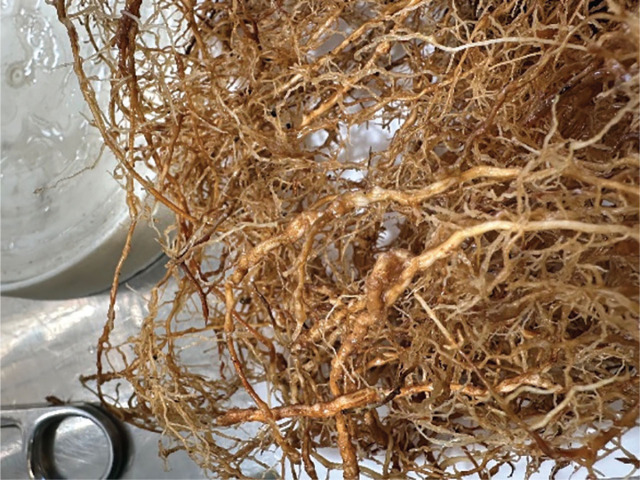 Figure 1
|
|
|
|
| |||
|---|---|---|---|---|---|---|
|
|
|
| ||||
|
|
|
|
|
|
| |
|
| 35,640 ± 425 b | 17 ± 371 a | 8,360 ± 222 b | 49,595 ± 869 bc | 5628 ± 122 a | 4,050 ± 373 c |
|
| 11,528 ± 141 a | 30 ± 38 a | 20,592 ± 627 bc | 485 ± 109 a | 6,409 ± 70 a | 113 ± 15 ab |
|
| 13,904 ± 119 ab | 11 ± 222 a | 0 ± 0 a | 3,094 ± 354 b | 1,935 ± 37 a | 81 ± 21 a |
|
| 59,576 ± 868 b | 24 ± 383 a | 15,004 ± 360 bc | 132 ± 14 a | 5,938 ± 98 a | 821 ± 126 b |
|
| 30,008 ± 362,3 ab | 24 ± 383 a | 9,856 ± 312 bc | 108 ± 14 a | 1,660 ± 22 a | 80 ± 13 a |
|
| 23,584 ± 213 ab | 13 ± 150 a | 3,344 ± 450 b | 3,864 ± 334 b | 1,311 ± 16 a | 71 ± 12 d |
|
| 799,128 ± 8,126 c | 561 ± 4,689 b | 149,547 ± 18,878 d | 32,048 ± 319 c | 77,391 ± 659 b | 445,350 ± 25,049 d |
|
|
|
| ||||
|---|---|---|---|---|---|---|
|
|
| |||||
|
|
|
|
|
|
| |
|
| 85,235 ± 118 b | 22,524 ± 492 a | 12,410 ± 214 c | 28 ± 4 b | 8 ± 2 a | 5 ± 9 cd |
|
| 12,013 ± 104 a | 36,945 ± 485 a | 20,705 ± 627 ab | 4 ± 5 a | 12 ± 16 a | 8 ± 3 d |
|
| 16,998 ± 105 ab | 13,375 ± 259 a | 81 ± 211 a | 6 ± 4 ab | 5 ± 9 a | 0 ± 0 a |
|
| 59,708 ± 869 b | 30,226 ± 480 a | 15,825 ± 357 bc | 20 ± 3 b | 10 ± 16 a | 6 ± 1 cd |
|
| 30,116 ± 362 ab | 11,614 ± 175 a | 9,926 ± 311 ab | 10 ± 1 ab | 4 ± 6 a | 4 ± 1 bcd |
|
| 27,448 ± 231 ab | 14,335 ± 166 a | 3,415 ± 45 b | 10 ± 8 ab | 5 ± 6 a | 1 ± 18 bc |
| Control | 831,176 ± 8,044 c | 638,805 ± 5,291 b | 594,897 ± 3,696 d | 277 ± 27 c | 213 ± 176 b | 238 ± 148 e |
|
|
| ||
|---|---|---|---|
|
| |||
|
|
|
| |
|
| S | S | MS |
|
| MS | S | S |
|
| S | MS | R |
|
| S | S | S |
|
| S | MS | MS |
|
| S | MS | MS |
| Control | S | S | S |
Peer Reviews
No public reviews on file for this paper yet. If you reviewed it on a platform where reviews are public (OpenReview, ICLR, NeurIPS, ICML), you can paste yours below so the community can read it here.
Videos
No videos yet. Explain this paper in a talk, walkthrough, or lecture? Add one.
Taxonomy
TopicsNematode management and characterization studies · Plant Parasitism and Resistance · Plant and animal studies
There is much information on the plant–parasitic nematodes associated with and impacting agricultural crops. However, the occurrence and impact of plant-parasitic nematodes on ornamental trees and shrubs have not been well defined. Considering the growth of the ornamental industry and the increasing demand for ornamental plants, this is an important knowledge gap (Howland and Quintanilla, 2023). The ornamental plant industry is valued at 70 billion worldwide ([Madhavan et al., 2021](#j_jofnem-2024-0024_ref_028)). The United States is one of the leading ornamental producers in the world. Oregon leads the United States in nursery production of shade trees (118 million) and is third in broadleaf evergreen shrubs (91 million) ([USDA NASS 2020](#j_jofnem-2024-0024_ref_045)). *Acer* spp. (maple) and *Quercus* spp. (oak) production alone is valued at 194 million and 141 million), while Thuja occidentalis (arborvitae) is the most valuable ornamental conifer ($155 million).
This study focused on five important ornamental shrubs and trees produced in the U.S.: Quercus alba (white oak), and Q. garryana (Oregon oak), Acer campestre (hedge maple), B. sempervirens, Rhododendron catawbiense (rhododendron), and T. occidentalis. The amount of information that is available on the host status of these species to plant-parasitic nematodes varies. No information is available on the nematode parasites associated with Q. alba and Q. garryana. Only limited information exists on plant-parasitic nematodes associated with A. campestris, with reports of this species being susceptible to Meloidogyne chitwoodi, Pratylenchus penetrans, and two species of Xiphinema (Goodey et al., 1965; Den Nijs et al., 2004; Arias et al., 2005; Barsi and De Luca, 2008). There have been many plant-parasitic nematodes reported to be associated with B. sempervirens, T. occidentalis, and R. catawbiense, including Meloidogyne spp., Pratylenchus spp., Tylenchorynchus spp., Paratrichodorus spp., Mesocriconema spp., and Xiphinema spp. (Goodey et al., 1965; Siddiqui et al., 1973; Benson and Barker, 1982; Bernard and Witte, 1987; Den Nijs et al., 2004).
The goal of this research was to further define the host status of important ornamental trees and shrubs to plant-parasitic nematodes. We focused on three plant-parasitic nematode species that have the potential to be found in nursery production fields: Meloidogyne hapla, Meloidogyne incognita, and Pratylenchus neglectus.
Materials and Methods
Meloidogyne incognita used in this trial was originally isolated from a grape vineyard in Parlier, CA, and M. hapla was originally isolated from a grape vineyard in Mattawa, WA. Both populations were obtained from single-egg masses and maintained on tomato (Solanum lycopersicon ‘Rutgers’). Species were confirmed by North Carolina Department of Agriculture and Consumer Services (Raleigh, NC) using molecular methods. Inoculum was obtained by destructively harvesting tomato plants and collecting eggs from washed roots by shaking roots in 0.05% NaOCl solution for 3 min. The egg solution was then poured over nested 250- and 25-μm sieves, with eggs retained on the 25-μm sieve. Eggs were collected in water and adjusted to achieve desired inoculation densities. Pratylenchus neglectus was originally collected from a wheat field in Pendleton, OR, and the population was derived from a single individual and identified to species (Yan et al., 2013). The culture was maintained on carrot discs as previously described (Moody et al., 1973). To extract the nematodes from the carrot discs, the discs were cut into small pieces, placed into a blender, covered with water, and blended. The slurry was then placed on a 25-μm sieve over water, and nematodes extracted for 12 to 48 hours. Collected P. neglectus were concentrated on a 28-μm sieve and adjusted to achieve the desired inoculation density.
Trees and shrubs were obtained as dormant, young plants from commercial nurseries in February and March 2023. Quercus alba, Q. garryana, and A. campestre were obtained as 15-cm tall, 1-year-old seedlings. Thuja occidentalis ‘Green Emerald’, B. sempervirens ‘Green Velvet’, and R. catawbiense ‘Boursault’ were obtained as 15–30 cm tall, 1- to 2-year-old rooted cuttings. Prior to planting, potting media was rinsed from roots, and then the plants were transplanted into 3-L pots containing a pasteurized 1:1 sand to Willamette loam mix.
Two experiments were conducted with each plant/nematode combination replicated five times; experiments were separated by time of inoculation but maintained in the same greenhouse. Plants were grown in a greenhouse with a 16 h: 8 h, light/dark photoperiod. Temperature in the greenhouse was set to 25°C during the day and 20°C at night. Plants were fertigated biweekly with a water-soluble fertilizer (20N-20P-20K delivering 200 ppm N; Jack's, Allentown, PA) for the duration of the experiment. Two weeks after transplanting, the plants were inoculated with plant-parasitic nematodes. The initial inoculation density for M. hapla and M. incognita was 3,000 eggs/pot, and for P. neglectus was 2,500 nematodes (mixed life stages)/pot. The inoculum was placed close to the root system of the plants in several holes at a depth of approximately 2.5 cm. Tomato ‘Rutgers’ was used as a positive control for Meloidogyne spp., and wheat ‘Scarlet’ was used as a positive control for P. neglectus. Pots were blocked by nematode species and then arranged in a completely randomized design.
After three months, the aboveground portion of the plants was removed, and the roots were rinsed free of soil under running tap water. Meloidogyne spp. eggs were extracted from roots by a modified bleach extraction method (Hussey and Barker, 1973). Approximately 10 g of roots were placed in a container, covered with a 10% NaOCl solution, and shaken for 3 min. The resulting egg suspension was poured through 75- and 25-μm sieves with eggs retained on the latter sieve. Eggs were rinsed into a tube. To extract P. neglectus, 10 g of roots were placed under intermittent mist (15 sec mist every 2 min) for five days (Zasada et al., 2015). All extracted nematodes were stored at 4ºC until counted. The remainder of the root system was placed in a 70ºC oven for three days and then weighed; the 10-g root subsamples used for extractions were treated the same. The root weights were combined to determine the dry weight of the entire root system. Second-stage juveniles (J2; for Meloidogyne spp.) or mixed-stage individuals (for P. neglectus) were extracted from soil with the Baermann-funnel method (Baermann, 1917) by placing 50 g of soil on a funnel for 5 days.
To obtain the M. incognita and M. hapla final nematode densities (Pf), the total number of J2 in the soil was extrapolated from the number of J2 extracted in 50 g of soil, and the total number of eggs in the entire root system was extrapolated from the number of eggs in 10 g of roots. To obtain the P. neglectus Pf, the total number of nematodes in the soil was extrapolated from the number of P. neglectus extracted in 50 g of soil, and the total mixed stages of P. neglectus in the entire root system was extrapolated from the number of mixed stages of P. neglectus extracted from 10 g of roots. The host efficiency was determined by the reproduction factor (RF) = Pf/Pi, which was calculated where Pf = final nematode population density and Pi = the initial nematode population density. A reproduction factor greater than one indicated an increase in nematode reproduction, whereas an RF factor of less than one indicated no increase in reproduction. Host suitability was categorized as good [susceptible] when Pf/Pi > 5.0, fair [moderately susceptible] if 5.0 ≥ Pf/Pi > 1, poor [moderately resistant] if 1 > Pf/Pi > 0, and non-host [resistant] when Pf/Pi = 0 (Zhang and Schmitt, 1994).
Data from the two trials was combined for analysis. Data homogeneity was assessed by the Kolmogorov–Smirnov test, and normality was assessed by the Bartlett test. The data was analyzed by the Kruskal-Wallis test followed by the post hoc test of Duncan's multiple range test (P ≤ 0.05). The statistical analyses were performed using R Studio software (R Studio Team, 2021).
Results
Across all of the plant-parasitic nematode species considered, the positive control plants (tomato for Meloidogyne spp. and wheat for P. neglectus) were significantly better hosts than any of the ornamental trees or shrubs (Tables 1, 2, and 3). Final nematode densities on the controls were > 44-fold higher than on the ornamental trees and shrubs, indicating that the control plants were excellent hosts for the nematodes considered in this study.
All the ornamental trees and shrubs supported the reproduction of M. incognita (Table 1). The number of M. incognita J2 recovered from soil was relatively consistent across trees and shrubs. However, final egg population densities recovered from roots varied among plants. Significantly fewer eggs were recovered from Q. alba, Q. garryana, and T. occidentalis compared to A. campestre, B. sempervirens, and R. catawbiense (Table 1). Acer campestre was the plant species with evident symptoms of M. incognita parasitism in the root system (Fig. 1). When soil and root population densities of M. incognita were combined, T. occidentalis was a poorer host for M. incognita compared to A. campestre and Q. alba based upon Pf and RF values (P < 0.05). The remaining ornamental trees and shrubs were intermediate in host status. There was no variation in densities of M. hapla recovered from soil (J2) or roots (eggs) among the ornamental tree and shrub species (Table 1). Based on Pf and RF values, all of the ornamental trees and shrubs were similar in their ability to host M. hapla (Table 2).
Meloidogyne incognita galls on Acer campestre roots.
The most variation in host status of the ornamental trees and shrubs was observed for P. neglectus. Similar densities of P. neglectus were recovered from soil for all of the trees and shrubs except for B. sempervirens where no nematodes were recovered (Table 1). Similarly, fewer P. neglectus were recovered from B. sempervirens roots, but at similar densities as for R. catawbiense, Q. garryana, and T. occidentalis. Acer campestre roots supported the highest densities of P. neglectus, at a level greater than 50 times the other ornamental trees and shrubs. Total Pf and RF values showed that B. sempervirens supported low P. neglectus densities, with an RF value significantly different than all of the other trees and shrubs (P < 0.05; Table 2).
Combined, the data allowed us to assign a susceptibility/host status designation to the ornamental trees and shrubs for all of the plant-parasitic nematodes (Table 3; Zhang and Schmitt, 1994). Only B. sempervirens was considered resistant to any of the nematodes, with almost no P. neglectus recovered from the plants at the end of the experiment.
Discussion
This experiment evaluated the host status of some of the leading ornamental shade trees and shrubs grown in the United States to plant-parasitic nematodes. All of the woody perennial trees and shrubs evaluated here would be considered hosts for M. incognita and M. hapla, with RF values > 1; however, the degree of host status varied among the plants considered. The host status of the woody ornamentals to P. neglectus was more variable. Buxus sempervirens was not a host for P. neglectus, with the other woody ornamentals ranging from poor to good hosts for the nematode. To our knowledge, the host status of the two oaks considered in this study, Q. alba and Q. garryana, for plant-parasitic nematodes has not previously been considered. This is the first report of these two oak species as hosts for M. incognita, M. hapla, and P. neglectus. Only a limited amount of information is available on the host status of A. campestre to plant-parasitic nematodes, and this is the first report of this maple species as a host for M. incognita, M. hapla, and P. neglectus. Buxus sempervirens has already been reported as a host for M. incognita and M. hapla, but the nonhost status of boxwood for P. neglectus is new information. The susceptible host status of T. occidentalis and R. catawbiense for P. neglectus is also new information.
Five of six tree and shrub species evaluated in this trial were susceptible to and good hosts for M. incognita. Four plant species (A. campestre, B. sempervirens, Q. garryana, and R. catawbiense) had higher RF values for M. incognita than for M. hapla and P. neglectus. These results confirm the broad host range and aggressive nature of M. incognita in ornamentals (Anwar and McKenry, 2010; Muhae-ud-Din et al., 2018). The mortality of trees in plantations with high population densities of M. incognita has been reported (Wang et al., 1975; Saucet et al., 2016; Khan, 2020; Tanimola and Ezeunara, 2021). The same susceptible host status was observed for M. incognita for two species of oak (Q. alba and Q. garryana), B. sempervirens, and R. catawbiense. It is interesting that both oak species supported higher M. incognita J2 densities in the soil but, in contrast, had lower egg densities in the root system. The expected correlation between the number of M. incognita J2 and females in the root did not occur. The timing of sampling may have affected nematode development. High M. incognita J2 densities may indicate that the females had died (Gabia et al., 2015). Previous literature reports M. incognita parasitizing Acer spp. (Riffle, 1963; Powell, 1971; Muhammad and Khan, 2022), Quercus spp. (Santamour, 1992; Chalanska and Labanowski, 2014), and B. sempervirens (Siddiqui et al., 1973; Bernard, 1980; Sharma and Rich, 2005; Brito et al., 2010; Eisenback, 2018). In our study, T. occidentalis was moderately susceptible to M. incognita and a poorer host for the nematode than other trees and shrubs. There were large differences in the frequency of nematode established within all gymnosperm and angiosperm families. In general, conifers are poor hosts for plant-parasitic nematodes, while there is a larger percentage of plant-parasitic nematodes that parasitize angiosperms (Eschen et al., 2015). Among the angiosperms, high population densities of plant-parasitic nematodes have been reported on Aceraceae, Fagaceae, and Rutaceae. Meloidogyne incognita also prefers to parasitize herbaceous dicotyledon species rather than lignified ones (Rathore and Ali, 2014).
Meloidogyne hapla is widely distributed, particularly in temperate regions and the cooler, higher-altitude areas of the tropics (Goodey et al., 1965). In the U.S., M. hapla is reported to infect over 550 crops and weeds (Taylor and Buhrer, 1958). Acer campestre, T. occidentalis, and Q. alba were all susceptible and good hosts for M. hapla. These plants have already been reported as hosts for M. hapla (Riffle, 1963; Powell, 1971; Sohrabi et al., 2015; Muhammad and Khan, 2022). Quercus garryana, B. sempervirens, and R. catawbiense were moderately susceptible to M. hapla. The results for Q. garryana and B. sempervirens align with the literature that reported these species were hosts for M. hapla (Bernard and Witte, 1987). However, our determination that R. catawbiense ‘Boursault’ is a host for M. hapla contradicts the findings of Bernard and Witte (1987) where the same variety was immune and not a host for M. hapla. This difference may be due to differences in the pathogenicity of the M. hapla populations used in the studies.
Pratylenchus spp. are frequently found in soil from woody ornamentals, often in high densities and associated with plant decline (Bernard, 1980). However, Pratylenchus sp. densities associated with plants normally decreased as trees matured (Manlay et al., 2000). Our data showed that Q. garryana and R. catawbiense were moderately susceptible to P. neglectus. This suggests that the nematode was able to penetrate the root, but some root factor reduced their development (Vicente and Acosta, 1987). Pratylenchus neglectus has been demonstrated to be harmful to Acer spp. production (Chalanska and Labanowski, 2014). Dieback of Rhododendron sp. was attributed to nematode parasites, including Pratylenchus (Baird et al., 2014). Quercus alba and T. occidentalis were susceptible to P. neglectus, although the literature reports that the Pratylenchus spp. are potentially more harmful to T. occidentalis than were P. crenatus, P. projectus, and P. nanus (Chalanska and Labanowski, 2014). Quercus spp. have also been reported as a host for P. neglectus, but not specifically the species considered here (Siddiqui et al., 1973; Chalanska and Labanowski, 2014; Mehrabian et al., 2020). Buxus sempervirens was resistant to P. neglectus. This result contradicts literature that reported Pratylenchus spp. parasitizing B. sempervirens (Taylor, 1944; Benson and Barker, 1982; Lehman, 1984; Lopez-Nicora et al., 2012; Eisenback, 2018). In these studies, B. sempervirens was a host for P. vulnus, P. penetrans, P. pratensis, and P. coffeae (Benson and Barker, 1982; Goodey et al., 1965). Differences in parasitism among the species may be attributed to genetic diversity among the different Pratylenchus spp. or genetic differences between the host species (Brown et al., 1980; Kayani and Mukhtar, 2018; Azizi, 2022).
Other Meloidogyne and Pratylenchus spp. have been reported to parasitize the ornamental trees and shrubs considered in this study. Acer campestre was a host for M. chitwoodi (Den Nijs et al., 2004). Rhododendron spp. were susceptible hosts for P. vulnus, P. crenatus, and M. pini (Eisenback et al., 1985; Siddiqui et al., 1973). Thuja occidentalis has already been reported to be parasitized by P. penetrans and M. incognita (Goodey, 1965; Wang et al., 1975). Quercus spp. was described as a host for M. partytula (Eisenback et al., 2015), and B. sempervirens is susceptible to many nematodes, including M. arenaria, P. penetrans, P. vulnus, P. pratensis, P. coffee, M. thanesi, M. incognita, M. fallax, and M. chitwoodi (Siddiqui et al., 1973; Benson, 1985; Den Nijs et al., 2004).
This study focused on three plant-parasitic nematodes that impact the ornamental plant industry, but there are many other plant-parasitic nematodes with unknown economic and damage potential in this field. Further research on infection behavior, overwintering survival, and nematode epidemiology is needed to better manage nematodes and meet the growing demand for ornamental plants. By controlling these nematodes, we can prevent their spread through exports and minimize global yield loss.
The reference list from the paper itself. Each links out to its DOI / PubMed record.
- 1Anwar S. A.Mc Kenry M. V.2010 Incidence and reproduction of Meloidogyne incognita on vegetable crop genotypes Pakistan Journal of Zoology 42135141
- 2Arias M.Robertson L.Garcia-Alvarez A.Arcos S. C.Escuer M.Sanz R.Mansilla J. P.2005 Bursaphelenchus fungivorus (Nematoda: Aphelenchida) associated with Orthotomicus erosus (Coleoptera: Scolitydae) in Spain Forest Pathology 35375383
- 3Azizi K.2022 Host preference and population level of Pratylenchoides ritteri on six legume crops University of Yasouj Plant Pathology Science 113647
- 4Baermann G.1917 Eine einfache methode zur auffindung von anklostomum (Nematoden) larven in erdproben Tijdschr Diergeneeskd 57131137
- 5Baird R.Wood-Jones A.Varco J.Watson C.Starrett W.Taylor G.Johnson K.2014 Rhododendron decline in the Great Smoky Mountains and surrounding areas: Intensive site study of biotic and abiotic parameters associated with the decline Southeastern Naturalist 13125
- 6Barsi L.Luca F.2008 Morphological and molecular characterization of two putative Xiphinema americanum-group species, X. parasimile and X. simile (Nematoda: Dorylaimida) from Serbia Nematology 101525
- 7Benson D. M.Barker K. R.1982 Susceptibility of Japanese boxwood, dwarf gardenia, Compacta (Japanese) holly, Spiny Greek and Blue Rug junipers, and nandina to four nematode species Plant Disease 6611761179
- 8Bernard E. C.1980 Identification, distribution, and plant associations of plant-parasitic nematodes in Tennessee University of Tennessee Agricultural Experiment Station https://trace.tennessee.edu/utk_agbulletin/408