An Unusual Occurrence of Tamoxifen-Induced Maculopathy in a Young Woman With Hormone Receptor-Positive Post-mastectomy Breast Carcinoma
Deeksha Jawale, Priyanka Bhoj, Amitabh Pandagle, Ankit Sharma, Asmita Kulshrestha

TL;DR
A young woman developed vision problems after long-term tamoxifen use for breast cancer, highlighting the need for eye monitoring during treatment.
Contribution
Reports a rare case of tamoxifen-induced maculopathy in a young breast cancer patient.
Findings
Tamoxifen use over three years led to bilateral maculopathy in a premenopausal patient.
Ophthalmic evaluation is crucial for early detection of vision-threatening side effects.
Tamoxifen remains effective in reducing breast cancer recurrence despite rare ocular risks.
Abstract
Tamoxifen, a selective estrogen receptor modulator (SERM), is a hormone therapy used for the treatment of estrogen receptor (ER)-positive breast cancer. We report the case of a 29-year-old premenopausal lady with a history of infertility treatments who was diagnosed with ER-positive infiltrating ductal carcinoma (IDC) of the breast. Following a modified radical mastectomy (MRM) and adjuvant systemic chemotherapy, tamoxifen was recommended as part of her adjuvant hormonal therapy. After over three years of tamoxifen use, the patient complained of gradual blurring of vision in both eyes. Ophthalmological examinations indicated bilateral maculopathy, a rare but alarming ocular side effect attributed to tamoxifen use. This case report emphasizes the significance of ophthalmic tests in patients on tamoxifen therapy to monitor any potential ocular side effects. While tamoxifen has shown…
Genes, proteins, chemicals, diseases, species, mutations and cell lines named across the full text — each resolved to its canonical identifier and authoritative record.
Click any figure to enlarge with its caption.
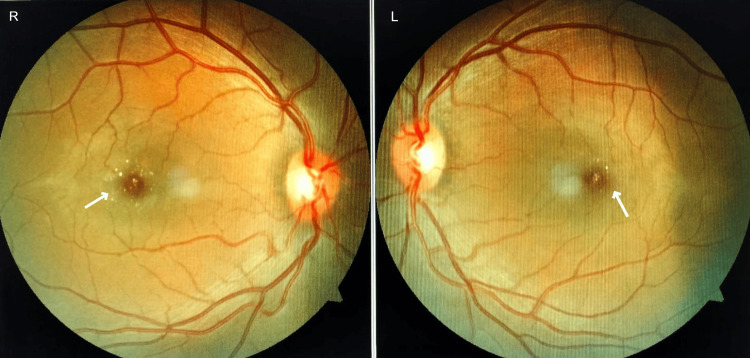 Figure 1
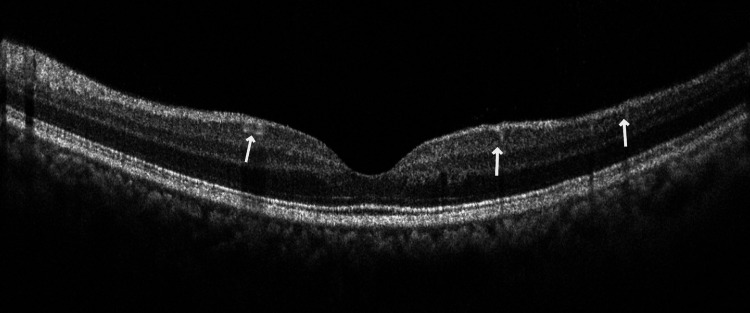 Figure 2
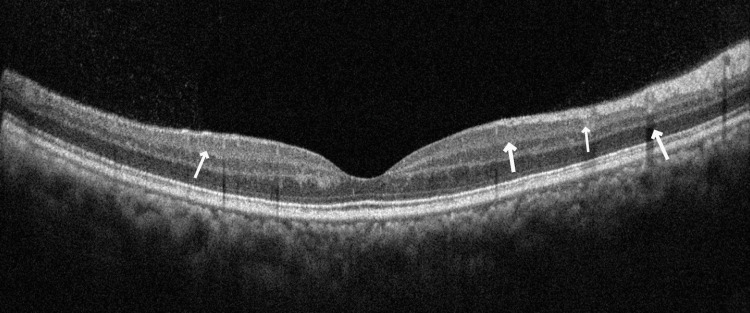 Figure 3
| Right Eye | Left Eye | |
| Vision with glasses | 6/18 | 6/18 |
| Color vision | Normal | Normal |
| Conjunctiva | Normal | Normal |
| Anterior chamber | Normal depth | Normal depth |
| Cornea | Bright | Bright |
| Pupil | Normal size, reacting to light | Normal size, reacting to light |
| Lens | Clear | Clear |
| Fundus | Disc normal | Disc normal |
| Macula | Crystalline maculopathy | Crystalline maculopathy |
Peer Reviews
No public reviews on file for this paper yet. If you reviewed it on a platform where reviews are public (OpenReview, ICLR, NeurIPS, ICML), you can paste yours below so the community can read it here.
Videos
No videos yet. Explain this paper in a talk, walkthrough, or lecture? Add one.
Taxonomy
TopicsDrug-Induced Ocular Toxicity · Cancer Treatment and Pharmacology · Retinoids in leukemia and cellular processes
Introduction
Tamoxifen is a selective estrogen receptor modulator (SERM) used for the treatment of breast cancer. In 1962, it was initially developed to be used as a contraceptive. However, in the 1980s, it underwent a transformative journey when clinical trials revealed its efficacy in treating estrogen receptor (ER)-positive breast cancer [1]. Tamoxifen is now a cornerstone of adjuvant hormonal therapy for women with breast cancer. It is often prescribed for a period of five to 10 years.
Tamoxifen has demonstrated proven benefit in prolonging disease-free survival among breast cancer patients. It also reduces recurrence in ER-positive and node-negative (stages I and II) breast cancers across all age groups [2]. Additionally, tamoxifen use has been approved as a chemo-preventive agent in women who have a higher risk of developing invasive and non-invasive breast cancer (factors increasing risk are strong family history, breast cancer gene (BRCA) mutation, atypical hyperplasia in breast tissue and high-density mammogram) [3].
We present a case of a young woman on tamoxifen who developed visual side effects to show the importance of conducting an ophthalmic evaluation before starting tamoxifen therapy and regular monitoring for any possible ocular effects.
Case presentation
A 29-year-old premenopausal patient presented with complaints of a painless lump in the right breast. She was nulliparous and had taken infertility treatments with clomiphene citrate three years back. A tru-cut biopsy of the lump was suggestive of high-grade intraductal carcinoma, following which the patient underwent a right modified radical mastectomy (MRM) along with right axillary lymph node dissection.
Post-operative histopathological examination revealed a 2x1.8x1.3 cubic cm tumor located in the upper outer quadrant. All 13 dissected axillary lymph nodes were negative for malignancy. Margins remained free, and no lymphovascular and perineural invasion were identified, with the skin and nipple-areolar complex also being free of the tumor. Her diagnosis was then confirmed as right infiltrating ductal carcinoma, with Nottingham's histological score being 7, suggesting moderate differentiation. The tumor was grade three on the modified Bloom-Richardson scale and staged as IIA (pT2N0Mx). The immunohistochemistry molecular profile was ER-positive (Allred score 3/8), progesterone receptor, and Her2/neu negative.
The general examination was unremarkable. On local examination, the right chest wall and axilla post-operative scar sites were healthy. No abnormality was detected in the left breast and axilla. All routine blood investigations were found to be within normal limits. Chest X-ray and ultrasonography of the abdomen and pelvis were unremarkable for any distant metastasis.
Following surgery, she received six cycles of adjuvant systemic chemotherapy with cyclophosphamide (600 mg/m^2^), Adriamycin (60 mg/m^2^), and 5-fluorouracil (600 mg/m^2^) every three weeks. She then received external beam radiotherapy (EBRT) using a breast board for immobilization with arms above the head and six megavoltage photon beam energy on a linear accelerator (LINAC) with three-dimensional conformal radiation therapy (3D-CRT) technique. The total dose given was 40 Gray in 15 fractions to the right chest wall and supraclavicular fossa over 23 days in accordance with the hypofractionation dosage protocol. The course of therapy was uneventful.
Given her ER-positive status, she was started on adjuvant hormonal therapy with tamoxifen 20 mg to be taken daily for five years. The patient adhered to scheduled follow-ups. About three years and four months into tamoxifen therapy, she reported blurred vision in both eyes for two months. She had previously worn prescription glasses with power +7 in her left eye and +6 in her right eye. An eye examination with fundoscopy and optical coherence tomography (OCT) identified bilateral ocular maculopathy (Figures 1-3). The findings have been summarized in Table 1.
Fundoscopy imageFundoscopy of the right (R) and left (L) eyes shows refractile crystalline deposits with pigment changes in the macula. The right eye has more deposits than the left eye. Turning off the temporal vessels nasally is seen.
Optical coherence tomography - left eyeThe left eye optical coherence tomography image shows hyper-reflectivity in the inner layer of the retina. They are likely crystalline deposits and have caused backshadowing. Macular edema is absent.
Optical coherence tomography - right eyeThe right eye optical coherence tomography image shows more hyper-reflective areas in the retina than the left eye. Backshadowing due to crystalline retinal deposits is present, with no cystoid macular edema.
Tamoxifen-induced maculopathy was suspected, with the patient having received a total dose of 24.4 grams. It was immediately discontinued, and she was prescribed oral letrozole 2.5 mg daily for the remaining duration of hormonal therapy. A positron emission tomography (PET) scan showed no evidence of recurrence or metastasis. A year later, follow-up revealed no progression in visual complaints but no significant improvement in blurred vision either.
Discussion
The Food and Drug Administration has approved tamoxifen for treating hormone receptor-positive, invasive, and non-invasive breast cancer post-completion of primary therapy with surgery and/or radiation to reduce the risk of recurrence and improve survival rates [4].
Tamoxifen is cardioprotective and lowers the risks of coronary artery disease, myocardial infarction, stroke, arrhythmia, pericarditis, and valvular heart disease due to its cholesterol-lowering effect [5]. A raised risk of venous thromboembolism has been reported, although the absolute risk remains low [6]. Taking tamoxifen reduces the risk of breast cancer mortality by one-third in the first 10 years following diagnosis [7]. For most, this benefit outweighs the increased risk of developing endometrial cancer [8].
A higher occurrence of cataracts has been noted in women with five or more years of tamoxifen use [9]. Incidences of ocular toxicity, even on low doses of tamoxifen, have been documented, including crystalline retinal deposits, cystoid macular edema, foveal cavitations, decreased visual acuity, and keratopathy [10,11]. Patients using high doses have experienced extensive retinal lesions, macular edema, and significant visual impairment [12]. The use of high doses of tamoxifen for breast cancer has since been discontinued.
Our patient had taken infertility treatment. While in-vitro fertilization was linked to retinal detachment, ovulation induction treatments by themselves have not been found to be significantly associated with long-term ocular adverse effects, according to a large study [13]. With an increasing incidence of breast cancer worldwide, including in women under 50 years of age, the use of tamoxifen is bound to rise [14]. OCT screenings have been recommended every six months for patients who have been on tamoxifen therapy for two years or more [15].
The most common causes of damage to the macula include age-related macular degeneration and diabetic retinopathy [16]. Symptoms of maculopathy include edema, decreased visual acuity, distorted vision, poor color vision, hemorrhages, light sensitivity, and difficulty seeing in low light levels [17,18].
Conclusions
Although the risk of tamoxifen-induced eye toxicity is low, and maculopathy is even rarer, early detection and treatment can help prevent serious vision problems. Given the lack of research on tamoxifen-induced maculopathy, especially in younger patients, this case report highlights this relatively rare complication. It emphasizes the need for patient education and regular eye check-ups.
It is important to inform patients about the possible ocular side effects of tamoxifen and encourage them to report any vision changes as soon as they notice them. By working together, patients and healthcare providers can make sure that the benefits of tamoxifen outweigh the risks, leading to the best outcomes for women taking this medication.
The reference list from the paper itself. Each links out to its DOI / PubMed record.
- 1Tamoxifen from failed contraceptive pill to best-selling breast cancer medicine: a case-study in pharmaceutical innovation Front Pharmacol Quirke VM 620820172895522610.3389/fphar.2017.00620 PMC 5600945 · doi ↗ · pubmed ↗
- 2A randomized clinical trial evaluating tamoxifen in the treatment of patients with node-negative breast cancer who have estrogen-receptor-positive tumors N Engl J Med Fisher B Costantino J Redmond C 4794843201989264453210.1056/NEJM 198902233200802 · doi ↗ · pubmed ↗
- 3Tamoxifen for women at high risk of breast cancer Breast Cancer (Dove Med Press) Nazarali SA Narod SA 2936620142464876710.2147/BCTT.S 43763 PMC 3933348 · doi ↗ · pubmed ↗
- 4Tamoxifen Stat Pearls [Internet] Farrar MC Jacobs TF Treasure Island (FL)Stat Pearls Publishing 2023 https://www.ncbi.nlm.nih.gov/books/NBK 532905/
- 5Endocrine therapy use and cardiovascular risk in postmenopausal breast cancer survivors Heart Matthews AA Peacock Hinton S Stanway S Lyon AR Smeeth L Lund JL Bhaskaran K 1327133510720213317711710.1136/heartjnl-2020-317510 PMC 8327412 · doi ↗ · pubmed ↗
- 6Risk of ischemic stroke with tamoxifen treatment for breast cancer: a meta-analysis Neurology Bushnell CD Goldstein LB 123012336320041547754310.1212/01.wnl.0000140491.54664.50 · doi ↗ · pubmed ↗
- 7a T Tom: long-term effects of continuing adjuvant tamoxifen to 10 years versus stopping at 5 years in 6,953 women with early breast cancer J Clin Oncol Gray RG Rea D Handley K 5312013
- 8Tamoxifen treatment for breast cancer and risk of endometrial cancer: a case-control study J Natl Cancer Inst Swerdlow AJ Jones ME 3753849720051574157410.1093/jnci/dji 057 · doi ↗ · pubmed ↗