Extending limits: the longest recorded duodenojejunal bypass implant
Jan Kral, Pavel Drastich, Manoel P. Galvão, Katerina Knotkova, Martin Haluzik, Evzen Machytka

Abstract
Genes, proteins, chemicals, diseases, species, mutations and cell lines named across the full text — each resolved to its canonical identifier and authoritative record.
Click any figure to enlarge with its caption.
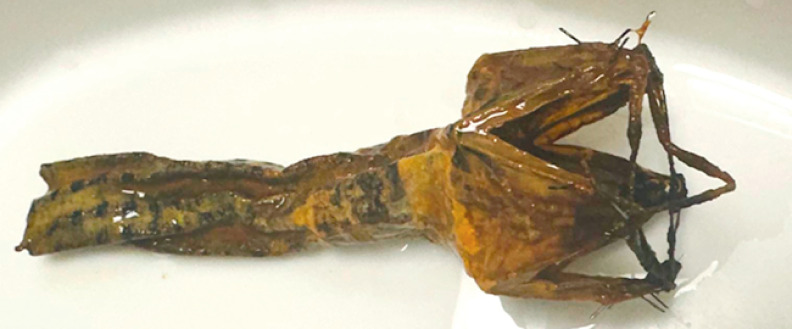 Fig. 1
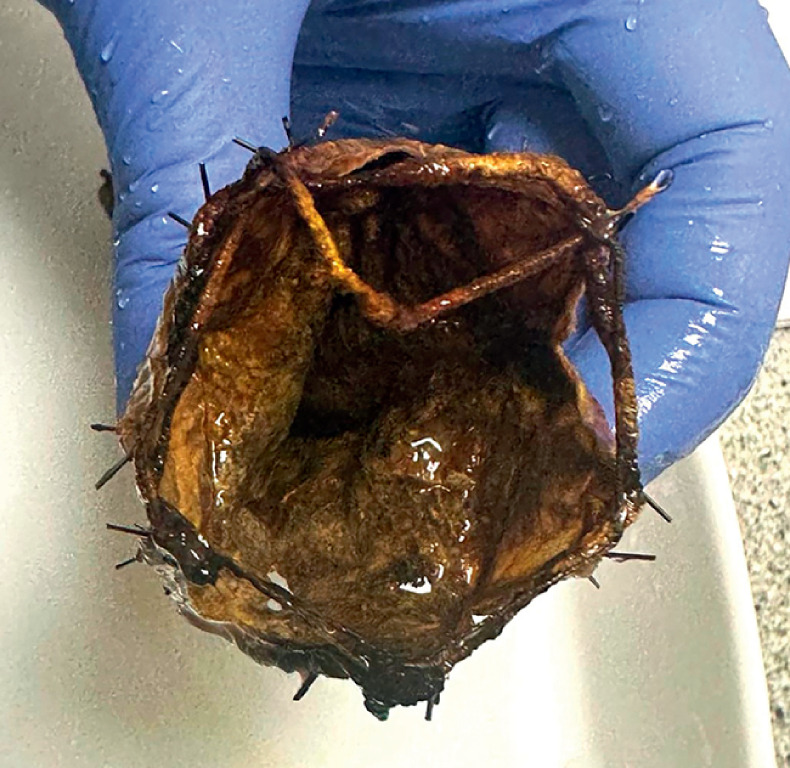 Fig. 2
Peer Reviews
No public reviews on file for this paper yet. If you reviewed it on a platform where reviews are public (OpenReview, ICLR, NeurIPS, ICML), you can paste yours below so the community can read it here.
Videos
No videos yet. Explain this paper in a talk, walkthrough, or lecture? Add one.
Taxonomy
TopicsBariatric Surgery and Outcomes · Diabetes Treatment and Management · Cardiac and Coronary Surgery Techniques
A 59-year-old patient with type 2 diabetes, dyslipidemia, and hypertension underwent the placement of a duodenojejunal bypass (EndoBarrier; GI Dynamics, Boston, Massachusetts, USA). At the time of the endoscopy procedure, the patient weighed 110 kg and was 172 cm tall, resulting in a body mass index (BMI) of 37.3 kg/m ^2^ . The procedure, performed under general anesthesia, concluded without complications. Postoperatively, the patient was prescribed 40 mg of proton pump inhibitors (PPIs) twice daily and advised to avoid fiber. Early side effects included daily nausea (five to eight episodes), and epigastric pain was managed with antiemetics and ongoing PPI use. One month later, an endoscopy confirmed the duodenojejunal bypass was correctly positioned but revealed ulcers at the deviceʼs sharp edges. Despite initial challenges, symptoms improved significantly within three weeks. After 12 months, the patient had lost 30 kg, reducing their (BMI) to 27.3 kg/m ^2^ . The patient chose to keep the bypass despite the conclusion of the study and against medical advice about potential risks.
Over the years, the patient maintained a stable weight of 80 kg and glycemic control with an HbA1c of 41 mmol/mol, managed on 20 mg of PPI and 1000 mg of metformin daily.
Eight years later the diagnostic gastroscopy revealed a torn upper part of the duodenojejunal bypass and a reduced sleeve with the surrounding mucosa irritated. This prompted a planned extraction procedure under general anesthesia, which proceeded without major complications. Following the removal of the duodenojejunal bypass, only minor tears in the esophagus and small ulcers were detected. The patient was discharged the next day without complications and remained stable at a follow-up 1 month later ( Video 1 ).
Extending limits: the longest recorded duodenojejunal bypass implant shows improved body mass index and glycated hemoglobin after 96 months.Video 1
Despite various challenges noted in studies, the duodenojejunal bypass demonstrates significant potential for weight loss and improved management of type 2 diabetes. Our case study features the longest-known implanted duodenojejunal bypass, which maintained its effectiveness even after the upper part was damaged and the sleeve shrank from the original 60 cm to 9.6 cm ( Fig. 1 , Fig. 2 ). This likely contributed to sustained weight management and the remission of type 2 diabetes. Although the device removal can be challenging, the procedure in this instance proceeded smoothly. Nevertheless, technical improvements are essential to reduce these complications and enhance patient safety 1 2 3 .
Extracted device I.
Extracted device II.
Endoscopy_UCTN_Code_TTT_1AO_2AD
The reference list from the paper itself. Each links out to its DOI / PubMed record.
- 1Kral J Benes M Lanska V Long-term results of duodeno-jejunal bypass in the treatment of obesity and type 2 diabetes Obes Surg 2024341407141410.1007/s 11695-023-06979-438436919 PMC 11031453 · doi ↗ · pubmed ↗
- 2Ruban A Miras AD Glaysher MA Duodenal-jejunal bypass liner for the management of type 2 diabetes mellitus and obesity: A multicenter randomized controlled trial Ann Surg 202227544044710.1097/SLA.000000000000498034647708 PMC 8820769 · doi ↗ · pubmed ↗
- 3Forner PM Ramacciotti T Farey JE Safety and effectiveness of an endoscopically placed duodenal-jejunal bypass device (Endo Barrier): Outcomes in 114 patients Obes Surg 2017273306331310.1007/s 11695-017-2939-429018990 · doi ↗ · pubmed ↗