invMap: a sensitive mapping tool for long noisy reads with inversion structural variants
Ze-Gang Wei, Peng-Yu Bu, Xiao-Dan Zhang, Fei Liu, Yu Qian, Fang-Xiang Wu

TL;DR
invMap is a new tool for accurately mapping long, noisy DNA sequences to detect inversion structural variants, which are hard to identify with existing methods.
Contribution
invMap introduces a novel mapping algorithm that improves inversion detection accuracy in long-read sequencing data.
Findings
invMap outperforms existing methods in locating aligned regions and calling inversion structural variants.
Testing on simulated and real human genome data shows invMap detects more inversion variants than competing tools.
The method is robust across different genomes and sequencing coverages.
Abstract
Longer reads produced by PacBio or Oxford Nanopore sequencers could more frequently span the breakpoints of structural variations (SVs) than shorter reads. Therefore, existing long-read mapping methods often generate wrong alignments and variant calls. Compared to deletions and insertions, inversion events are more difficult to be detected since the anchors in inversion regions are nonlinear to those in SV-free regions. To address this issue, this study presents a novel long-read mapping algorithm (named as invMap). For each long noisy read, invMap first locates the aligned region with a specifically designed scoring method for chaining, then checks the remaining anchors in the aligned region to discover potential inversions. We benchmark invMap on simulated datasets across different genomes and sequencing coverages, experimental results demonstrate that invMap is more accurate to…
Genes, proteins, chemicals, diseases, species, mutations and cell lines named across the full text — each resolved to its canonical identifier and authoritative record.
Click any figure to enlarge with its caption.
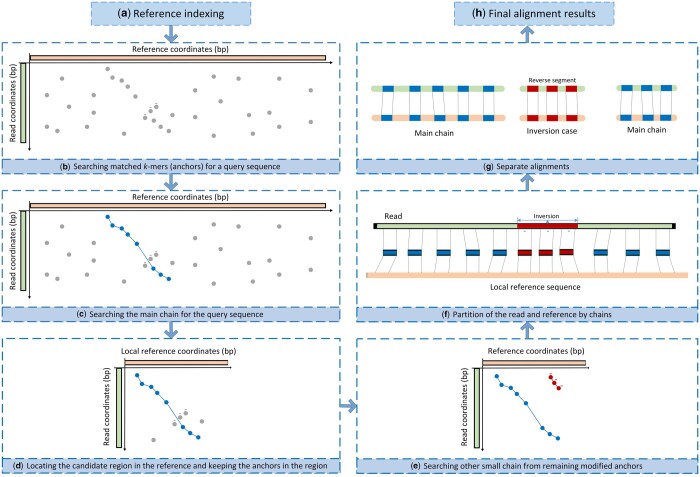 Figure 1
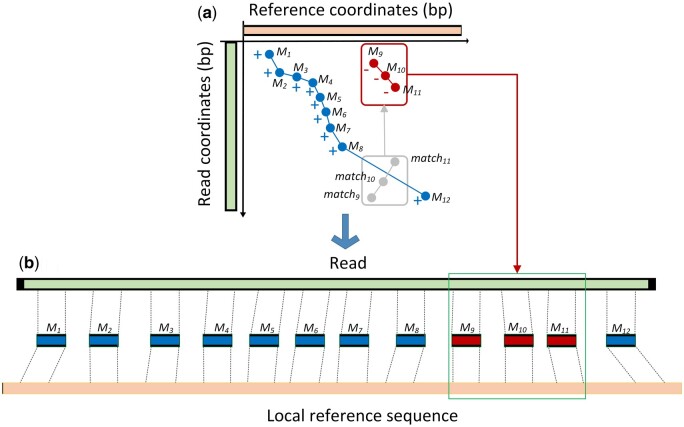 Figure 2
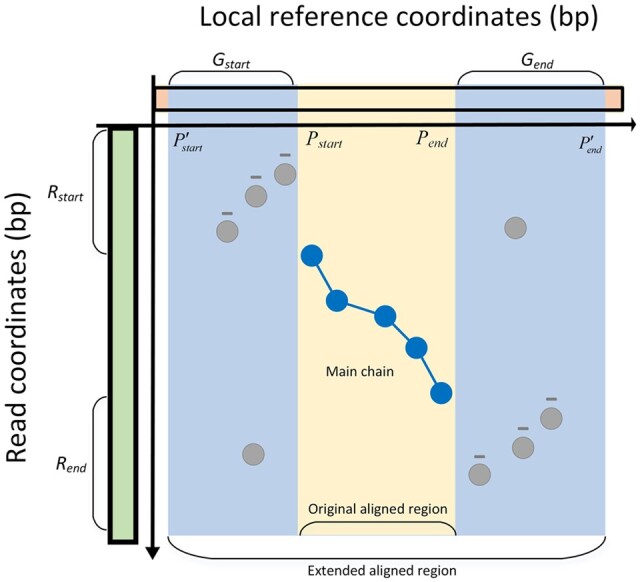 Figure 3
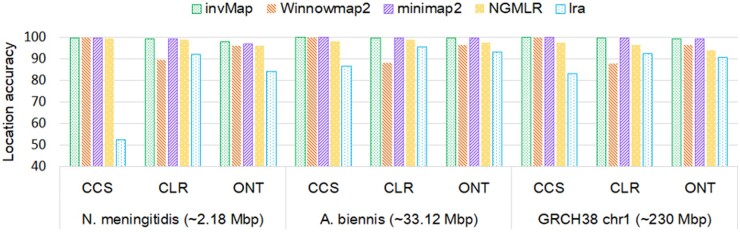 Figure 4
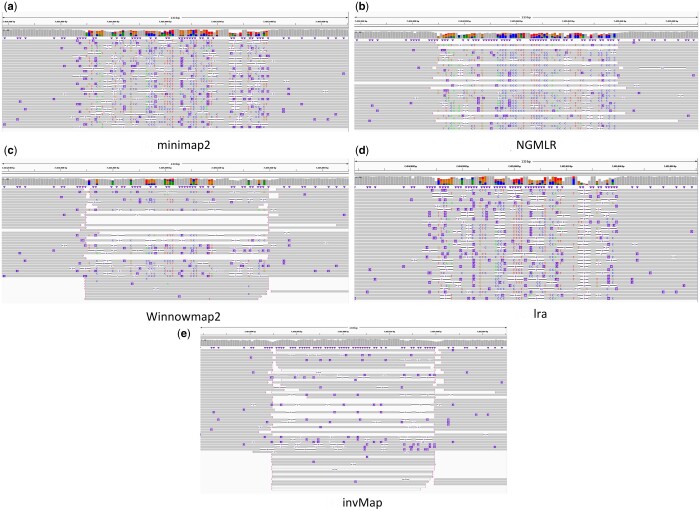 Figure 5
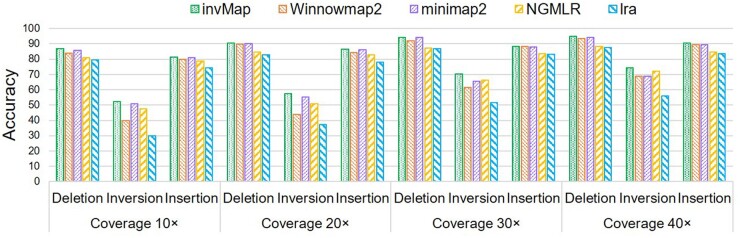 Figure 6
Peer Reviews
No public reviews on file for this paper yet. If you reviewed it on a platform where reviews are public (OpenReview, ICLR, NeurIPS, ICML), you can paste yours below so the community can read it here.
Videos
No videos yet. Explain this paper in a talk, walkthrough, or lecture? Add one.
Taxonomy
TopicsDiverse Scientific and Economic Studies · Scientific Research and Philosophical Inquiry