Using convolutional neural networks to count parrot nest‐entrances on photographs from the largest known colony of Psittaciformes
Gabriel L. Zanellato, Gabriel A. Pagnossin, Mauricio Failla, Juan F. Masello

TL;DR
This study uses AI to count parrot nests in the world's largest parrot colony, showing how human activity has changed their nesting patterns.
Contribution
Applying CNNs to count parrot nest entrances and detect human-induced distribution changes in a large Psittaciformes colony.
Findings
U-Net CNN achieved the best performance with a mean absolute error of 2.7 nest-entrances.
Nest-entrance distribution has changed significantly due to human-induced disturbance over 20 years.
The El Cóndor colony hosts 71% of the global Burrowing Parrot population, making it critical for species conservation.
Abstract
Counting animal populations is fundamental to understand ecological processes. Counts make it possible to estimate the size of an animal population at specific points in time, which is essential information for understanding demographic change. However, in the case of large populations, counts are time‐consuming, particularly if carried out manually. Here, we took advantage of convolutional neural networks (CNN) to count the total number of nest‐entrances in 222 photographs covering the largest known Psittaciformes (Aves) colony in the world. We conducted our study at the largest Burrowing Parrot Cyanoliseus patagonus colony, located on a cliff facing the Atlantic Ocean in the vicinity of El Cóndor village, in north‐eastern Patagonia, Argentina. We also aimed to investigate the distribution of nest‐entrances along the cliff with the colony. For this, we used three CNN architectures,…
Genes, proteins, chemicals, diseases, species, mutations and cell lines named across the full text — each resolved to its canonical identifier and authoritative record.
Click any figure to enlarge with its caption.
 Figure 1
 Figure 2
 Figure 3
 Figure 4
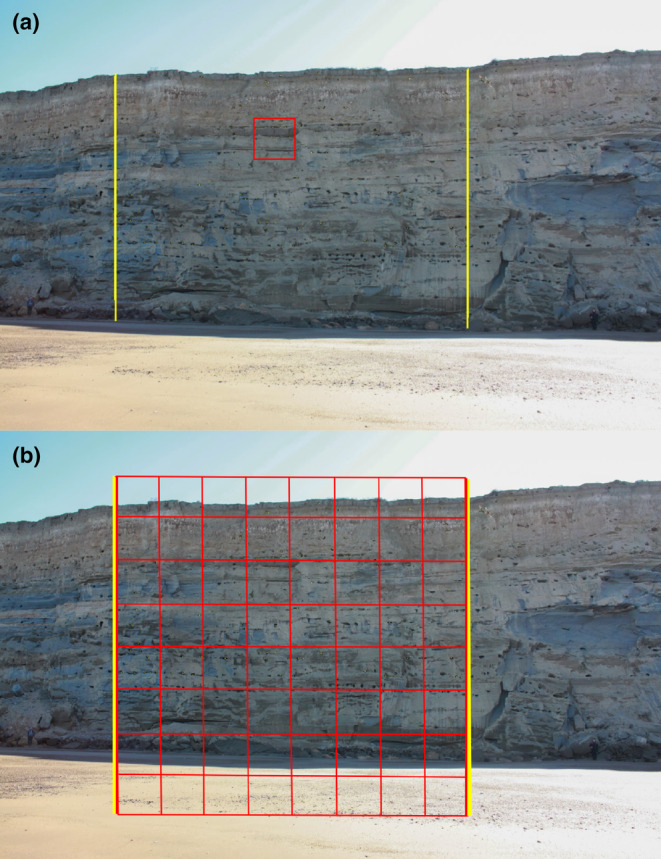 Figure 5
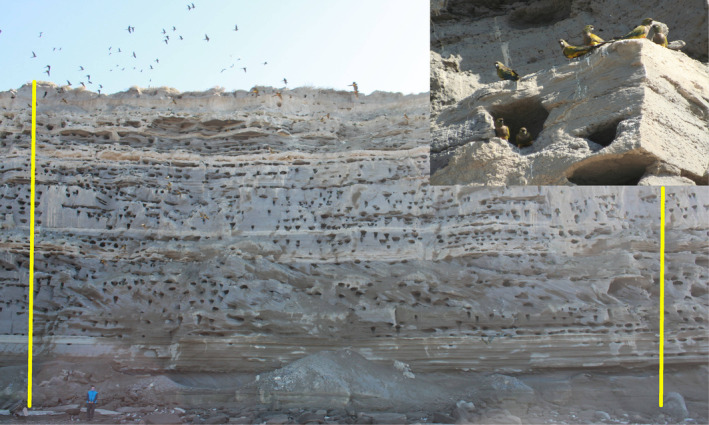 Figure 6
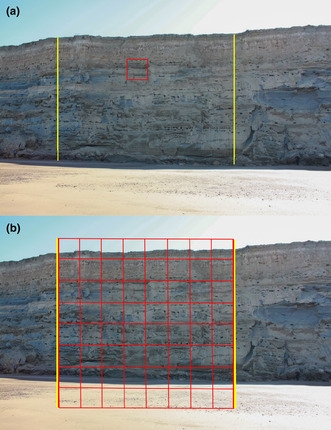 Figure 7
Peer Reviews
No public reviews on file for this paper yet. If you reviewed it on a platform where reviews are public (OpenReview, ICLR, NeurIPS, ICML), you can paste yours below so the community can read it here.
Videos
No videos yet. Explain this paper in a talk, walkthrough, or lecture? Add one.
Taxonomy
TopicsWildlife Conservation and Criminology Analyses · Wildlife Ecology and Conservation · Rabies epidemiology and control