An Epidemiological Assessment of SARS-CoV-2 in the Sewage System of a Higher Education Institution
Carmem Cícera Maria da Silva, Carolina Rangel de Lima Santos, Eliomar Pivante Céleri, David Salles, Julia Miranda Fardin, Kamily Fagundes Pussi, Daniel Claudio de Oliveira Gomes, Vinicius de Oliveira Ribeiro, Leila Cristina Konrad-Moraes, Herintha Coeto Neitzke-Abreu

TL;DR
This study monitored SARS-CoV-2 in sewage at a university campus to assess its potential as a low-cost tool for tracking outbreaks.
Contribution
The study demonstrates sewage monitoring as a cost-effective alert system for SARS-CoV-2 in post-pandemic settings.
Findings
SARS-CoV-2 RNA was detected in two out of 15 sewage samples collected over 66 days.
The pH of the sewage samples ranged from 6.35 to 8.17, and the samples were cloudy with impurities.
An increase in reported cases in the state coincided with the collection period of the positive samples.
Abstract
Background: The World Health Organization declared the end of the COVID-19 pandemic in May 2023, three years after the adoption of global emergency measures. Monitoring of SARS-CoV-2 in sewage underscores its importance due to its effectiveness and cost-effectiveness, highlighting the need to prioritize research on water resources and sanitation. Objectives: The aim of this study was to conduct an epidemiological assessment of SARS-CoV-2 in the sewage system of a higher education institution located in Vitória Espírito Santo State, Maruípe campus. Methods: Over a period of 66 days, from February 6 to April 12, 2023, 15 samples were collected. Each sample consisted of 1 L, collected in 1 hour, with 250 mL collected every 15 minutes. The samples were characterized by assessing their appearance, and pH was measured using a Horiba U-50 multiparameter probe. The extracted RNA was subjected…
Genes, proteins, chemicals, diseases, species, mutations and cell lines named across the full text — each resolved to its canonical identifier and authoritative record.
Click any figure to enlarge with its caption.
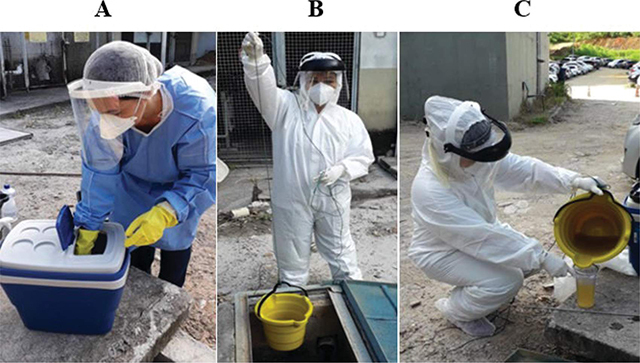 Figure 1
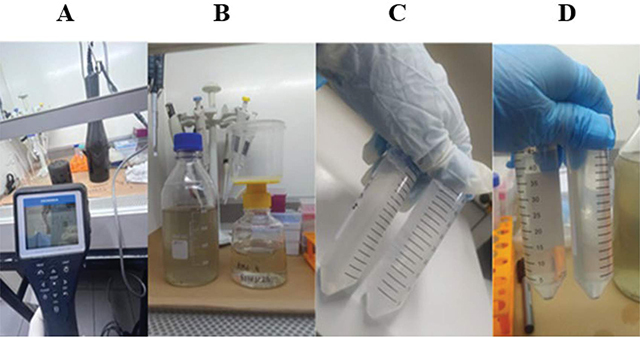 Figure 2
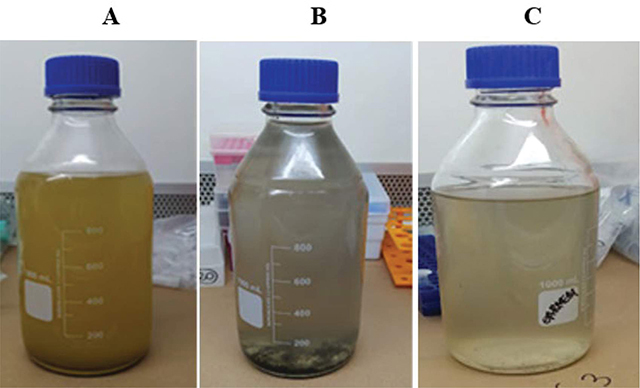 Figure 3
Peer Reviews
No public reviews on file for this paper yet. If you reviewed it on a platform where reviews are public (OpenReview, ICLR, NeurIPS, ICML), you can paste yours below so the community can read it here.
Videos
No videos yet. Explain this paper in a talk, walkthrough, or lecture? Add one.
Taxonomy
TopicsSARS-CoV-2 detection and testing · COVID-19 diagnosis using AI · SARS-CoV-2 and COVID-19 Research