Novel de novo SPAST mutation in a Han Chinese SPG4 patient: a case report
Yu-Han Xu, Bao-Yu Yuan, Jia-Le Ji, Di Wu, Hong Zhou, Yi-Jing Guo

TL;DR
A new mutation in the SPAST gene was found in a Han Chinese patient with spastic paraplegia type 4, suggesting it arose spontaneously and contributes to the disease's genetic diversity.
Contribution
A novel de novo SPAST mutation is reported, expanding the known genetic spectrum of SPG4 and highlighting its potential for late-onset disease.
Findings
A de novo frameshift variant, c.1545dupA, was identified in the SPAST gene of a Han Chinese SPG4 patient.
The mutation was absent in the patient's asymptomatic parents, confirming its de novo origin.
The case demonstrates that de novo SPAST mutations can present as late-onset pure SPG4 without family history.
Abstract
Spastic paraplegia type 4 (SPG4), the predominant form of Autosomal Dominant Hereditary spastic paraplegia (AD-HSP), is characterized by variants in the SPAST gene. This study reports a unique case of a late-onset SPG4 in a Han Chinese male, manifesting primarily as gait disturbances from lower extremity spasticity. Uncovered through whole-genome sequencing, a previously undocumented frameshift variant, c.1545dupA in exon 14 of the SPAST gene, was identified. Notably, this variant was absent in asymptomatic parents with confirmed paternity and maternity status, suggesting a de novo variant occurrence. This discovery emphasizes the potential of de novo variants to exhibit a late-onset pure pattern, extending the SPG4 variant spectrum, and consideration of such variants should be given in HSP patients with a negative family history.
Genes, proteins, chemicals, diseases, species, mutations and cell lines named across the full text — each resolved to its canonical identifier and authoritative record.
Click any figure to enlarge with its caption.
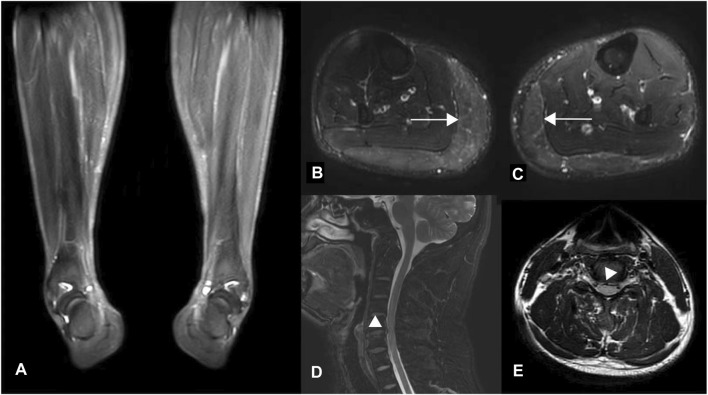 Figure 1
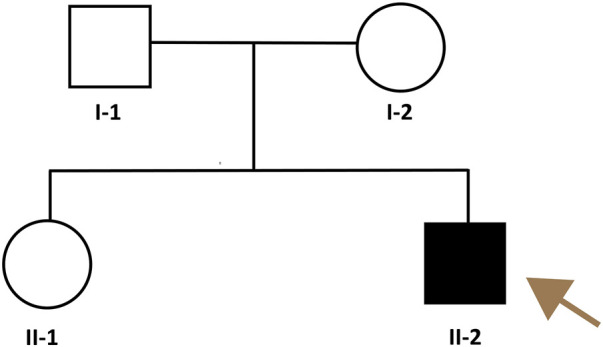 Figure 2
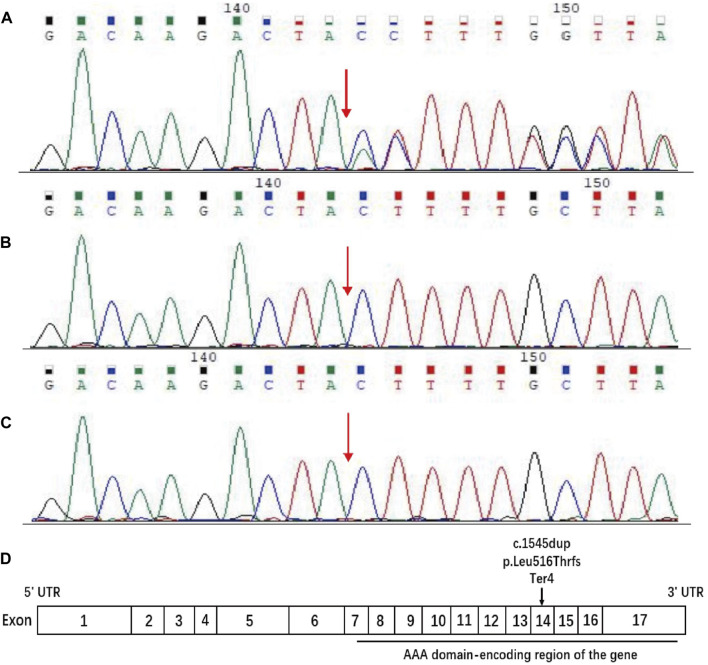 Figure 3
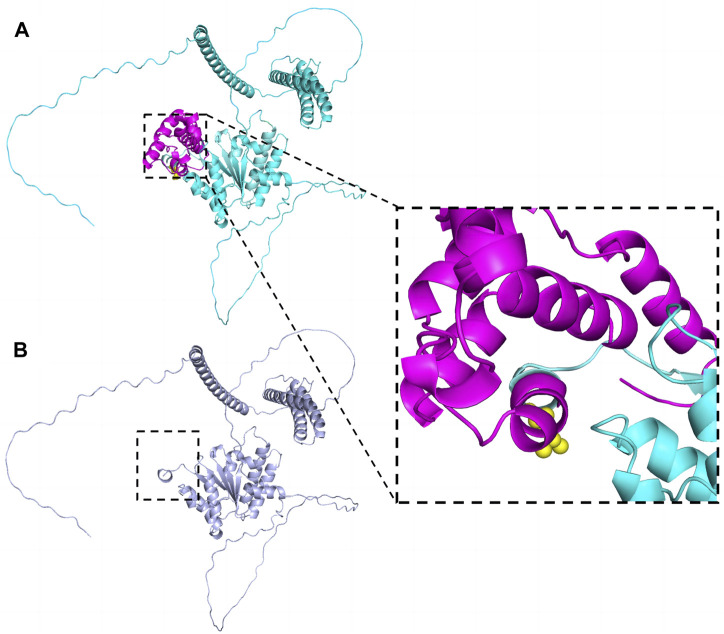 Figure 4
Peer Reviews
No public reviews on file for this paper yet. If you reviewed it on a platform where reviews are public (OpenReview, ICLR, NeurIPS, ICML), you can paste yours below so the community can read it here.
Videos
No videos yet. Explain this paper in a talk, walkthrough, or lecture? Add one.
Taxonomy
TopicsHereditary Neurological Disorders · Dupuytren's Contracture and Treatments · Dermatological and Skeletal Disorders