French adaptation and validation of the Niigata PPPD Questionnaire: measure of severity of Persistent Postural-Perceptual Dizziness and its association with psychiatric comorbidities and perceived handicap
Vasiliki Meletaki, Maélis Gobinet, Jacques Léonard, Maya Elzière, Christophe Lopez

TL;DR
This study adapts and validates a questionnaire for measuring dizziness severity in French-speaking patients and finds it correlates with anxiety and disability.
Contribution
The study provides a validated French version of the Niigata PPPD Questionnaire and explores its association with psychiatric and disability factors.
Findings
The French NPQ showed high internal consistency and higher scores in PPPD patients compared to others.
PPPD patients had higher depression, trait anxiety, and disability scores than controls and non-PPPD vestibular patients.
The NPQ correlated with disability scores but had limited diagnostic accuracy.
Abstract
Persistent Postural-Perceptual Dizziness (PPPD) is a functional vestibular condition. Despite being the most common chronic neuro-otologic disorder, it remains undertreated. The Niigata PPPD Questionnaire (NPQ), developed by Yagi et al. in 2019 to assess the severity of PPPD, could be a useful tool to help in the screening and diagnosis of this condition. This study aimed to validate a French version of the NPQ and make it an available assessment tool. Moreover, we aimed to understand the characteristics of PPPD patients better. The NPQ was translated and adapted into French. 50 PPPD patients, 50 patients with vestibular disorders without PPPD, and 50 healthy controls were included. They answered the adapted NPQ and additional questionnaires assessing trait (STAI) and state anxiety (HADS-A), depression (HADS-D) and handicap related to dizziness (DHI). The NPQ’s reliability was assessed…
Genes, proteins, chemicals, diseases, species, mutations and cell lines named across the full text — each resolved to its canonical identifier and authoritative record.
Click any figure to enlarge with its caption.
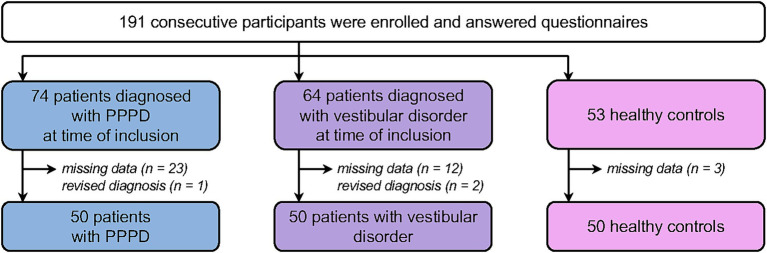 Figure 1
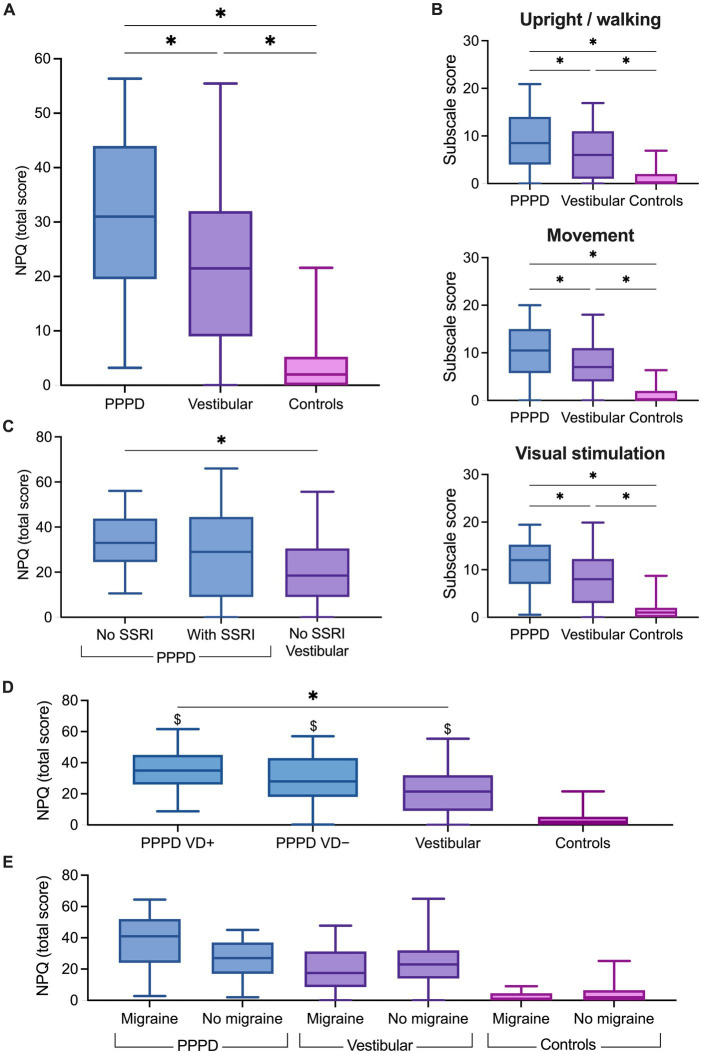 Figure 2
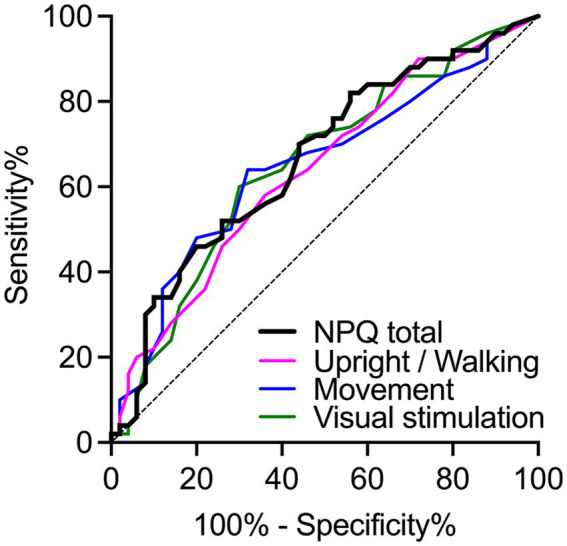 Figure 3
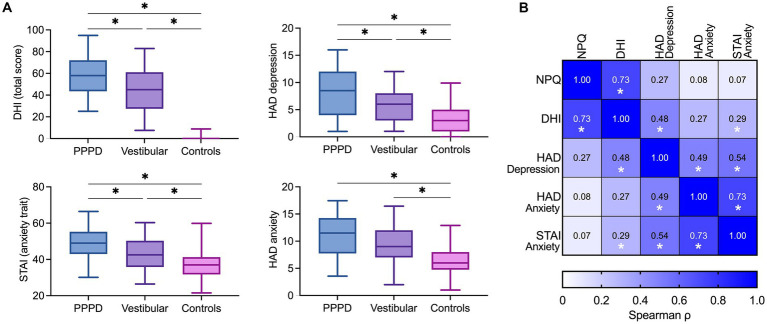 Figure 4
Peer Reviews
No public reviews on file for this paper yet. If you reviewed it on a platform where reviews are public (OpenReview, ICLR, NeurIPS, ICML), you can paste yours below so the community can read it here.
Videos
No videos yet. Explain this paper in a talk, walkthrough, or lecture? Add one.
Taxonomy
TopicsEmotional Intelligence and Performance