Acute Peritoneal Dialysis in a Patient with Severe Uremic Syndrome and Multiple Hemodialysis Access Failure
Made Dyah Vismita Indramila Duarsa, Gede Wira Mahadita, Yenny Kandarini

TL;DR
A patient with severe kidney failure and no dialysis access was successfully treated with peritoneal dialysis.
Contribution
Demonstrates acute peritoneal dialysis as a viable emergency option when hemodialysis access is unavailable.
Findings
Acute peritoneal dialysis provided an adequate response in a patient needing emergency dialysis.
The patient transitioned to continuous ambulatory peritoneal dialysis and showed a good response.
Abstract
A 67-year-old woman was diagnosed with chronic kidney disease stage V, severe uremia syndrome, hyperkalemia, metabolic acidosis, suspected pulmonary oedema, and multiple hemodialysis access failure. The patient is in a condition that requires emergency hemodialysis, but the patient does not have any access to undergo hemodialysis. The patient then underwent acute peritoneal dialysis and received an adequate response. The patient continued continuous ambulatory peritoneal dialysis and responded well.
Genes, proteins, chemicals, diseases, species, mutations and cell lines named across the full text — each resolved to its canonical identifier and authoritative record.
Click any figure to enlarge with its caption.
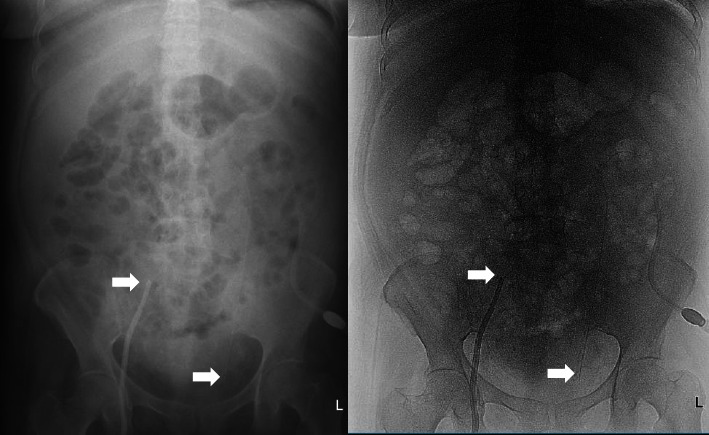 Figure 1
Peer Reviews
No public reviews on file for this paper yet. If you reviewed it on a platform where reviews are public (OpenReview, ICLR, NeurIPS, ICML), you can paste yours below so the community can read it here.
Videos
No videos yet. Explain this paper in a talk, walkthrough, or lecture? Add one.
Taxonomy
TopicsDialysis and Renal Disease Management · Neurological and metabolic disorders · Muscle and Compartmental Disorders