Coupling of potential habitat models with particle tracking experiments to examine larval fish dispersal and connectivity in deep water regions
Gonzalo Daudén-Bengoa, Julio Sheinbaum, Javier RodríguezOuterelo, Sharon Z. Herzka

TL;DR
This study uses ocean models and larval habitat data to understand how fish larvae disperse and connect in the deep Gulf of Mexico.
Contribution
The paper introduces a method combining habitat models with particle tracking to study larval connectivity in deep water regions.
Findings
Potential habitat location and size significantly influence larval dispersal and connectivity patterns.
Mesoscale ocean features like eddies affect larval retention and dispersion in the Gulf of Mexico.
High Loop Current intrusion leads to greater larval dispersal through the Florida Straits.
Abstract
Computing Lagrangian trajectories with ocean circulation models is a powerful way to infer larval dispersal pathways and connectivity. Defining release areas and timing of particles to represent larval habitat realistically is critical to obtaining representative dispersal pathways. However, it is challenging due to spatial and temporal variability in larval density. Forward-tracking particle experiments were conducted to study larval connectivity of four species (neritic or mesopelagic) in the Gulf of Mexico’s (GoM) deep-water region. A seasonal climatology coupled with predicted potential larval habitat models based on generalized additive models was used to delimit the particle dispersal origin. Two contrasting mesoscale circulation patterns were examined: (1) high Loop Current (LC) intrusion, absence of recently detached LC anticyclonic eddies (LC-ACE), and no interaction between…
Genes, proteins, chemicals, diseases, species, mutations and cell lines named across the full text — each resolved to its canonical identifier and authoritative record.
Click any figure to enlarge with its caption.
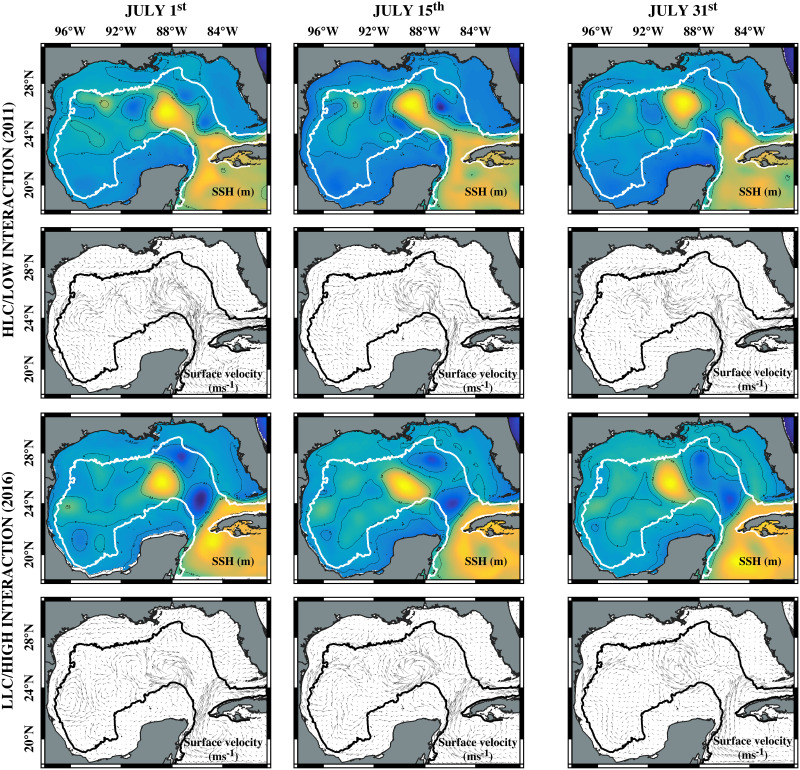 Figure 1
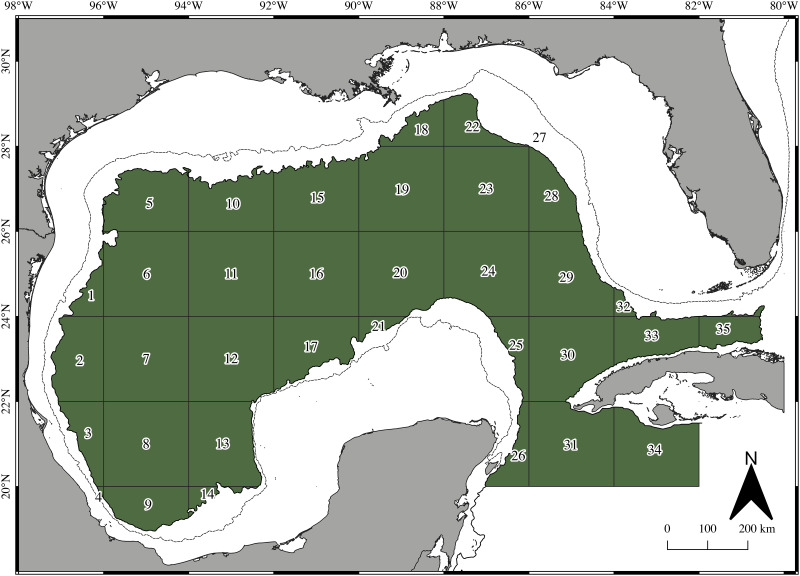 Figure 2
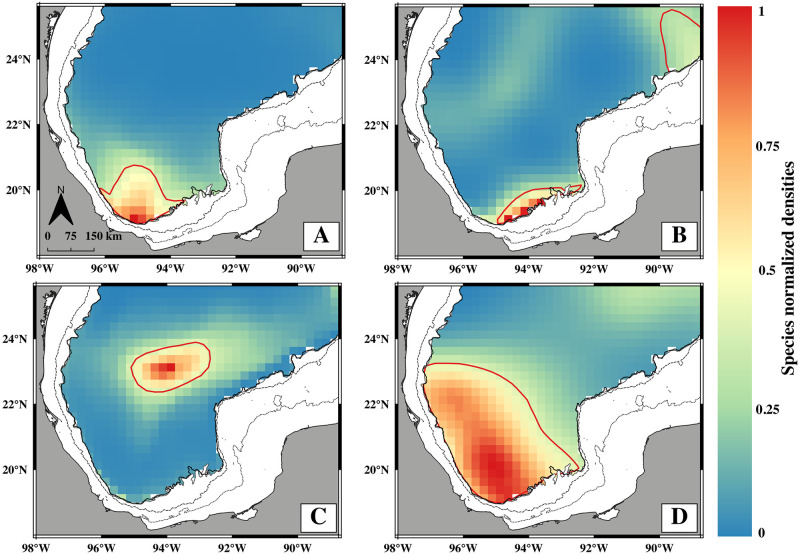 Figure 3
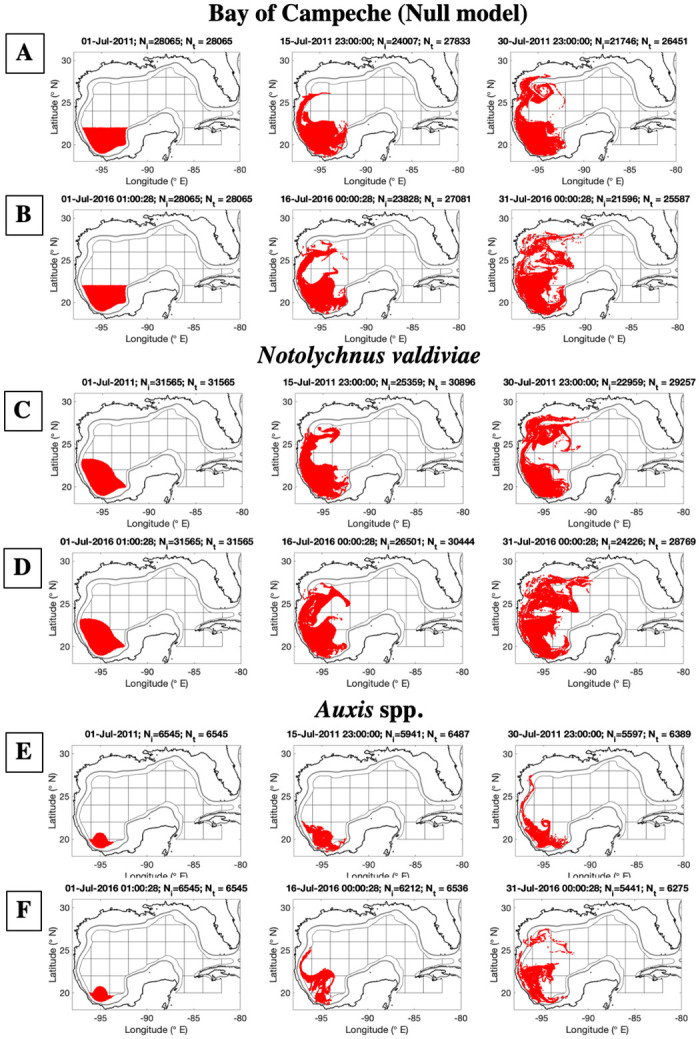 Figure 4
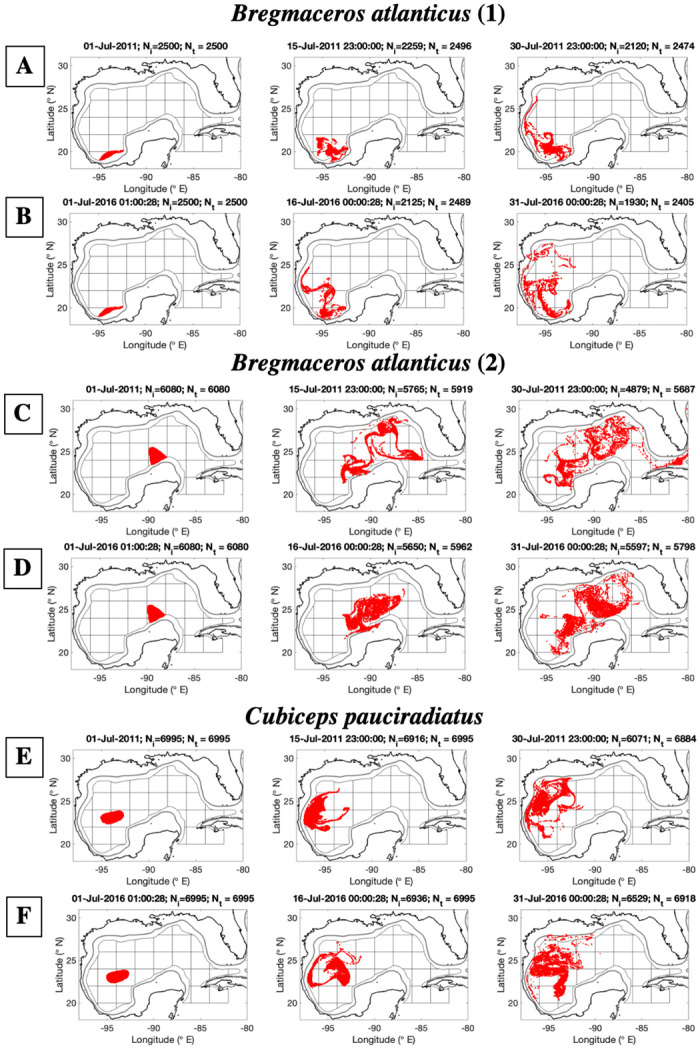 Figure 5
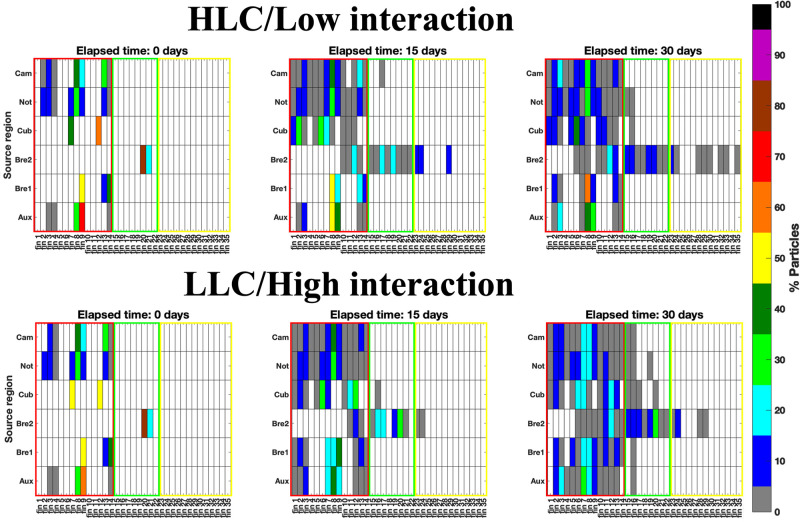 Figure 6
 Figure 7
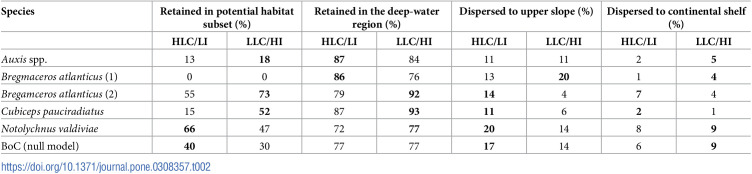 Figure 8
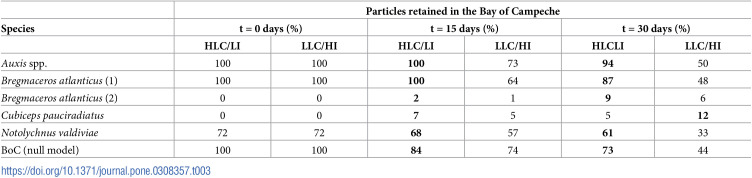 Figure 9
Peer Reviews
No public reviews on file for this paper yet. If you reviewed it on a platform where reviews are public (OpenReview, ICLR, NeurIPS, ICML), you can paste yours below so the community can read it here.
Videos
No videos yet. Explain this paper in a talk, walkthrough, or lecture? Add one.
Taxonomy
TopicsMarine and fisheries research · Oceanographic and Atmospheric Processes · Marine and coastal ecosystems