The complete chloroplast genome of Typha angustifolia and its phylogenetic position in Typhaceae
Weiwei Lv, Jiayi Qian, Qian Long, Songting Wang

TL;DR
This paper reports the first complete chloroplast genome of narrowleaf cattail, providing genetic insights for future studies on its evolutionary relationships.
Contribution
The first complete chloroplast genome assembly for Typha angustifolia is presented.
Findings
The chloroplast genome is 161,597 bp long with typical structural features of LSC, SSC, and IR regions.
Phylogenetic analysis places T. angustifolia as a sister to T. orientalis in the Typhaceae family.
The genome contains 113 unique genes, including 79 protein-coding genes and 30 tRNA genes.
Abstract
Typha angustifolia, commonly known as narrowleaf cattail, is a marginal, semi-aquatic, herbaceous perennial species with both ecological and edible values. In this study, the complete chloroplast (cp) genome of T. angustifolia was assembled using the next-generation sequencing technology. The whole cp genome was 161,597 bp in length, consisting of a large single copy (LSC, 89,119 bp) and a small single copy (SSC, 18,550 bp) separated by two copies of inverted region (IR, 26,964 bp). The genome encoded 113 unique genes, including 79 protein-coding genes, 30 tRNA genes, four rRNA genes, with 19 duplicated genes in the IR regions. Phylogenetic analysis showed that T. angustifolia is sister to Typha orientalis in the family Typhaceae. The cp genome of T. angustifolia is reported for the first time, which will provide essential and important genetic resources for future phylogenetic…
Genes, proteins, chemicals, diseases, species, mutations and cell lines named across the full text — each resolved to its canonical identifier and authoritative record.
Click any figure to enlarge with its caption.
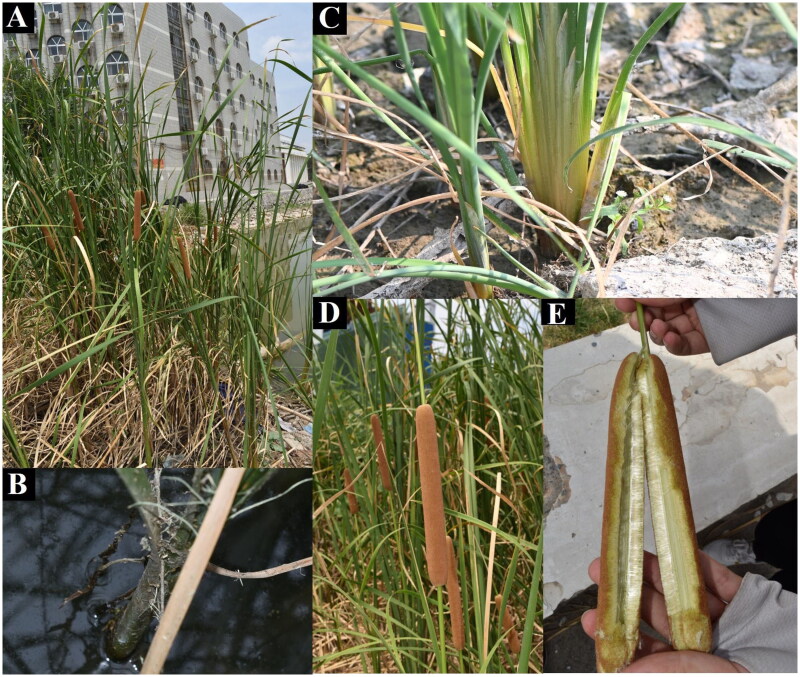 Figure 1
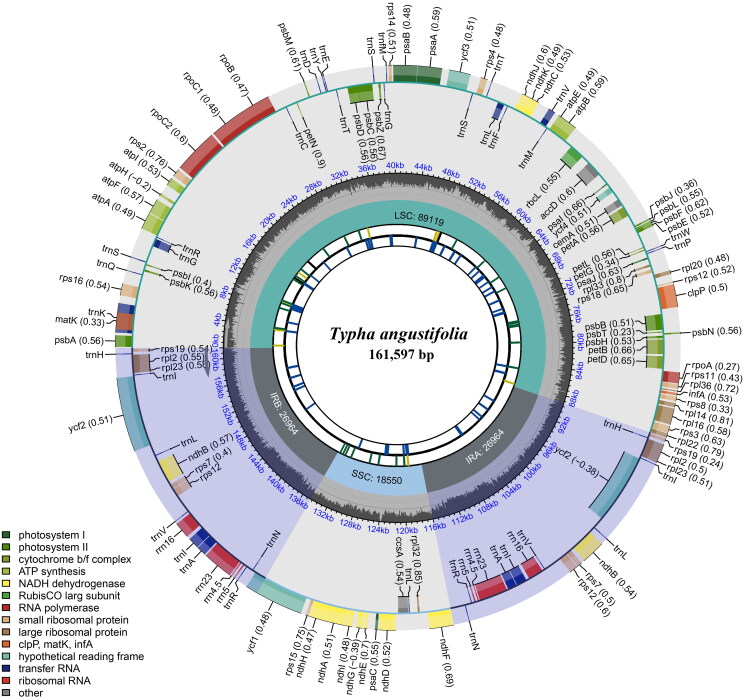 Figure 2
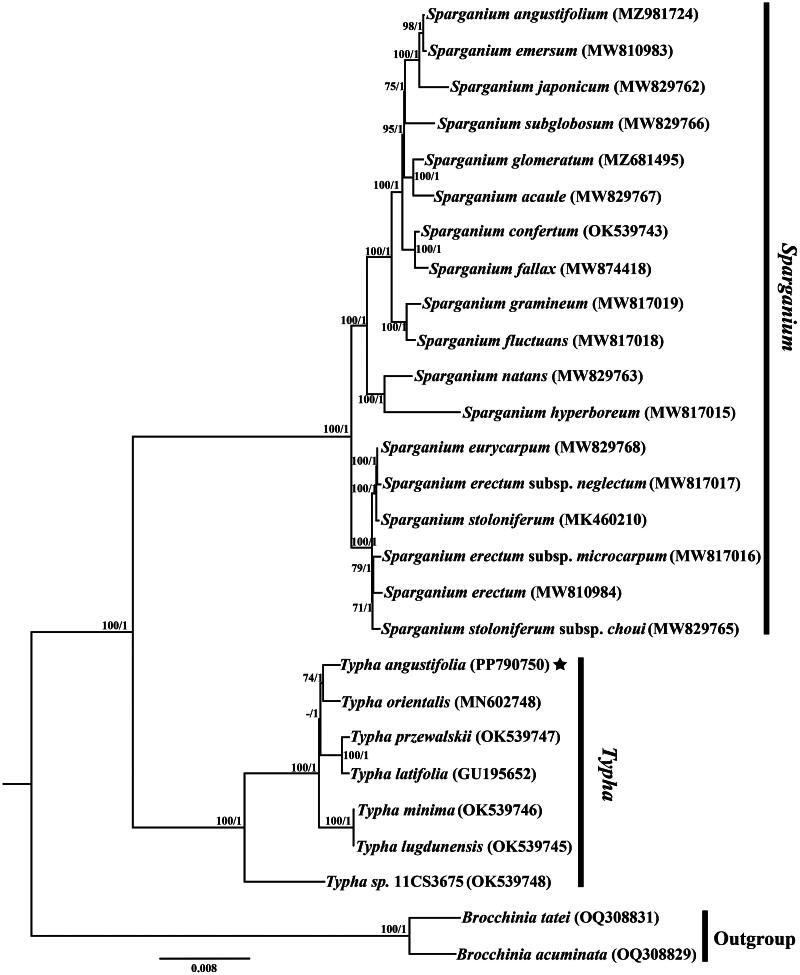 Figure 3
Peer Reviews
No public reviews on file for this paper yet. If you reviewed it on a platform where reviews are public (OpenReview, ICLR, NeurIPS, ICML), you can paste yours below so the community can read it here.
Videos
No videos yet. Explain this paper in a talk, walkthrough, or lecture? Add one.
Taxonomy
TopicsGenomics and Phylogenetic Studies · Plant and Fungal Species Descriptions · Plant Diversity and Evolution