Surgical management of bilateral preaxial and postaxial polydactyly with syndactyly: A case report
Yoyos Dias Ismiarto, Mirna Phandu, Hans Kristian Handoko, Gregorius Thomas Prasetiyo, Fajri Rozi Kamaris, Tri Taufiqurachman Telaumbanua

TL;DR
This case report describes a rare condition where a child had extra toes on both feet and fused toes, which were surgically corrected in one operation.
Contribution
The paper presents a rare case of combined preaxial and postaxial polydactyly with syndactyly and a one-stage surgical solution.
Findings
A one-stage surgical correction was successfully performed for bilateral polydactyly and syndactyly.
Z-plasty was used to release syndactyly after removing the supernumerary digits.
The procedure improved both function and cosmetic appearance with minimal patient morbidity.
Abstract
Polydactyly is the most common congenital malformation in the limbs. However, it is rare for a patient to exhibit concomitant preaxial and postaxial polydactyly alongside syndactyly in both limbs, and there are limited recommendations for such conditions. This report presents a case of bilateral preaxial and postaxial polydactyly with syndactyly of the feet. A 2-year-old girl was presented with an excess number of toes on both feet and an abnormal connection between the second and third toes. After a physical examination and plain radiography, the patient was diagnosed with bilateral preaxial and postaxial polydactyly with syndactyly. We performed a one-stage surgical correction consisting of ablation at the extra digit of bilateral great and little toes, followed by syndactyly release using z-plasty. The surgery was uneventful, and the parents were satisfied with the result. A plain…
Genes, proteins, chemicals, diseases, species, mutations and cell lines named across the full text — each resolved to its canonical identifier and authoritative record.
Click any figure to enlarge with its caption.
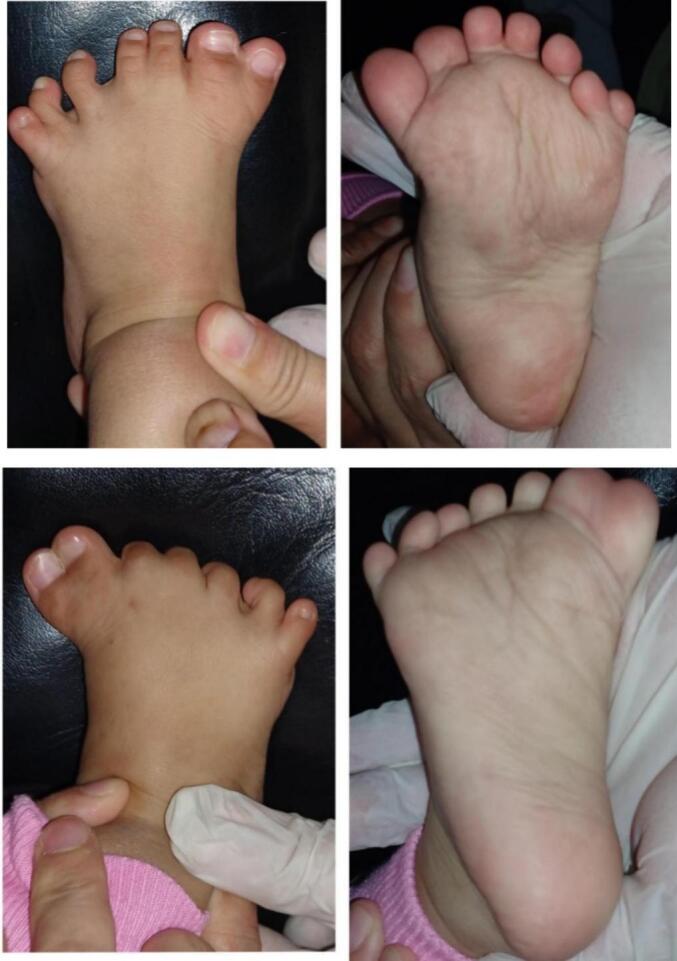 Figure 1
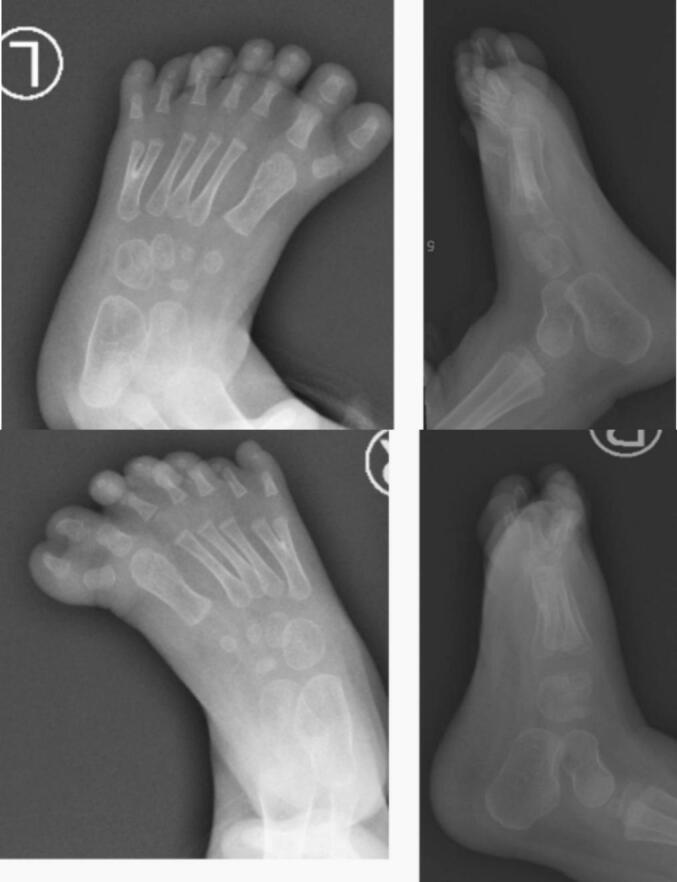 Figure 2
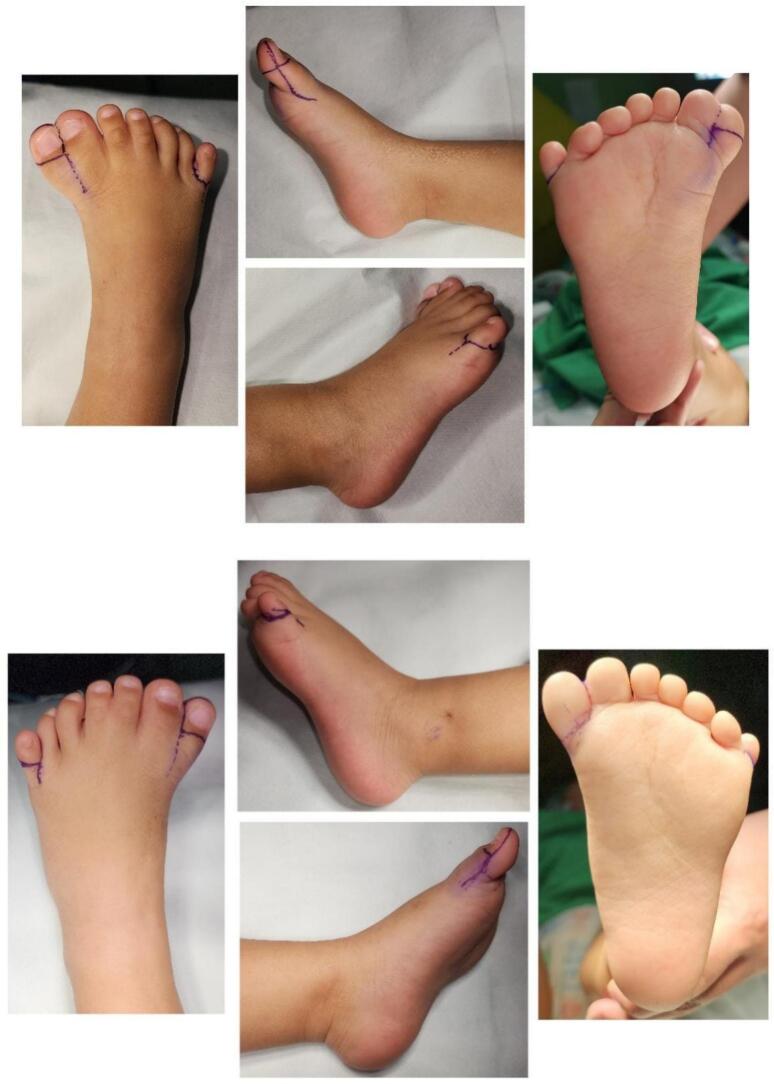 Figure 3
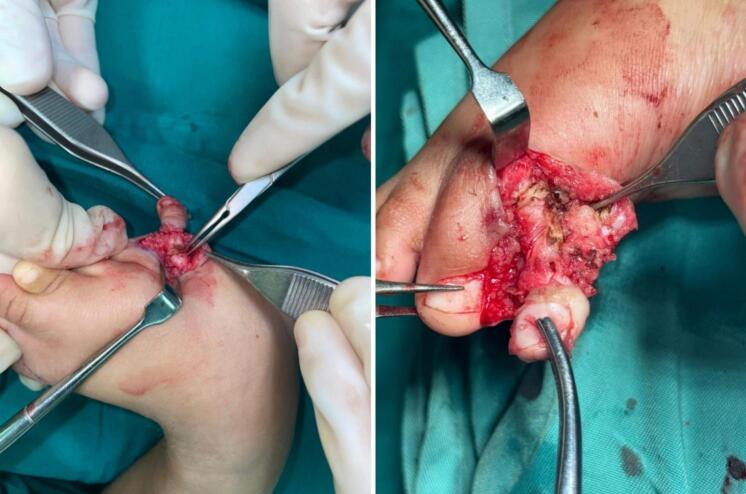 Figure 4
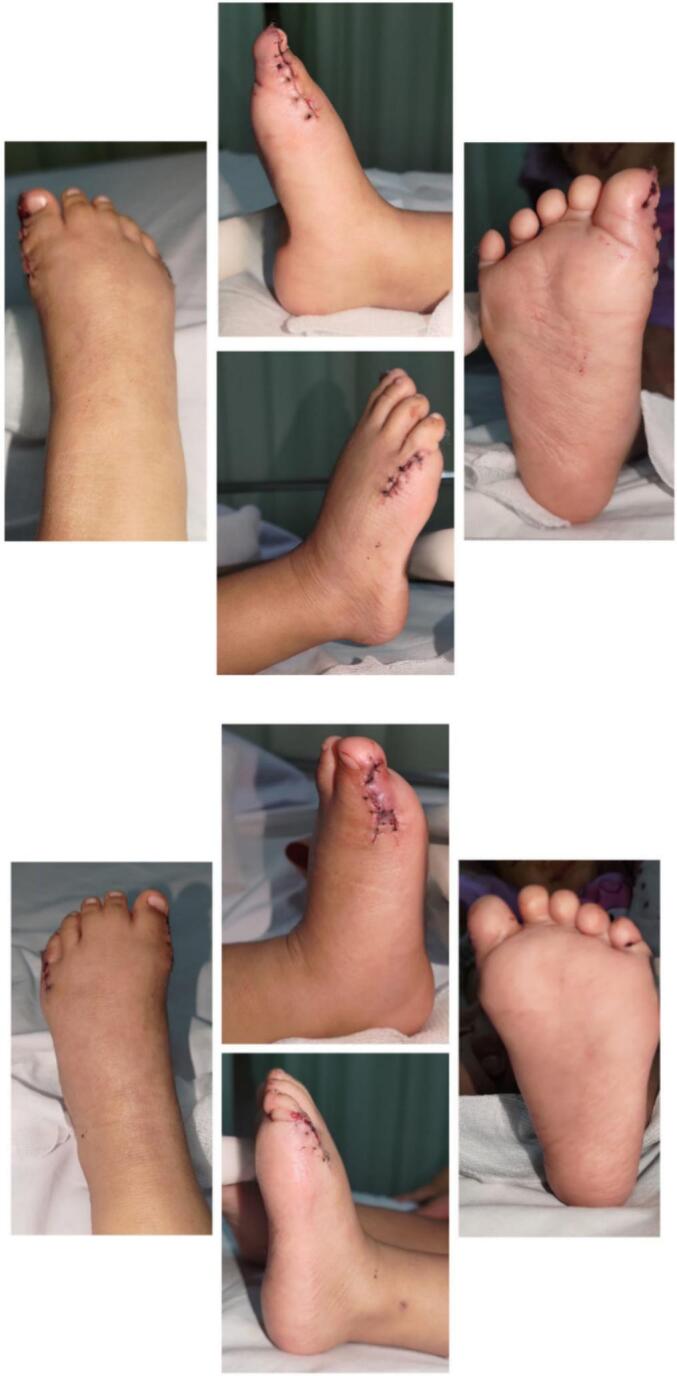 Figure 5
Peer Reviews
No public reviews on file for this paper yet. If you reviewed it on a platform where reviews are public (OpenReview, ICLR, NeurIPS, ICML), you can paste yours below so the community can read it here.
Videos
No videos yet. Explain this paper in a talk, walkthrough, or lecture? Add one.
Taxonomy
TopicsCongenital limb and hand anomalies · Hedgehog Signaling Pathway Studies · Genetic and rare skin diseases.