Recanalization status and temporal evolution of early ischemic changes following stroke thrombectomy
Pekka Virtanen, Liisa Tomppo, Georgios Georgiopoulos, Nina Brandstack, Erno Peltola, Tatu Kokkonen, Kimmo Lappalainen, Antti Korvenoja, Daniel Strbian

TL;DR
This study examines how early brain changes after stroke evolve over time, depending on whether blood flow is successfully restored.
Contribution
The study reveals that successful recanalization affects cortical regions in ICA/M1 stroke patients but not deep structures or M2 patients.
Findings
Successful recanalization (mTICI 3) was associated with less severe early ischemic changes in cortical regions of ICA/M1 patients.
Ischemic changes detected at baseline remained unchanged in follow-up scans, regardless of recanalization success.
Recanalization effects were not observed in deep brain structures or in patients with M2 occlusions.
Abstract
Present-day computer tomography (CT) scanners have excellent spatial resolution and signal-to-noise ratio and are instrumental detecting early ischemic changes (EIC) in brain. We assessed the temporal changes of EIC based on the recanalization status after thrombectomy. The cohort comprises consecutive patients with acute ischemic stroke in anterior circulation treated with thrombectomy in tertiary referral hospital. All baseline and follow-up scans were screened for any ischemic changes and further classified using Alberta Stroke Program Early CT Score (ASPECTS). Generalized linear mixed models were used to analyze the impact of recanalization status using modified Thrombolysis in Cerebral Infarction (mTICI) on temporal evolution of ischemic changes. We included 614 patients with ICA, M1, or M2 occlusions. Median ASPECTS score was 9 (IQR 7–10) at baseline and 7 (5-8) at approximately…
Genes, proteins, chemicals, diseases, species, mutations and cell lines named across the full text — each resolved to its canonical identifier and authoritative record.
Click any figure to enlarge with its caption.
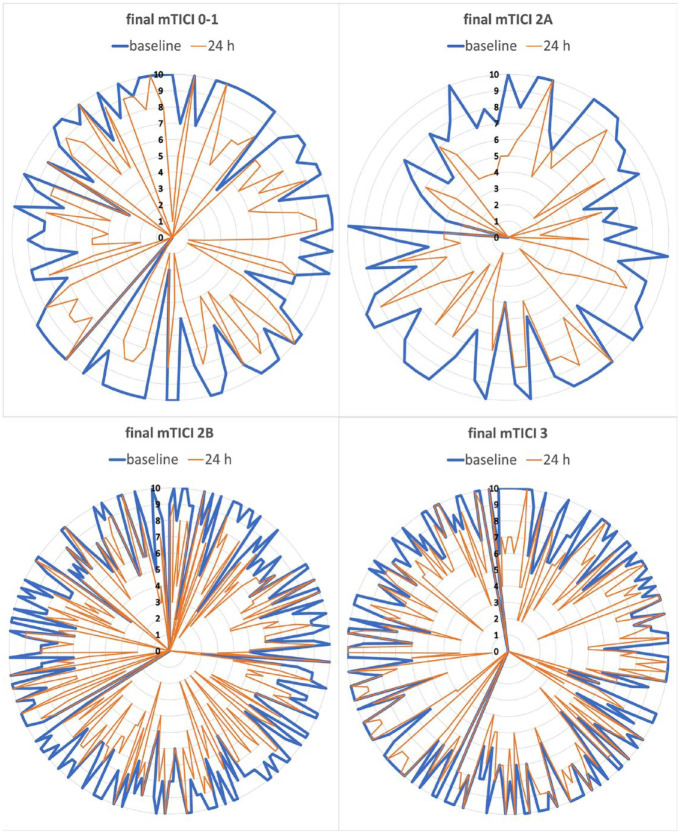 Figure 1
 Figure 2
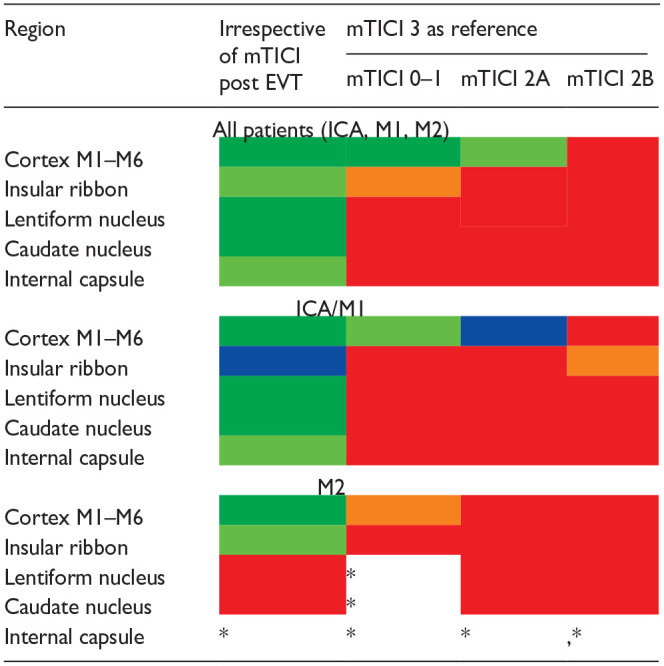 Figure 3
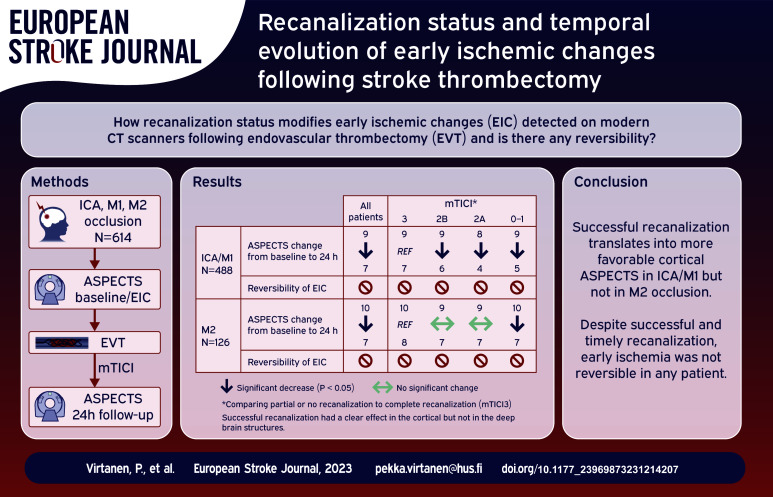 Figure 4
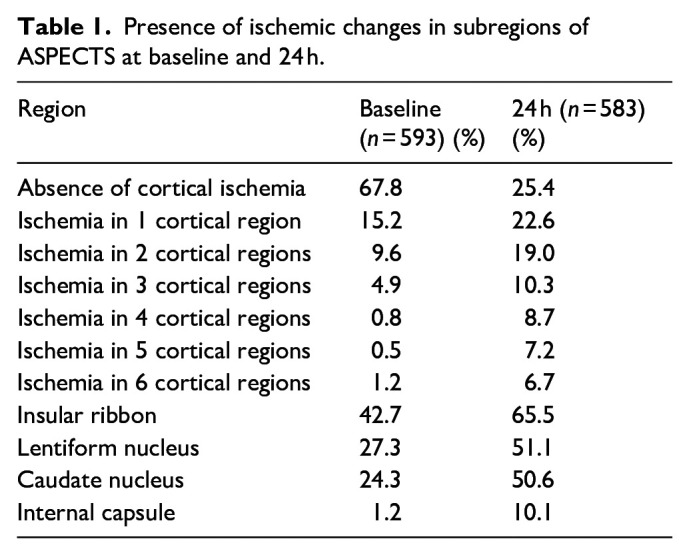 Figure 5
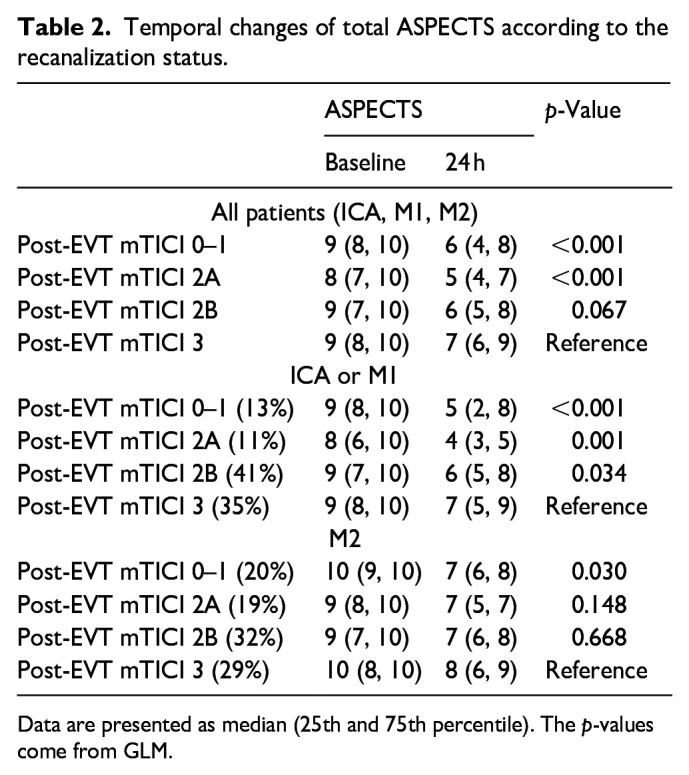 Figure 6
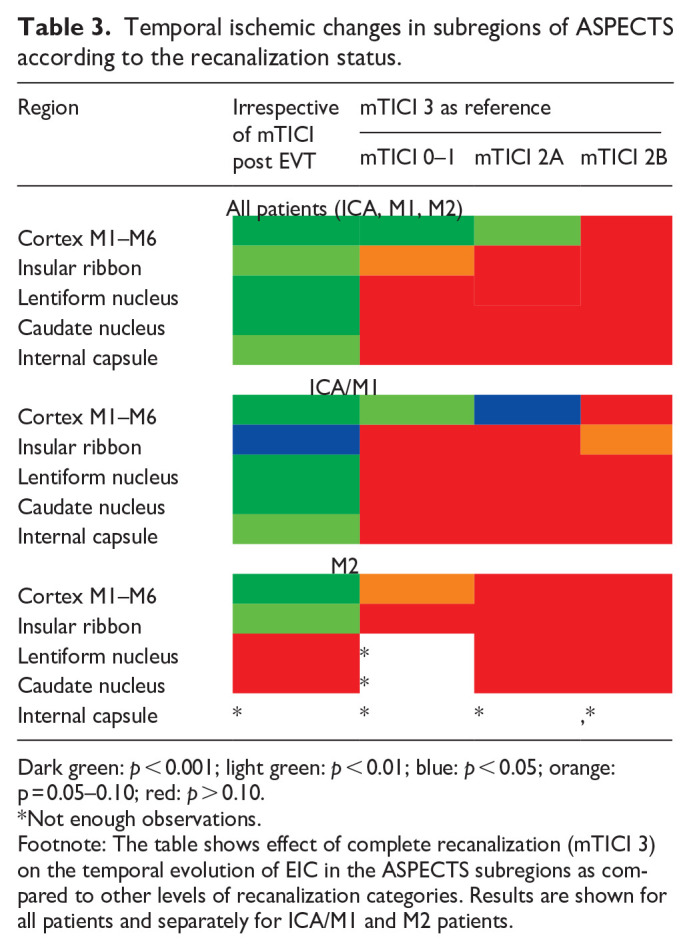 Figure 7
Peer Reviews
No public reviews on file for this paper yet. If you reviewed it on a platform where reviews are public (OpenReview, ICLR, NeurIPS, ICML), you can paste yours below so the community can read it here.
Videos
No videos yet. Explain this paper in a talk, walkthrough, or lecture? Add one.
Taxonomy
TopicsAcute Ischemic Stroke Management · Cerebrovascular and Carotid Artery Diseases · Traumatic Brain Injury and Neurovascular Disturbances