Soybean pod shattering resistance allele pdh1 and marker‐assisted selection
Dora Shimbwambwa, Christabel Nachilima, Swivia Hamabwe, Kuwabo Kuwabo, Godfree Chigeza, Kristin Bilyeu, Kelvin Kamfwa

TL;DR
This study identifies a soybean gene (pdh1) linked to resistance against pod shattering and shows it is nearly fixed in a key germplasm collection.
Contribution
The study confirms the effectiveness of a DNA marker for pdh1 in marker-assisted selection for pod shattering resistance.
Findings
TGx2002-8FM and TGx2002-9FM are the most resistant soybean genotypes in early and medium maturity classes.
Narrow sense heritability for pod shattering ranged from 0.27 to 0.80.
96.6% of genotypes carried the resistance allele pdh1, indicating near-fixation in IITA germplasm.
Abstract
Pod shattering is a major production constraint of soybean [Glycine max (L.)]. The objectives of this study were to (i) estimate heritability for pod shattering resistance, (ii) determine the frequency of the pod shattering resistance allele pdh1 in the International Institute for Tropical Agriculture (IITA) soybean germplasm and Zambian commercial varieties, and (iii) determine the effectiveness of the DNA marker for the pod shattering resistance allele pdh1. A total of 59 genotypes were evaluated for pod shattering in field trials conducted in Malawi and Zambia and genotyped with a marker for pdh1. TGx2002‐8FM and TGx2002‐9FM were the most resistant among genotypes in early and medium maturity classes and can be used for genetic enhancement of pod shattering resistance in these specific maturity classes. Narrow sense heritability estimates for pod shattering ranged from 0.27 to 0.80.…
Genes, proteins, chemicals, diseases, species, mutations and cell lines named across the full text — each resolved to its canonical identifier and authoritative record.
Click any figure to enlarge with its caption.
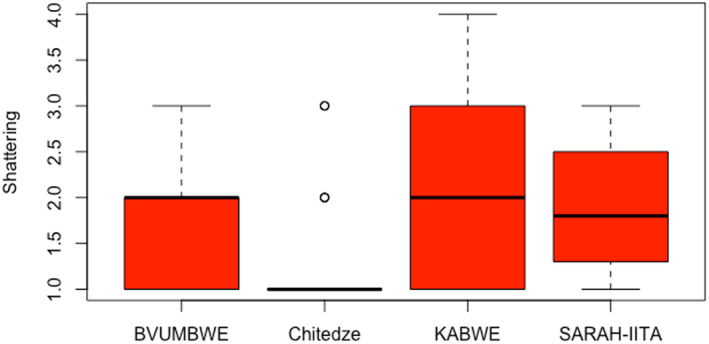 Figure 1
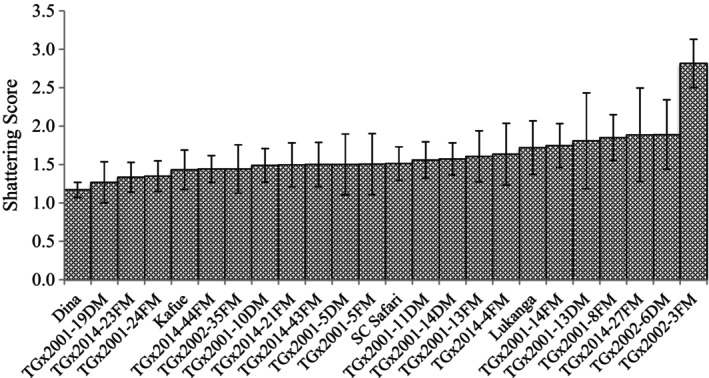 Figure 2
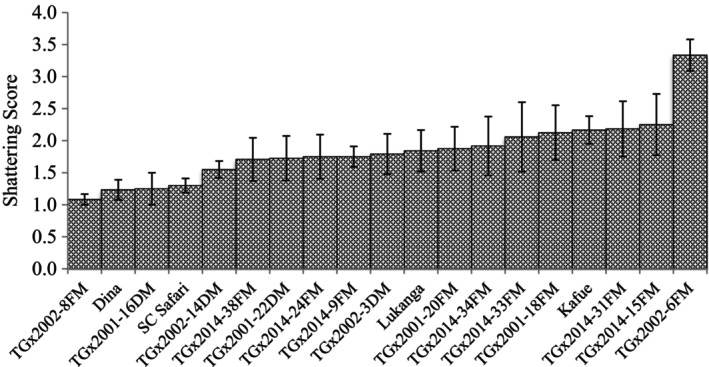 Figure 3
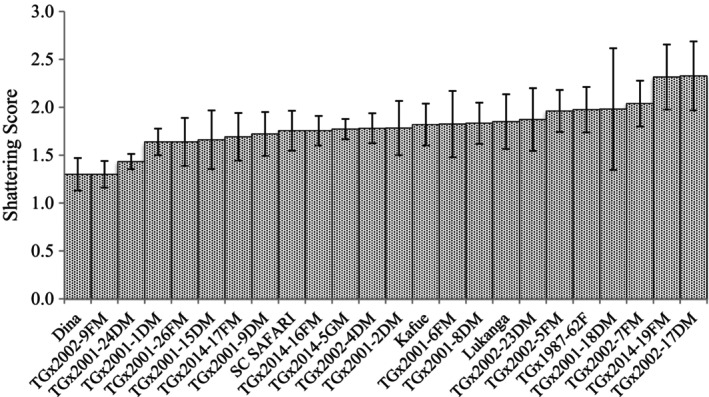 Figure 4
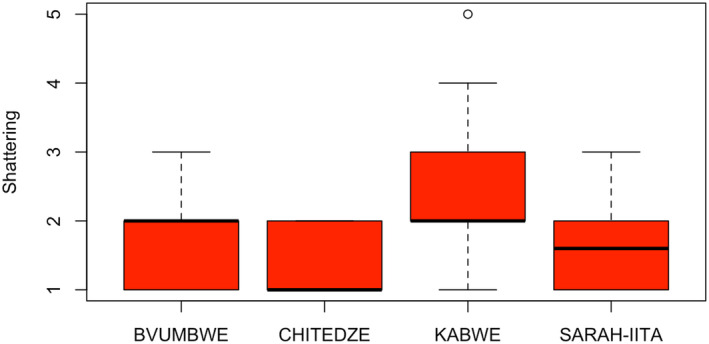 Figure 5
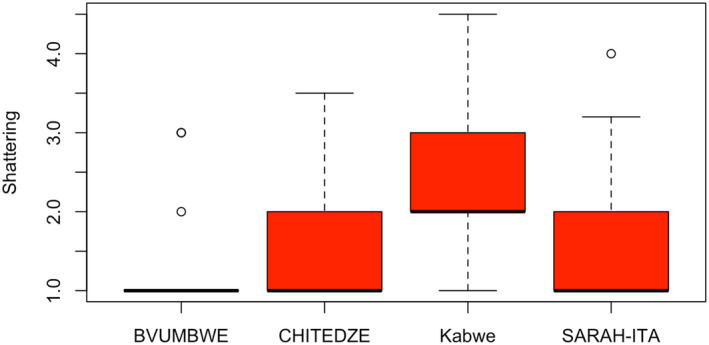 Figure 6
Peer Reviews
No public reviews on file for this paper yet. If you reviewed it on a platform where reviews are public (OpenReview, ICLR, NeurIPS, ICML), you can paste yours below so the community can read it here.
Videos
No videos yet. Explain this paper in a talk, walkthrough, or lecture? Add one.
Taxonomy
TopicsReligious and Theological Studies