Slow Mohs Micrographic Surgery and Reconstruction With Artificial Dermis for Atrophic Dermatofibrosarcoma Protuberans: A Case Report
Peiyun Ho, Meng-Han Shen

TL;DR
This case report shows how artificial dermis helped reconstruct a large chest wound after a rare skin cancer surgery.
Contribution
Demonstrates the novel use of artificial dermis in reconstructing large defects after slow Mohs surgery for atrophic DFSP.
Findings
A rotational flap combined with synthetic xenogeneic artificial dermis successfully reconstructed a 13 cm x 12 cm defect.
Slow Mohs surgery effectively managed a large atrophic DFSP lesion near the pectoralis major muscle.
MRI revealed a 9.3 cm x 6.5 cm lesion with close proximity to muscle, guiding surgical planning.
Abstract
This case report describes the utility of artificial dermis in reconstruction for atrophic dermatofibrosarcoma protuberans (DFSP) after slow Mohs micrographic surgery (MMS). A 34-year-old man presented as a slowly growing nodule from an atrophic scar on his right chest for over 10 years. The pathology report confirmed the diagnosis of atrophic DFSP. Further magnetic resonance imaging (MRI) revealed a 9.3 cm x 6.5 cm cutaneous-subcutaneous lesion with close contact with the pectoralis major muscle. The patient underwent a slow MMS, and we utilized a rotational flap in combination with synthetic xenogeneic artificial dermis to reconstruct the final 13 cm x 12 cm defect.
Genes, proteins, chemicals, diseases, species, mutations and cell lines named across the full text — each resolved to its canonical identifier and authoritative record.
Click any figure to enlarge with its caption.
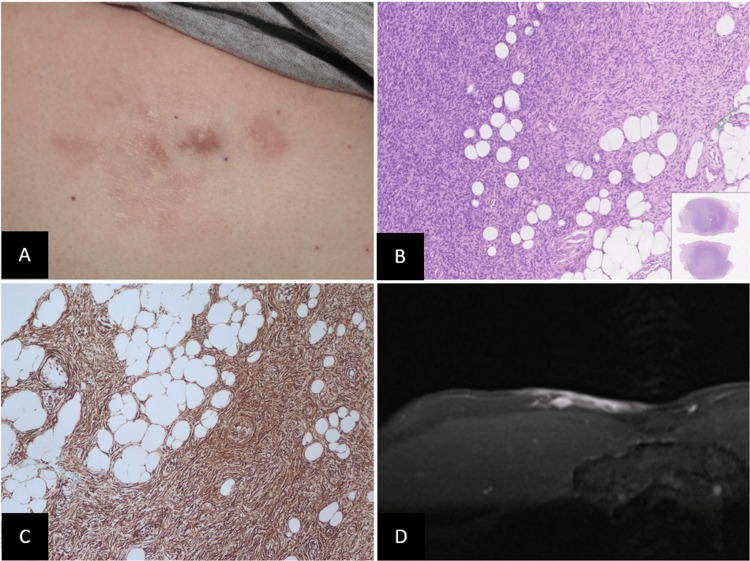 Figure 1
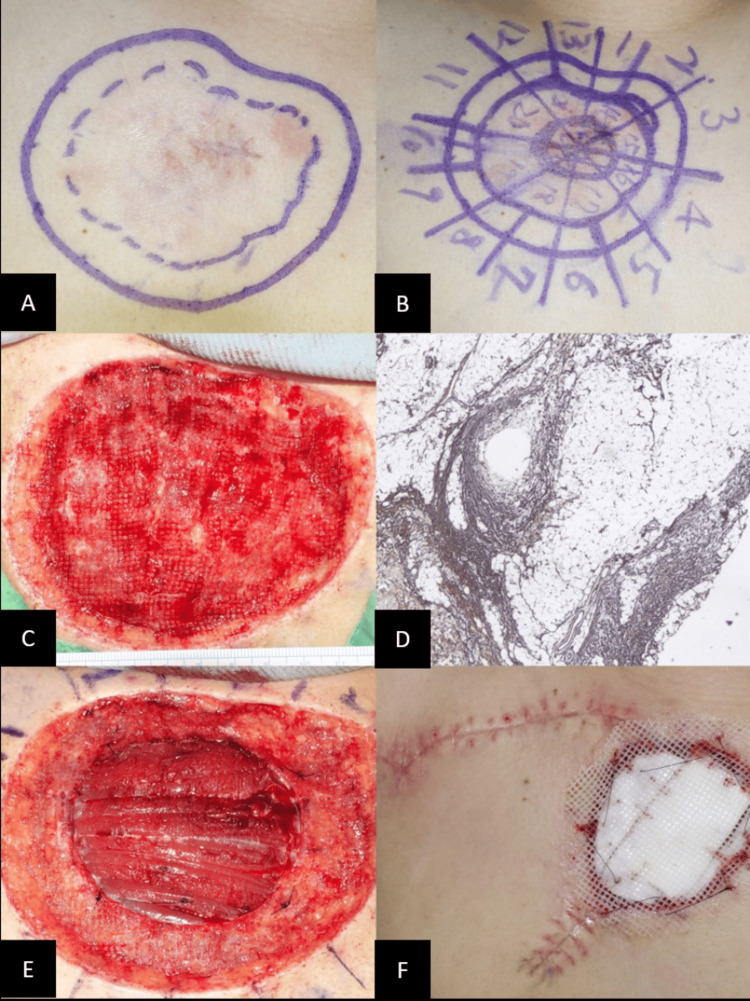 Figure 2
Peer Reviews
No public reviews on file for this paper yet. If you reviewed it on a platform where reviews are public (OpenReview, ICLR, NeurIPS, ICML), you can paste yours below so the community can read it here.
Videos
No videos yet. Explain this paper in a talk, walkthrough, or lecture? Add one.
Taxonomy
TopicsNonmelanoma Skin Cancer Studies · Sarcoma Diagnosis and Treatment · Cutaneous lymphoproliferative disorders research