An autoantibody profile identified by human genome‐wide protein arrays in rheumatoid arthritis
Xu Liu, Xiaoying Zhang, Yu‐Jian Kang, Fei Huang, Shuang Liu, Yixue Guo, Yingni Li, Changcheng Yin, Mingling Liu, Qimao Han, Qingwen Wang, Hua Ye, Haihong Yao, Chun Li, Jiahe Li, Wangzha Pingcuo, Yan Zhang, Yin Su, Ge Gao, Zhanguo Li, Xiaolin Sun

TL;DR
Researchers identified a set of autoantibodies that could help diagnose rheumatoid arthritis, especially in patients who do not have ACPA antibodies.
Contribution
The study introduces a new set of autoantibodies that may serve as diagnostic markers for ACPA-negative rheumatoid arthritis.
Findings
Five autoantibodies were found to be elevated in ACPA-negative rheumatoid arthritis patients.
Anti-parathymosin showed the highest prevalence in early-stage ACPA-negative rheumatoid arthritis.
A prediction model using 44 autoantibodies achieved 90.8% specificity and 66.1% sensitivity in diagnosing rheumatoid arthritis.
Abstract
Precise diagnostic biomarkers of anticitrullination protein antibody (ACPA)‐negative and early‐stage RA are still to be improved. We aimed to screen autoantibodies in ACPA‐negative patients and evaluated their diagnostic performance. The human genome‐wide protein arrays (HuProt arrays) were used to define specific autoantibodies from the sera of 182 RA patients and 261 disease and healthy controls. Statistical analysis was performed with SPSS 17.0. In Phase I study, 51 out of 19,275 recombinant proteins covering the whole human genome were selected. In Phase II validation study, anti‐ANAPC15 (anaphase promoting complex subunit 15) exhibited 41.8% sensitivity and 91.5% specificity among total RA patients. There were five autoantibodies increased in ACPA‐negative RA, including anti‐ANAPC15, anti‐LSP1, anti‐APBB1, anti‐parathymosin, and anti‐UBL7. Anti‐parathymosin showed the highest…
Genes, proteins, chemicals, diseases, species, mutations and cell lines named across the full text — each resolved to its canonical identifier and authoritative record.
Click any figure to enlarge with its caption.
 Figure 1
 Figure 2
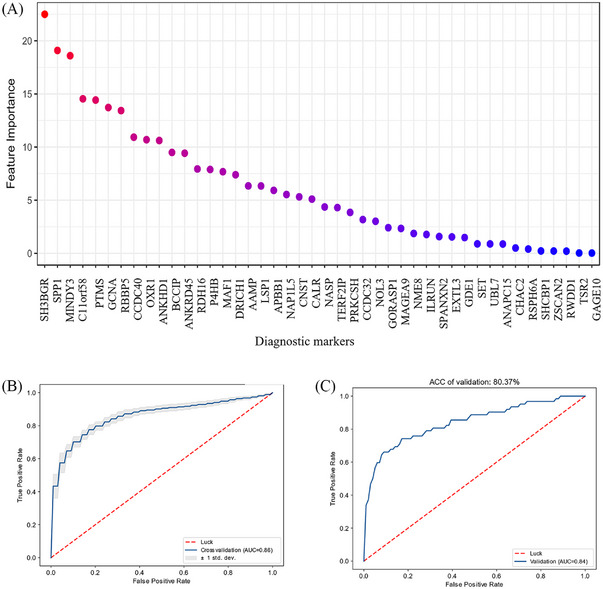 Figure 3
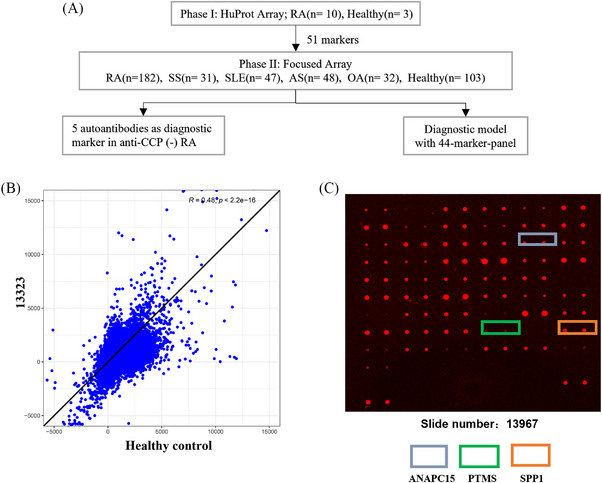 Figure 4
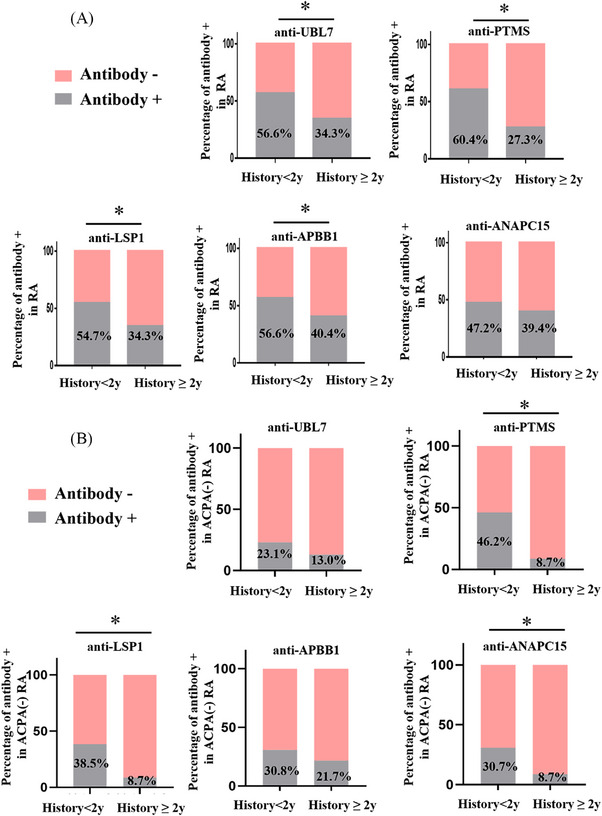 Figure 5
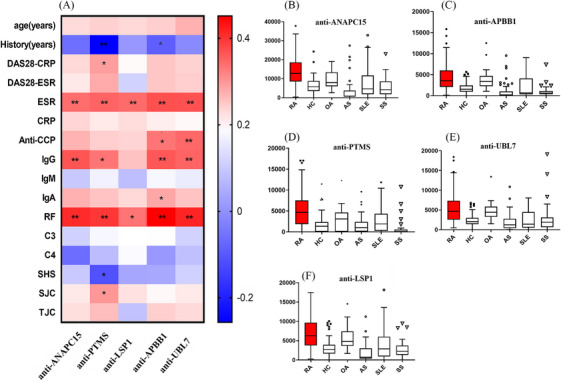 Figure 6
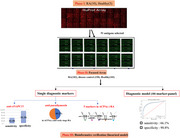 Figure 7
Peer Reviews
No public reviews on file for this paper yet. If you reviewed it on a platform where reviews are public (OpenReview, ICLR, NeurIPS, ICML), you can paste yours below so the community can read it here.
Videos
No videos yet. Explain this paper in a talk, walkthrough, or lecture? Add one.
Taxonomy
TopicsSystemic Lupus Erythematosus Research · Monoclonal and Polyclonal Antibodies Research · Rheumatoid Arthritis Research and Therapies