CLEMENT: genomic decomposition and reconstruction of non-tumor subclones
Young-soo Chung, Seungseok Kang, Jisu Kim, Sangbo Lee, Sangwoo Kim

TL;DR
CLEMENT is a new algorithm that accurately identifies and reconstructs subclones in non-tumor genome sequencing data.
Contribution
CLEMENT introduces a novel algorithm for non-tumor subclone decomposition using EM optimization strategies tailored for normal samples.
Findings
CLEMENT outperformed cancer decomposition algorithms in estimating clone numbers and variant-clone membership.
Testing on normal tissue sequencing confirmed accurate subclone identification from different cell types.
Clone-level analysis revealed new insights into mutational burden and signatures in normal tissues.
Abstract
Genome-level clonal decomposition of a single specimen has been widely studied; however, it is mostly limited to cancer research. In this study, we developed a new algorithm CLEMENT, which conducts accurate decomposition and reconstruction of multiple subclones in genome sequencing of non-tumor (normal) samples. CLEMENT employs the Expectation-Maximization (EM) algorithm with optimization strategies specific to non-tumor subclones, including false variant call identification, non-disparate clone fuzzy clustering, and clonal allele fraction confinement. In the simulation and in vitro cell line mixture data, CLEMENT outperformed current cancer decomposition algorithms in estimating the number of clones (root-mean-square-error = 0.58–0.78 versus 1.43–3.34) and in the variant-clone membership agreement (∼85.5% versus 70.1–76.7%). Additional testing on human multi-clonal normal tissue…
Genes, proteins, chemicals, diseases, species, mutations and cell lines named across the full text — each resolved to its canonical identifier and authoritative record.
Click any figure to enlarge with its caption.
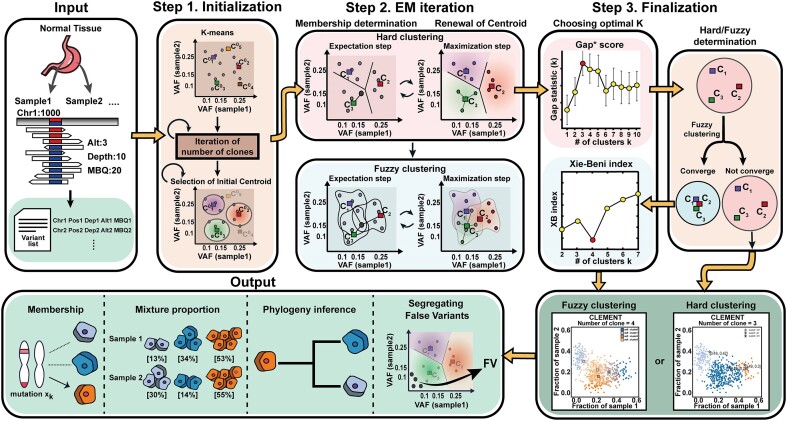 Figure 1
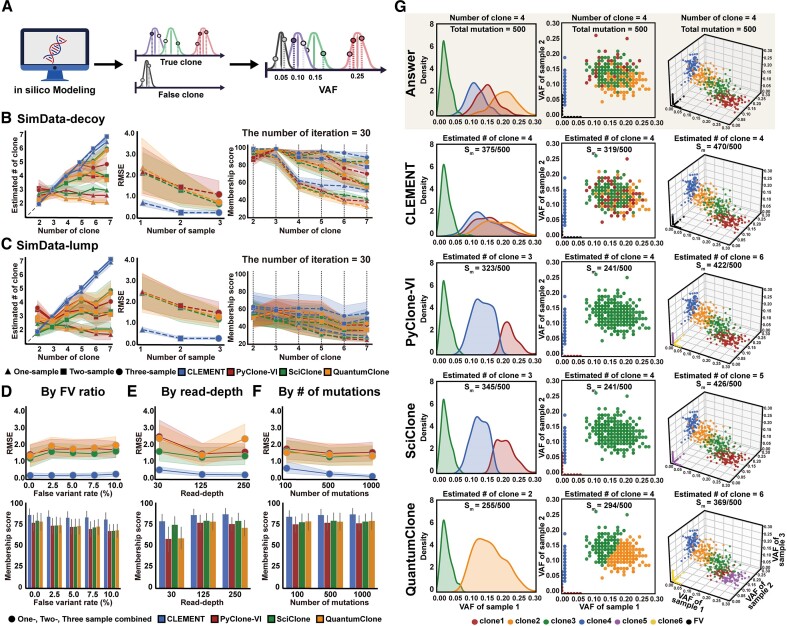 Figure 2
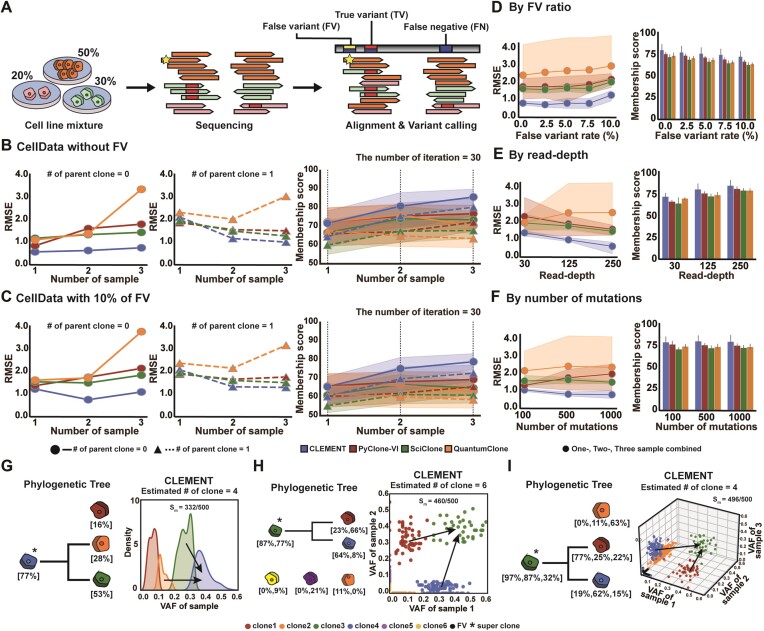 Figure 3
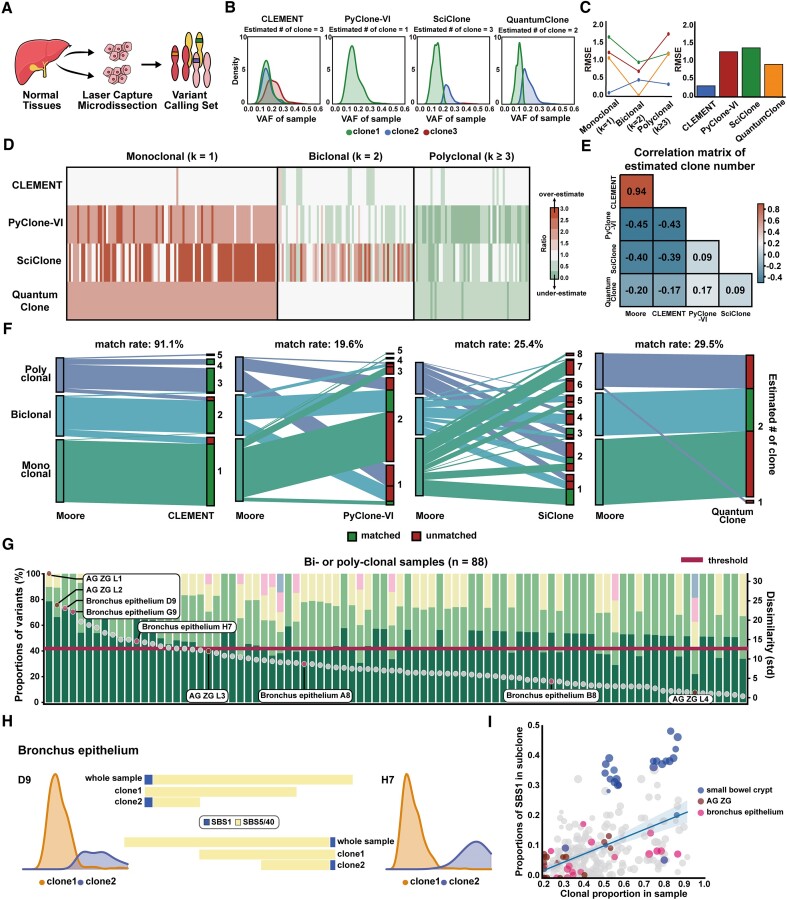 Figure 4
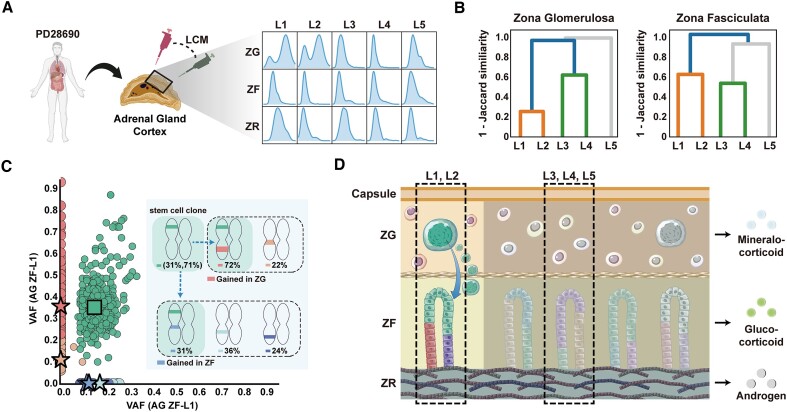 Figure 5
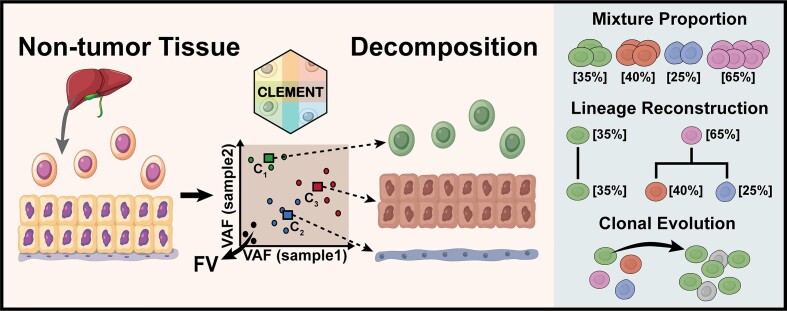 Figure 6
Peer Reviews
No public reviews on file for this paper yet. If you reviewed it on a platform where reviews are public (OpenReview, ICLR, NeurIPS, ICML), you can paste yours below so the community can read it here.
Videos
No videos yet. Explain this paper in a talk, walkthrough, or lecture? Add one.
Taxonomy
TopicsCancer Genomics and Diagnostics · Molecular Biology Techniques and Applications · Genomic variations and chromosomal abnormalities