PTEN and the PTEN-like phosphatase CnrN have both distinct and overlapping roles in a Dictyostelium chemorepulsion pathway
Kristen M. Consalvo, Ramesh Rijal, Steven L. Beruvides, Ryan Mitchell, Karissa Beauchemin, Danni Collins, Jack Scoggin, Jerome Scott, Richard H. Gomer

TL;DR
This study shows how two similar proteins, PTEN and CnrN, work together in Dictyostelium cells to help them move away from a harmful chemical signal.
Contribution
The study reveals distinct and overlapping roles of PTEN and CnrN in chemorepulsion, a poorly understood process in eukaryotic cells.
Findings
PTEN and CnrN both inhibit Ras activation and reduce PI(3,4,5)P3 levels in response to the chemorepellent AprA.
AprA requires both PTEN and CnrN to increase PI(4,5)P2 levels and alter cell morphology.
PTEN uniquely decreases PI(4,5)P2 levels and induces cell roundness in response to AprA.
Abstract
Little is known about eukaryotic chemorepulsion. The enzymes phosphatase and tensin homolog (PTEN) and CnrN dephosphorylate phosphatidylinositol 3,4,5-trisphosphate [PI(3,4,5)P3] to phosphatidylinositol 4,5-bisphosphate [PI(4,5)P2]. Dictyostelium discoideum cells require both PTEN and CnrN to induce chemorepulsion of cells away from the secreted chemorepellent protein AprA. How D. discoideum cells utilize two proteins with redundant phosphatase activities in response to AprA is unclear. Here, we show that D. discoideum cells require both PTEN and CnrN to locally inhibit Ras activation, decrease basal levels of PI(3,4,5)P3 and increase basal numbers of macropinosomes, and AprA prevents this increase. AprA requires both PTEN and CnrN to increase PI(4,5)P2 levels, decrease PI(3,4,5)P3 levels, inhibit proliferation, decrease myosin II phosphorylation and increase filopod sizes. PTEN, but…
Genes, proteins, chemicals, diseases, species, mutations and cell lines named across the full text — each resolved to its canonical identifier and authoritative record.
Click any figure to enlarge with its caption.
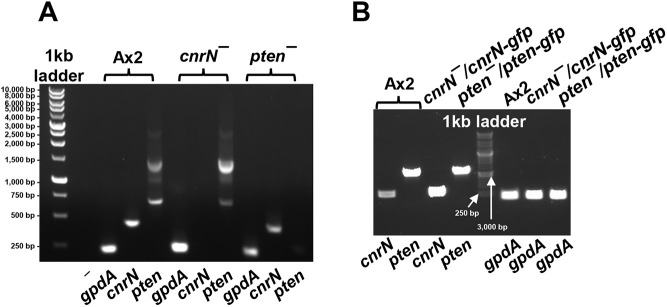 Figure 1
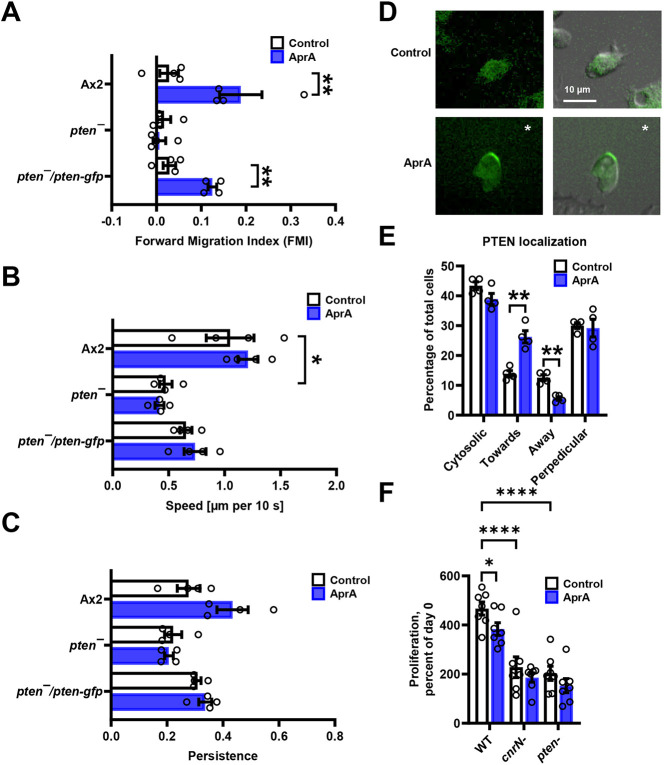 Figure 2
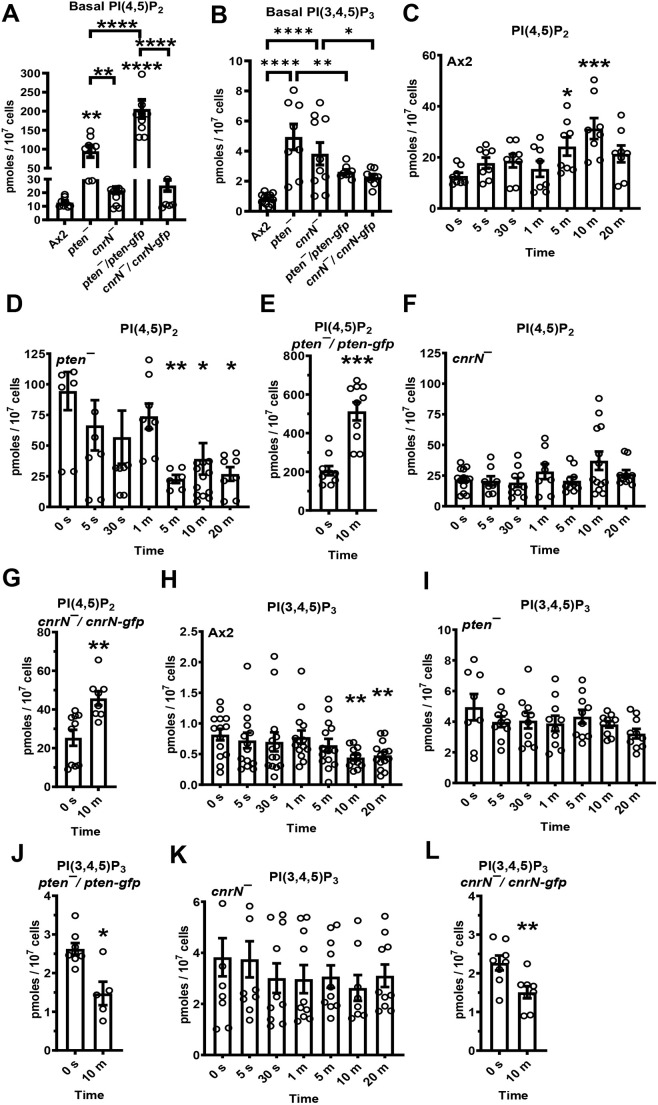 Figure 3
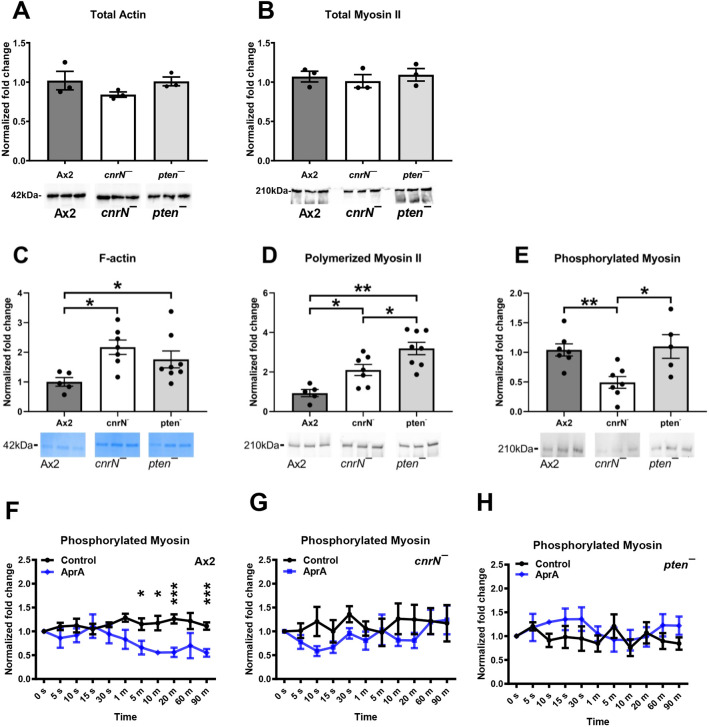 Figure 4
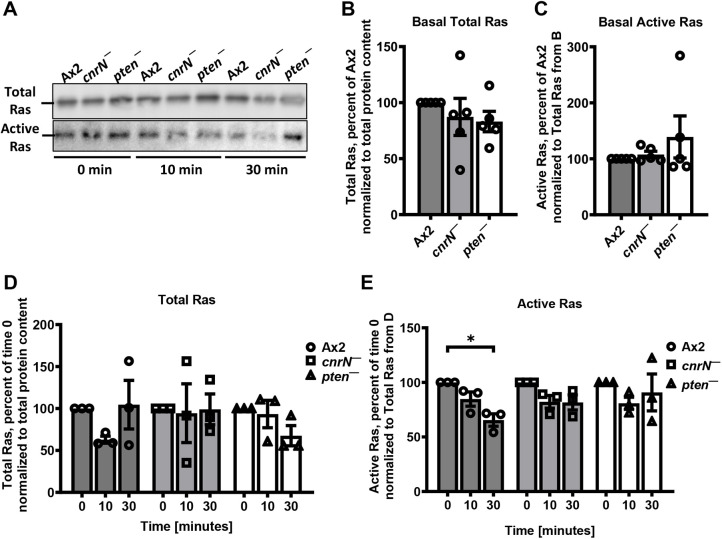 Figure 5
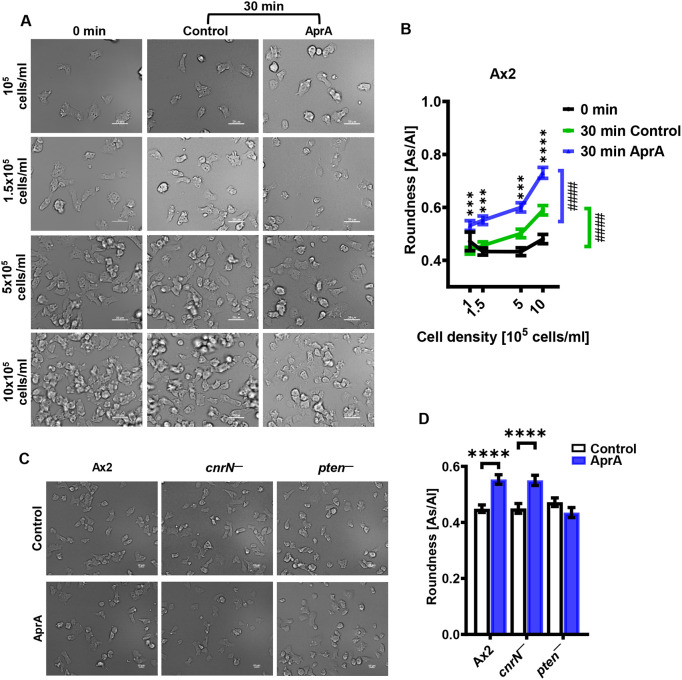 Figure 6
Peer Reviews
No public reviews on file for this paper yet. If you reviewed it on a platform where reviews are public (OpenReview, ICLR, NeurIPS, ICML), you can paste yours below so the community can read it here.
Videos
No videos yet. Explain this paper in a talk, walkthrough, or lecture? Add one.
Taxonomy
TopicsCellular Mechanics and Interactions · Microtubule and mitosis dynamics · PI3K/AKT/mTOR signaling in cancer