Utility of Adjunctive Impella Support to Venoarterial Extracorporeal Membrane Oxygenation for a Refractory Electrical Storm
Yusuke Akazawa, Haruhiko Higashi, Toru Miyoshi, Shinji Inaba, Osamu Yamaguchi

TL;DR
This case study shows how combining Impella support with VA-ECMO can help manage a severe heart condition unresponsive to standard treatments.
Contribution
The study presents a novel approach using Impella to reduce left ventricular strain during VA-ECMO in refractory electrical storms.
Findings
VA-ECMO alone increases left ventricular afterload and pressure.
Adding Impella support may improve outcomes by unloading the left ventricle.
The combination was effective in a case resistant to defibrillation.
Abstract
Venoarterial extracorporeal membrane oxygenation (VA-ECMO) stabilizes hemodynamics in an electrical storm leading to cardiogenic shock. However, adverse effects of VA-ECMO are increased left ventricular (LV) afterload and LV end-diastolic pressure due to retrograde blood return. These adverse effects could be ameliorated by LV unloading with Impella insertion. This case illustrates the possible efficacy of adjunctive Impella insertion for a refractory electrical storm that is resistant to defibrillation under mechanical support with VA-ECMO for cardiogenic shock.
Genes, proteins, chemicals, diseases, species, mutations and cell lines named across the full text — each resolved to its canonical identifier and authoritative record.
Click any figure to enlarge with its caption.
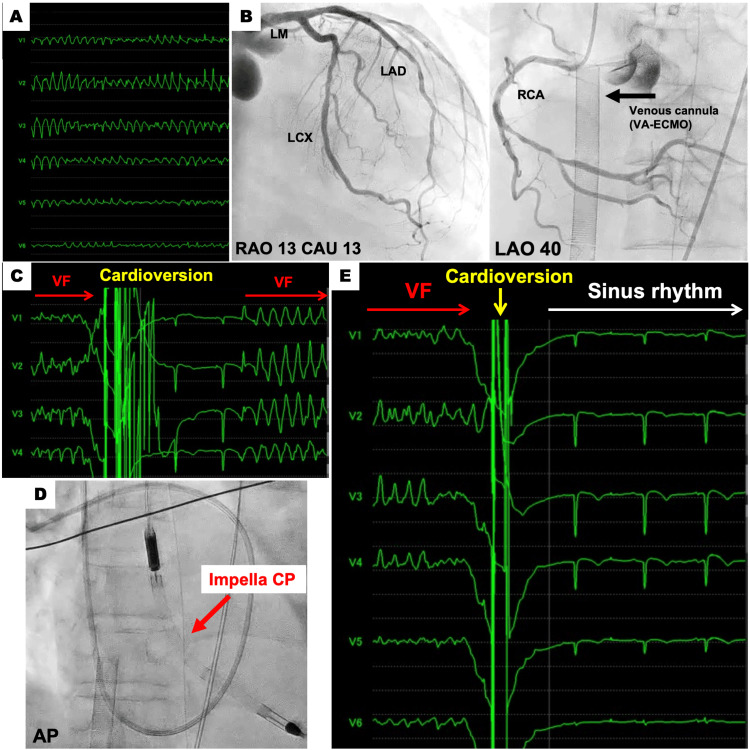 Figure 1
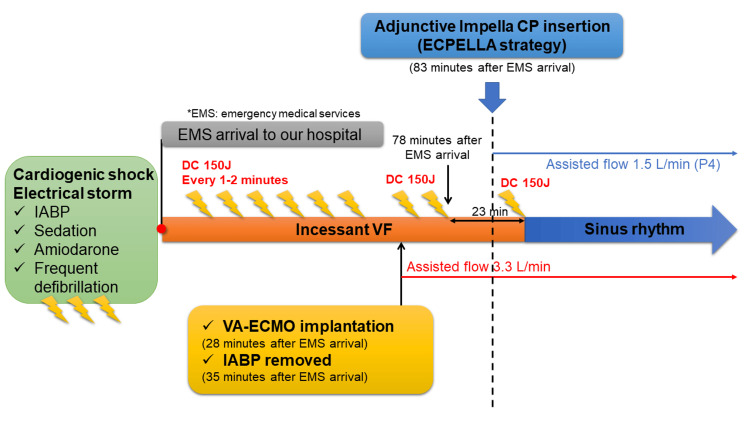 Figure 2
 Figure 3
 Figure 4
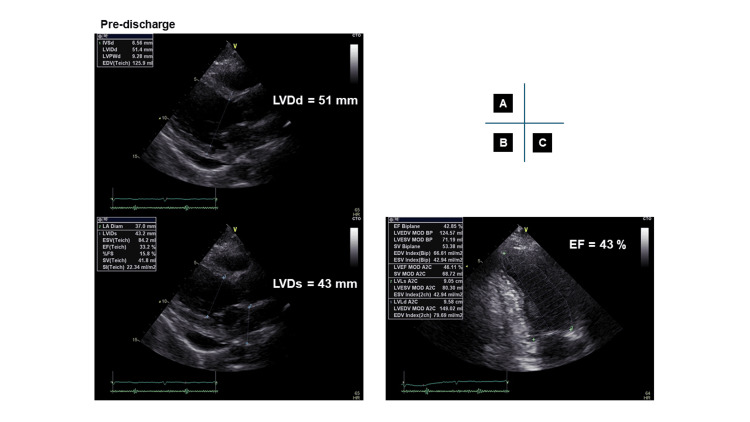 Figure 5
Peer Reviews
No public reviews on file for this paper yet. If you reviewed it on a platform where reviews are public (OpenReview, ICLR, NeurIPS, ICML), you can paste yours below so the community can read it here.
Videos
No videos yet. Explain this paper in a talk, walkthrough, or lecture? Add one.
Taxonomy
TopicsCardiac Arrest and Resuscitation · Mechanical Circulatory Support Devices · Cardiac electrophysiology and arrhythmias