Comparative analysis of virulence gene profiles of Escherichia coli from human and non-human sources in Rivers State, Nigeria
Barira Azeez Abeni, Nnenna Frank-Peterside, Kome Otokunefor

TL;DR
The study compares virulence genes in Escherichia coli from human and non-human sources in Nigeria, finding similar profiles and suggesting these genes may not reliably distinguish between the two sources.
Contribution
The study provides new insights into the distribution of virulence gene profiles in E. coli isolates from human and non-human sources in Rivers State, Nigeria.
Findings
Most E. coli isolates carried fimH as the most prevalent virulence gene.
Non-human isolates showed higher occurrence of virulence genes compared to human isolates.
The afaCc-aer-fimH profile was the most common in general, while aer-afaCc-fimH-papC was most common in non-human isolates.
Abstract
Traditionally, the presence of virulence features has been thought to be a key factor in differentiating pathogenic from commensal strains. An understanding of the virulence potential of Escherichia coli isolates from various sources is essential to shed light on potential contamination/transmission rates between the various sources. This study was therefore aimed at exploring the occurrence of specific virulence genes and gene profiles associated with E. coli from human and non-human sources in Rivers State, Nigeria. Two hundred samples from human (urine and faeces) and non-human (soil and poultry droppings) sources (50 each) were analysed using standard microbiological procedures. DNA was extracted from isolates presumptively identified as E. coli using the Presto Mini gDNA Bacteria-Kit Quick protocol following the manufacturer’s instructions. Isolate identities were confirmed using…
Genes, proteins, chemicals, diseases, species, mutations and cell lines named across the full text — each resolved to its canonical identifier and authoritative record.
Click any figure to enlarge with its caption.
 Figure 1
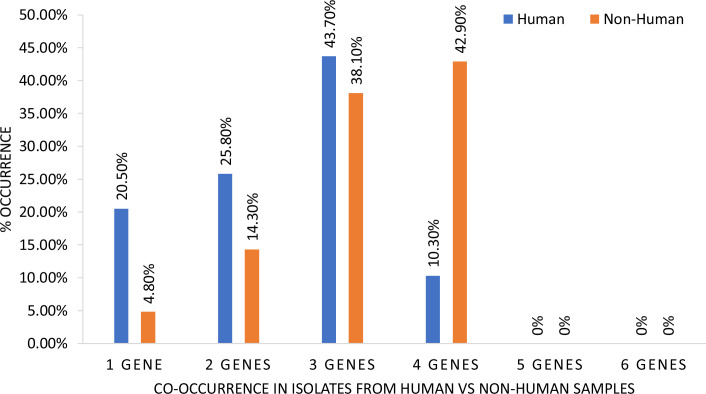 Figure 2
Peer Reviews
No public reviews on file for this paper yet. If you reviewed it on a platform where reviews are public (OpenReview, ICLR, NeurIPS, ICML), you can paste yours below so the community can read it here.
Videos
No videos yet. Explain this paper in a talk, walkthrough, or lecture? Add one.
Taxonomy
TopicsEscherichia coli research studies · Vibrio bacteria research studies · Bacteriophages and microbial interactions