ICTV Virus Taxonomy Profile: Turriviridae 2024
Sydnie K. Chase, Jamie C. Snyder

TL;DR
This paper summarizes the taxonomy of Turriviridae, a virus family infecting archaea, with details on their structure and host range.
Contribution
Provides an updated ICTV taxonomy profile for Turriviridae, highlighting their unique characteristics and host interactions.
Findings
Turriviridae viruses have a dsDNA genome of 16–17 kbp and a spherical virion structure.
They infect extremophilic archaea like Sulfolobus and Saccharolobus.
Some Turriviridae members cause cell lysis, while others are temperate.
Abstract
The family Turriviridae includes viruses with a dsDNA genome of 16–17 kbp. Virions are spherical with a diameter of approximately 75 nm and comprise a host-derived internal lipid membrane surrounded by a proteinaceous capsid shell. Members of the family Turriviridae infect extremophilic archaea of the genera Sulfolobus and Saccharolobus. Viral infection results in cell lysis for Sulfolobus turreted icosahedral virus 1 infection but other members of the family can be temperate. This is a summary of the International Committee on Taxonomy of Viruses (ICTV) Report on the family Turriviridae, which is available at ictv.global/report/turriviridae.
Genes, proteins, chemicals, diseases, species, mutations and cell lines named across the full text — each resolved to its canonical identifier and authoritative record.
Click any figure to enlarge with its caption.
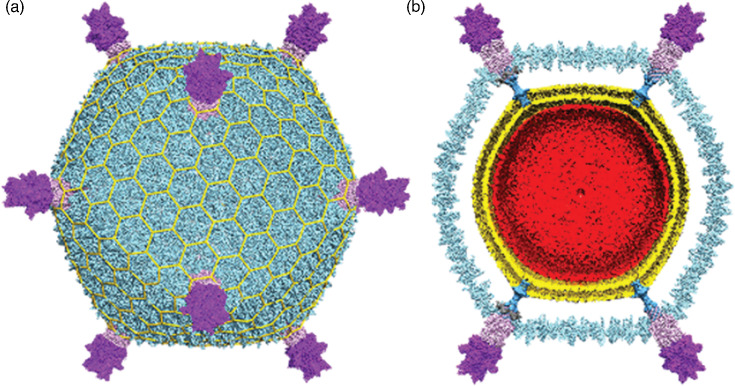 Figure 1
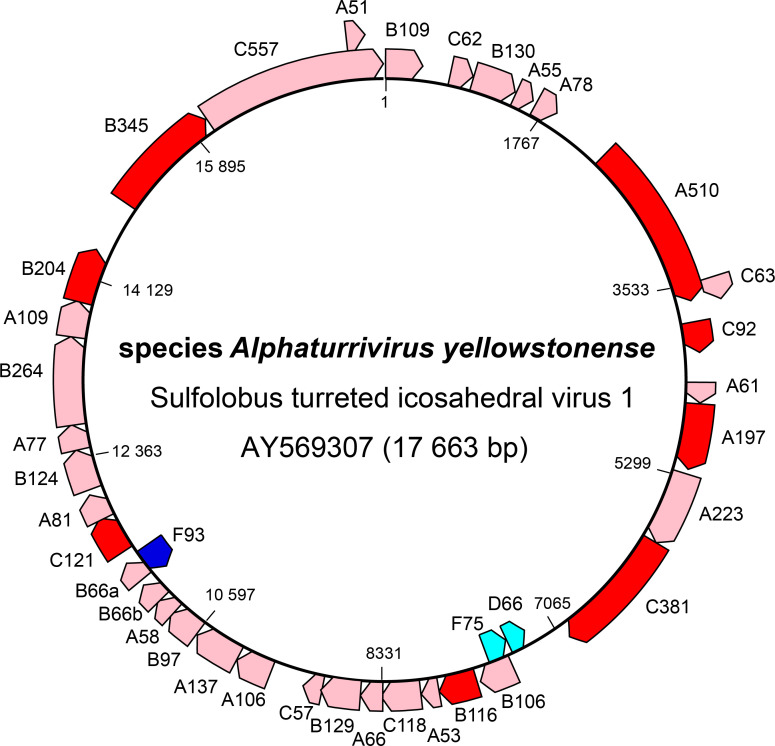 Figure 2
Peer Reviews
No public reviews on file for this paper yet. If you reviewed it on a platform where reviews are public (OpenReview, ICLR, NeurIPS, ICML), you can paste yours below so the community can read it here.
Videos
No videos yet. Explain this paper in a talk, walkthrough, or lecture? Add one.
Taxonomy
TopicsAnimal Virus Infections Studies · Plant Virus Research Studies · Bacteriophages and microbial interactions