GWarrange: a pre- and post- genome-wide association studies pipeline for detecting phenotype-associated genome rearrangement events
Yi Ling Tam, Sarah Cameron, Andrew Preston, Lauren Cowley

TL;DR
GWarrange is a pipeline that uses k-mers to detect genome rearrangements linked to phenotypes in bacterial genome-wide association studies.
Contribution
GWarrange introduces a novel method to interpret k-mers in the context of genome rearrangements using placeholder sequences for repeats.
Findings
GWarrange successfully identifies genome rearrangements associated with phenotypes in bacterial species.
The pipeline replaces repeat sequences with placeholders to improve k-mer analysis of rearrangement boundaries.
Case studies on Bordetella pertussis and Enterococcus faecium demonstrate the pipeline's effectiveness.
Abstract
The use of k-mers to capture genetic variation in bacterial genome-wide association studies (bGWAS) has demonstrated its effectiveness in overcoming the plasticity of bacterial genomes by providing a comprehensive array of genetic variants in a genome set that is not confined to a single reference genome. However, little attempt has been made to interpret k-mers in the context of genome rearrangements, partly due to challenges in the exhaustive and high-throughput identification of genome structure and individual rearrangement events. Here, we present GWarrange, a pre- and post-bGWAS processing methodology that leverages the unique properties of k-mers to facilitate bGWAS for genome rearrangements. Repeat sequences are common instigators of genome rearrangements through intragenomic homologous recombination, and they are commonly found at rearrangement boundaries. Using whole-genome…
Genes, proteins, chemicals, diseases, species, mutations and cell lines named across the full text — each resolved to its canonical identifier and authoritative record.
Click any figure to enlarge with its caption.
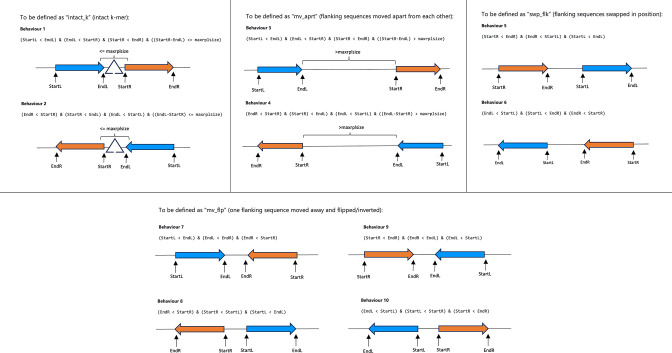 Figure 1
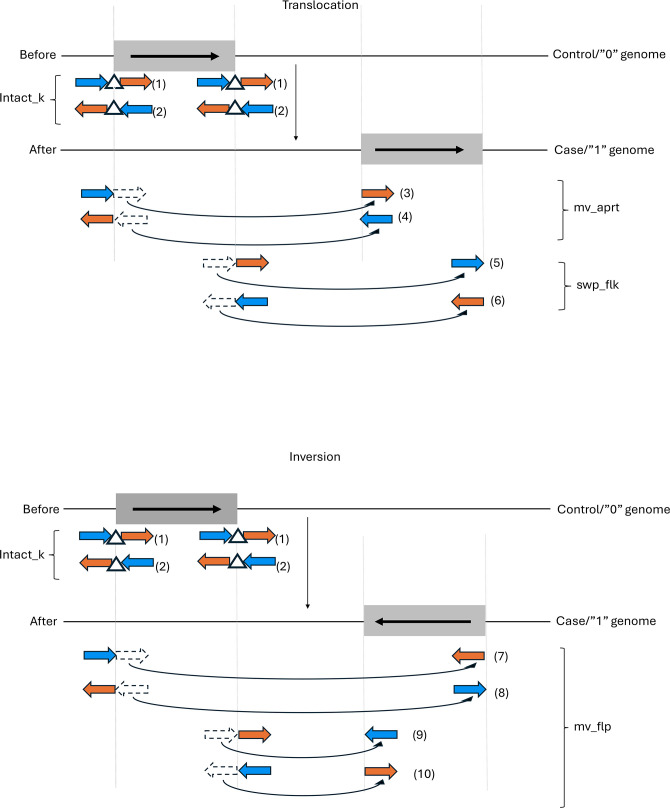 Figure 2
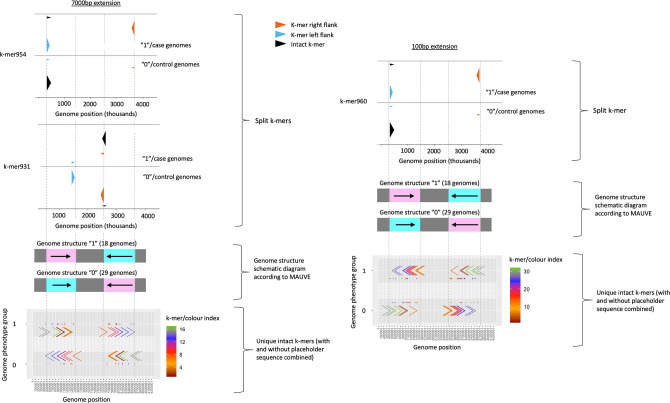 Figure 3
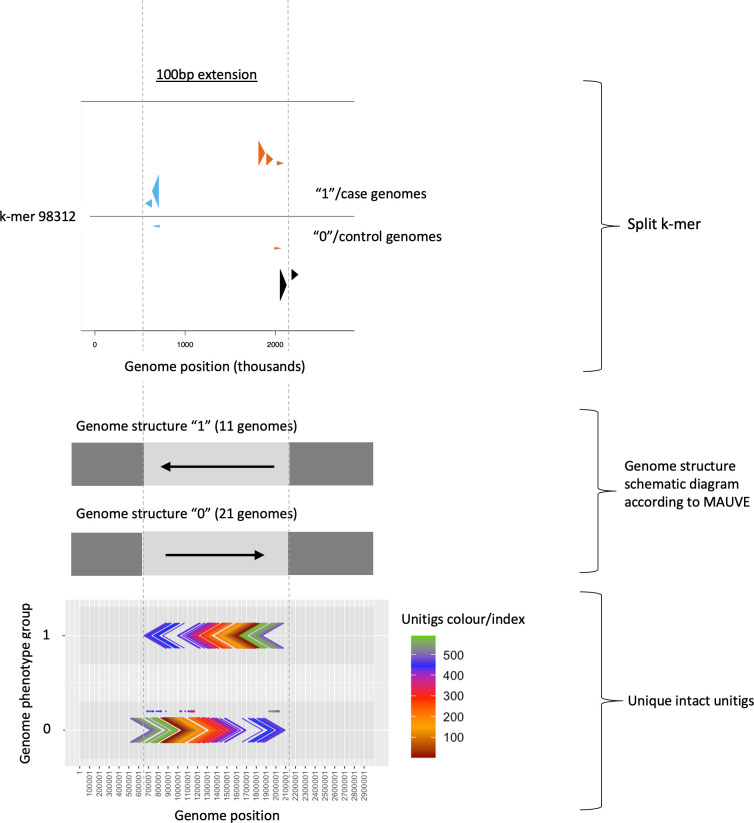 Figure 4
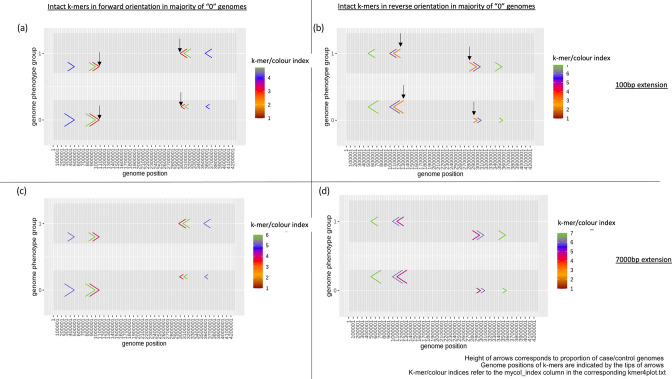 Figure 5
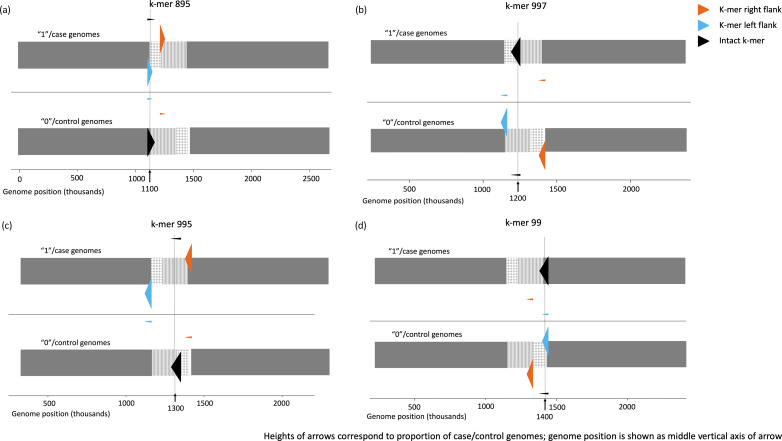 Figure 6
Peer Reviews
No public reviews on file for this paper yet. If you reviewed it on a platform where reviews are public (OpenReview, ICLR, NeurIPS, ICML), you can paste yours below so the community can read it here.
Videos
No videos yet. Explain this paper in a talk, walkthrough, or lecture? Add one.
Taxonomy
TopicsGenomics and Phylogenetic Studies · Bacteriophages and microbial interactions · Legume Nitrogen Fixing Symbiosis