Comparison of Trifecta and Pentafecta Outcomes across 3 Surgical Modalities of Partial Nephrectomy (PN) – Open, Lap, and Robotic
Hiranya Deka, N. Mallikarjunarao Medam, Ginil Kumar P., Vishnu P., Manav Gideon, Achuth Ajith Kumar, Yensani Prashanth Reddy, Shivraj Barath Kumar

TL;DR
This study compares the success of three kidney surgery methods using Trifecta and Pentafecta outcomes, finding no significant differences between them.
Contribution
The study provides a comparative analysis of Trifecta and Pentafecta outcomes across open, laparoscopic, and robotic partial nephrectomy.
Findings
Trifecta and Pentafecta outcomes showed no significant differences among the three surgical modalities.
Robotic and laparoscopic methods had lower morbidity compared to open surgery.
Open surgery had higher warm ischemia time, hospital stay, and estimated blood loss.
Abstract
Renal cell carcinoma (RCC) is the most common solid tumor in the kidney (90%), accounting for about 3% of all cancers in adults. Partial nephrectomy (PN) is the surgical procedure primarily used for the treatment of localized kidney tumors. Two commonly used terms to describe the complexity and success of a partial nephrectomy procedure are “trifecta” and “pentafecta.” Trifecta is defined as Warm ischemia time (WIT) ≤ 25min or Cold ischemia time (CIT) ≤ 60min, Negative surgical margin (NSM), and no perioperative Clavien-Dindo complications (CDC) of Gr 3 or more [8], whereas pentafecta is defined as trifecta plus >90% preservation of e-Glomerular filtration rate (GFR) and no increase in chronic kidney disease (CKD) stage at 12-months post-operative period. We retrospectively analyzed all patients who underwent partial nephrectomy at a single high-volume tertiary centre, from 2012 to…
Genes, proteins, chemicals, diseases, species, mutations and cell lines named across the full text — each resolved to its canonical identifier and authoritative record.
Click any figure to enlarge with its caption.
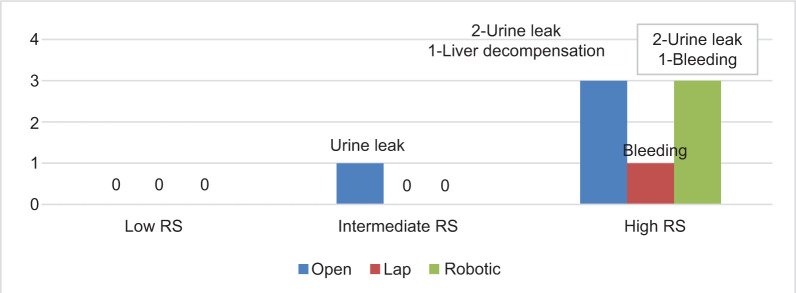 Figure 1
Peer Reviews
No public reviews on file for this paper yet. If you reviewed it on a platform where reviews are public (OpenReview, ICLR, NeurIPS, ICML), you can paste yours below so the community can read it here.
Videos
No videos yet. Explain this paper in a talk, walkthrough, or lecture? Add one.
Taxonomy
TopicsInnovative Teaching and Learning Methods · Wikis in Education and Collaboration · Open Education and E-Learning