Occult gastric carcinoma with microsatellite instability diagnosed 10 years after excision of metastatic lymph node: a case report
Yutaka Tamamori, Takuya Mori, Akihiro Tanaka, Takuma Okada, Shogo Tanaka, Yuichi Fumimoto, Kiyotaka Yukimoto, Ryugo Sawada, Hisao Sano, Yoshio Ohta, Hirokazu Taniguchi, Toshimasa Tsujinaka

TL;DR
A rare case of gastric cancer was diagnosed 10 years after a lymph node biopsy, with both tumors showing microsatellite instability.
Contribution
This is the first reported case of gastric cancer with high microsatellite instability where the primary tumor was identified long after metastatic lymph node resection.
Findings
Early gastric cancer was detected 10 years after suprapancreatic lymph node excision.
Both the gastric tumor and lymph node showed microsatellite instability, indicating a common origin.
This case highlights the potential for occult gastric cancer to be diagnosed long after initial metastatic findings.
Abstract
Suprapancreatic lymph node metastasis is one of the usual routes for gastric cancer. However, it is rare for the primary lesion to be found several years after resection of the suprapancreatic metastatic lymph node. This is a report of occult gastric carcinoma with microsatellite instability diagnosed 10 years after excision of a metastatic lymph node. A 55-year-old female presented with suprapancreatic lymph node swelling during a medical examination. Gastroscopy revealed no malignancy. We performed an excisional biopsy via laparotomy and histologically suspected metastatic cancer of unknown origin. After nine and a half years, we detected early gastric cancer by gastroscopy and performed a distal gastrectomy. The gastric tumor was pathologically similar to the previous suprapancreatic tumor. Immunohistochemical examination revealed that both the stomach and suprapancreatic lymph node…
Genes, proteins, chemicals, diseases, species, mutations and cell lines named across the full text — each resolved to its canonical identifier and authoritative record.
Click any figure to enlarge with its caption.
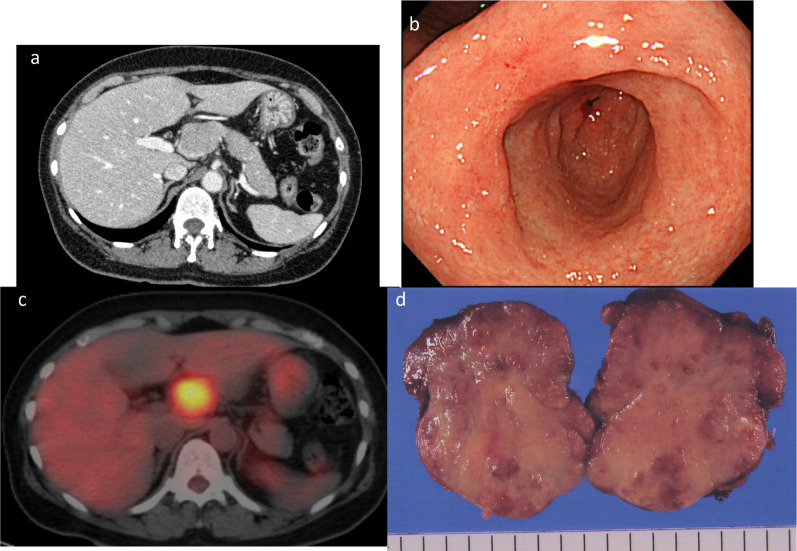 Figure 1
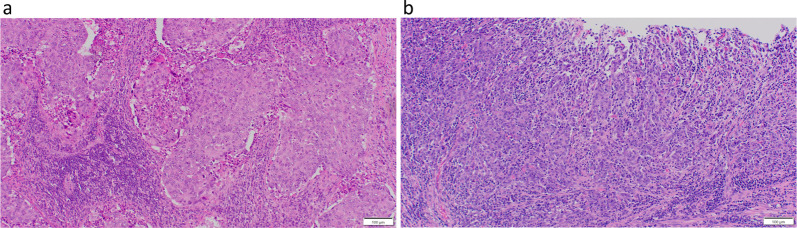 Figure 2
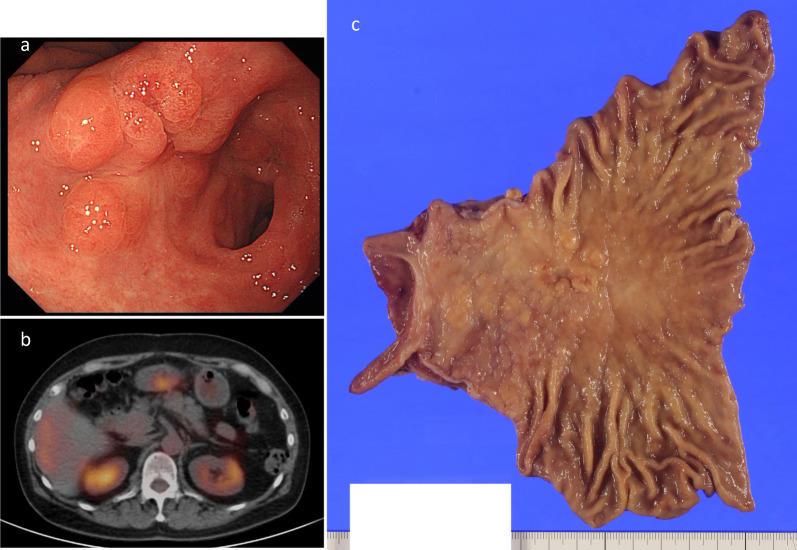 Figure 3
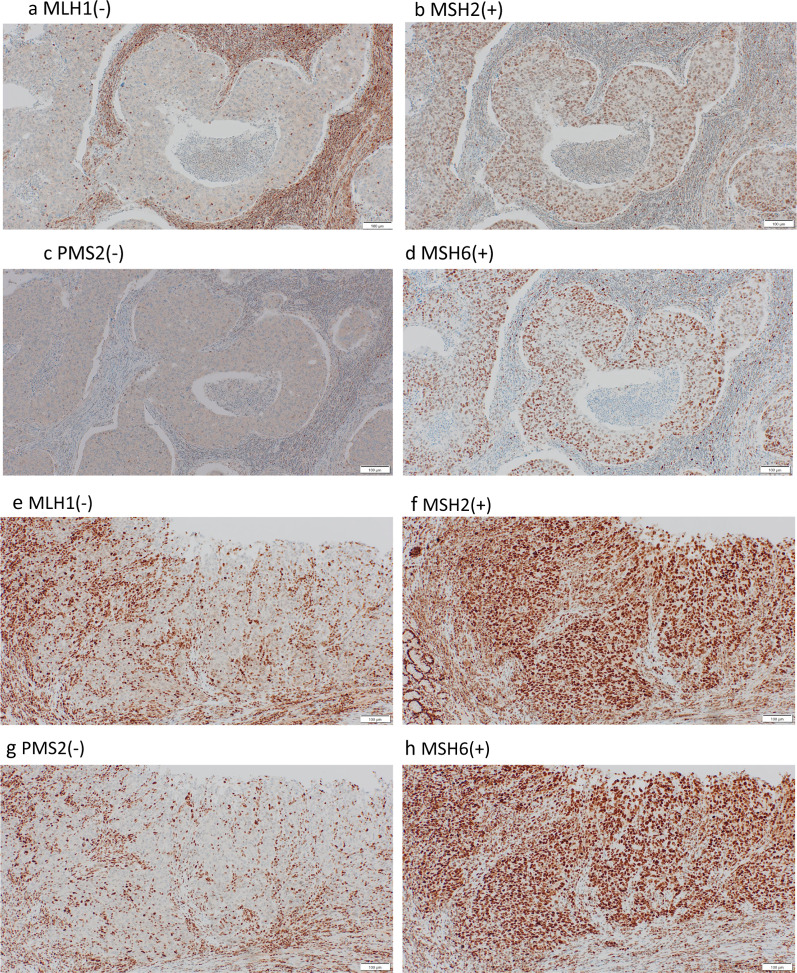 Figure 4
Peer Reviews
No public reviews on file for this paper yet. If you reviewed it on a platform where reviews are public (OpenReview, ICLR, NeurIPS, ICML), you can paste yours below so the community can read it here.
Videos
No videos yet. Explain this paper in a talk, walkthrough, or lecture? Add one.
Taxonomy
TopicsGenetic factors in colorectal cancer · Gastric Cancer Management and Outcomes · Cholangiocarcinoma and Gallbladder Cancer Studies