Evaluation of neuroretina following i.v. or intra‐CSF AAV9 gene replacement in mice with MPS IIIA, a childhood dementia
Helen Beard, Leanne Winner, Andrew Shoubridge, Emma Parkinson‐Lawrence, Adeline A. Lau, Siti N. Mubarokah, Tabitha‐Rose Lance, Barbara King, William Scott, Marten F. Snel, Paul J. Trim, Kim M. Hemsley

TL;DR
This study compares two gene therapy methods in mice with a childhood dementia, finding that intravenous delivery improves retinal health better than cerebrospinal fluid delivery.
Contribution
The study reveals that intravenous AAV9 gene replacement is more effective than CSF delivery in preserving retinal structure in a mouse model of Sanfilippo syndrome.
Findings
Intravenous AAV9 gene replacement significantly improved peripheral retinal thickness and photoreceptor cell length.
Normalization of endo-lysosomal compartment size and microglial morphology was observed only with intravenous delivery.
Intra-CSF gene replacement showed limited efficacy in peripheral retinal degeneration.
Abstract
Sanfilippo syndrome (mucopolysaccharidosis type IIIA; MPS IIIA) is a childhood dementia caused by inherited mutations in the sulfamidase gene. At present, there is no treatment and children with classical disease generally die in their late teens. Intravenous or intra‐cerebrospinal fluid (CSF) injection of AAV9‐gene replacement is being examined in human clinical trials; evaluation of the impact on brain disease is an intense focus; however, MPS IIIA patients also experience profound, progressive photoreceptor loss, leading to night blindness. To compare the relative efficacy of the two therapeutic approaches on retinal degeneration in MPS IIIA mice. Neonatal mice received i.v. or intra‐CSF AAV9‐sulfamidase or vehicle and after 20 weeks, biochemical and histological evaluation of neuroretina integrity was carried out. Both treatments improved central retinal thickness; however, in…
Genes, proteins, chemicals, diseases, species, mutations and cell lines named across the full text — each resolved to its canonical identifier and authoritative record.
Click any figure to enlarge with its caption.
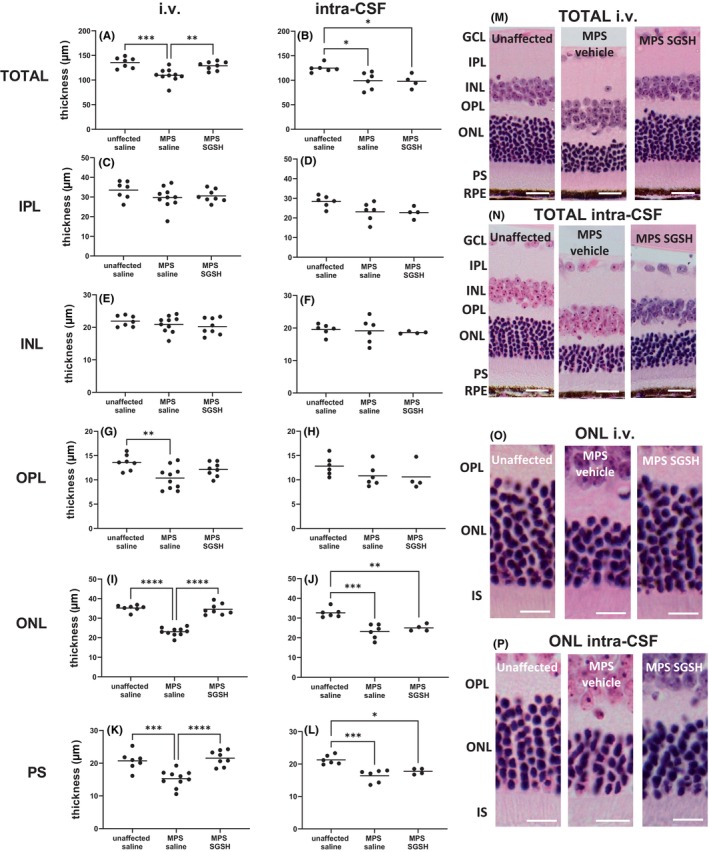 Figure 1
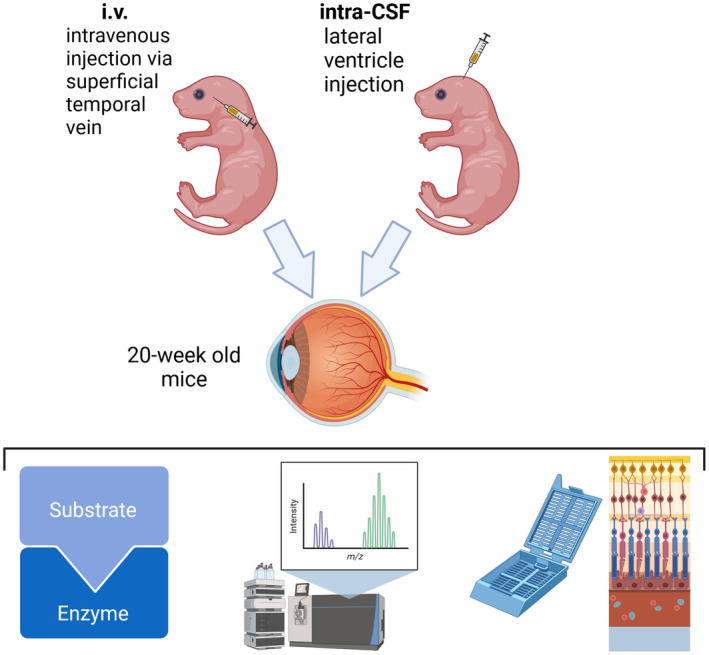 Figure 2
 Figure 3
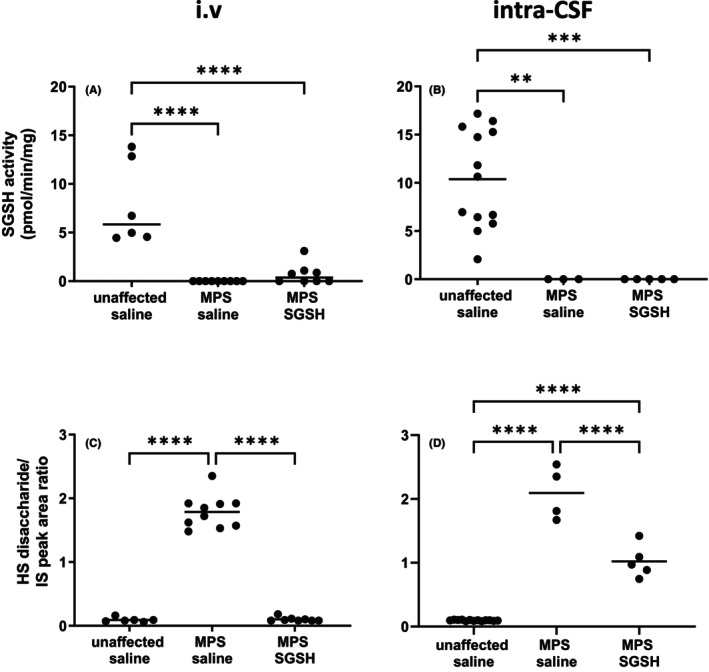 Figure 4
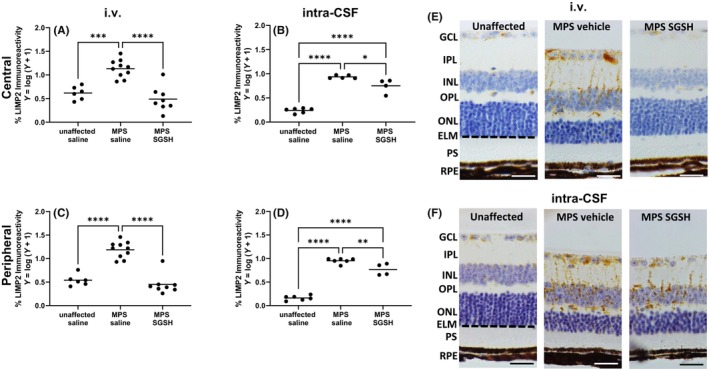 Figure 5
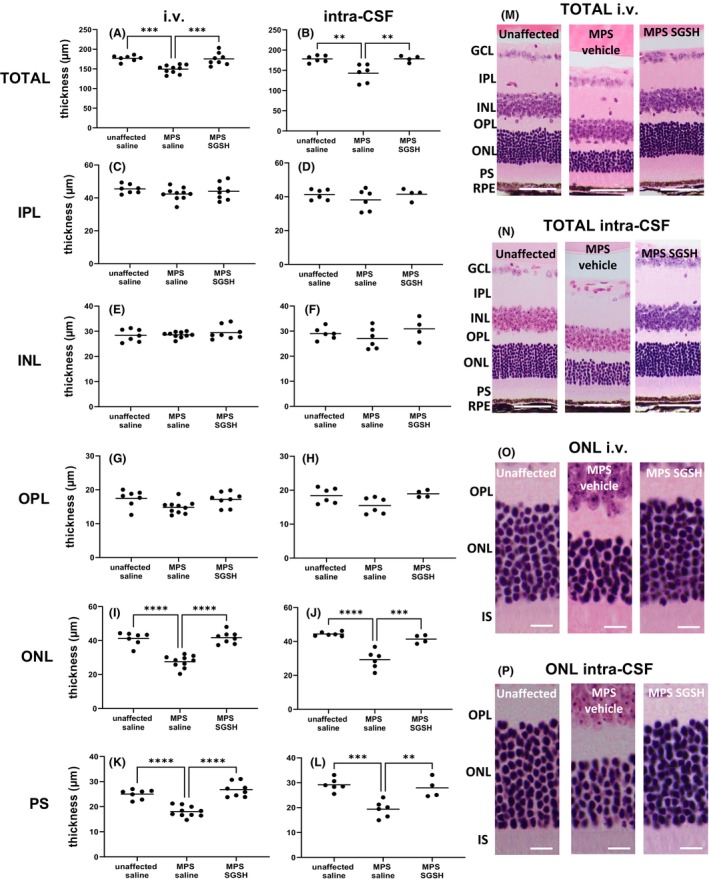 Figure 6
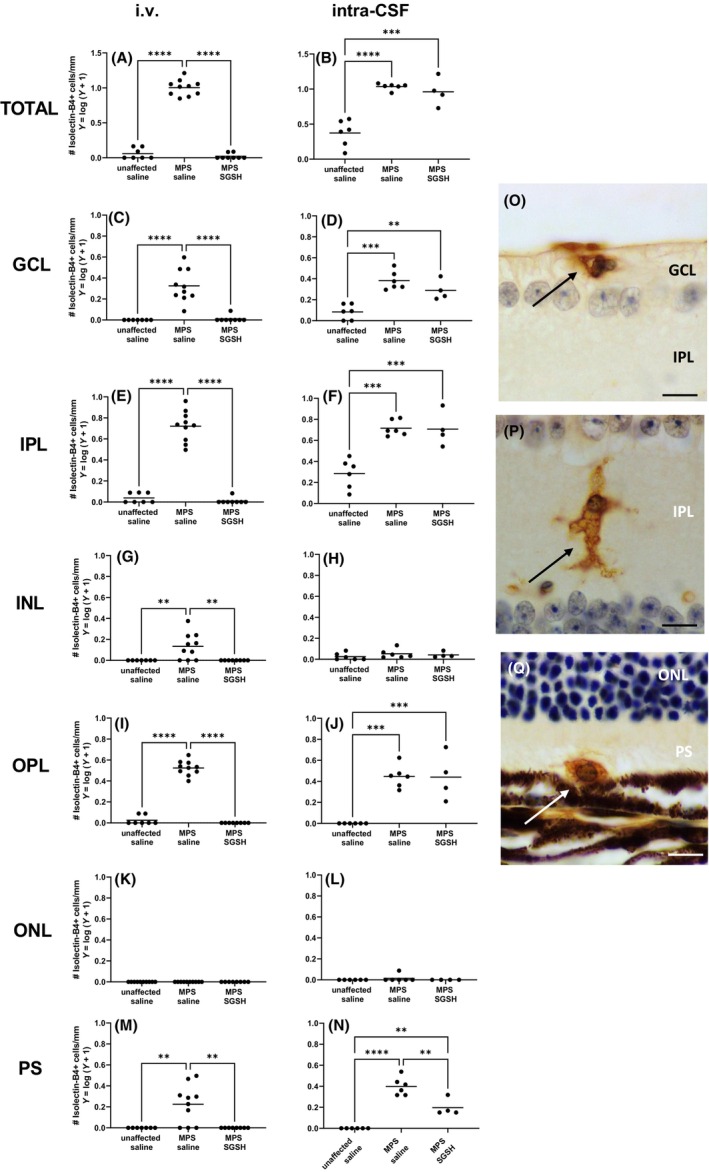 Figure 7
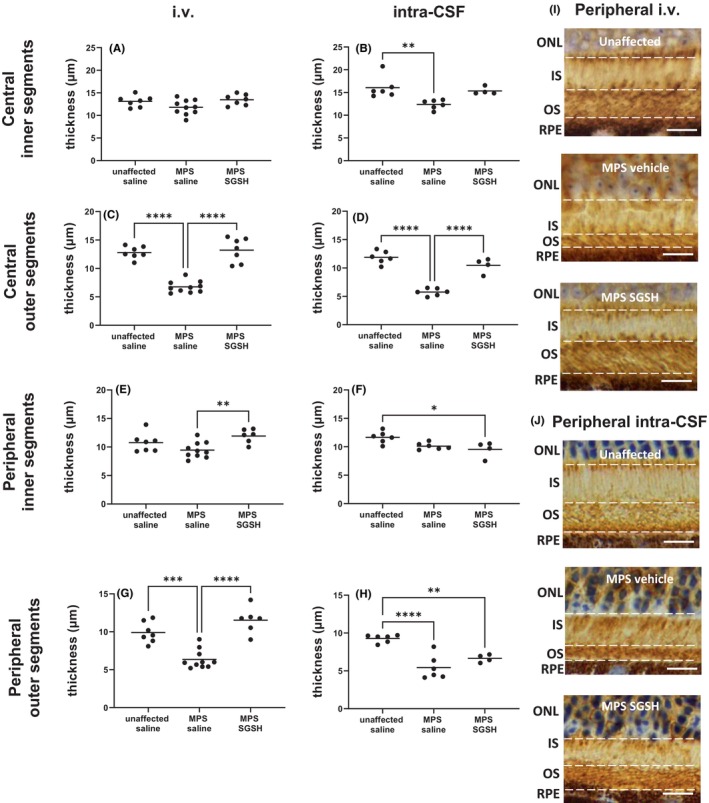 Figure 8
Peer Reviews
No public reviews on file for this paper yet. If you reviewed it on a platform where reviews are public (OpenReview, ICLR, NeurIPS, ICML), you can paste yours below so the community can read it here.
Videos
No videos yet. Explain this paper in a talk, walkthrough, or lecture? Add one.
Taxonomy
TopicsLysosomal Storage Disorders Research · Virus-based gene therapy research · Retinal Development and Disorders