Targeted cancer therapy: the initial high concentration may slow down the selection for resistance
Mikhail V. Blagosklonny

TL;DR
This paper suggests that starting cancer treatment with high drug doses could delay resistance development.
Contribution
The novelty is proposing high initial drug concentrations as a strategy to reduce resistance in targeted cancer therapy.
Findings
Starting with low drug levels selects for drug resistance.
Maximizing initial drug levels may slow resistance development.
Preemptive combination therapies could be more effective.
Abstract
Unfortunately, any targeted therapy is, always, started with low levels of the drug in the organism, selecting for drug resistance. One should propose that initial drug levels must be maximized, and durations may be minimized, ideally, as portions of preemptive combination of targeted drugs.
Genes, proteins, chemicals, diseases, species, mutations and cell lines named across the full text — each resolved to its canonical identifier and authoritative record.
Click any figure to enlarge with its caption.
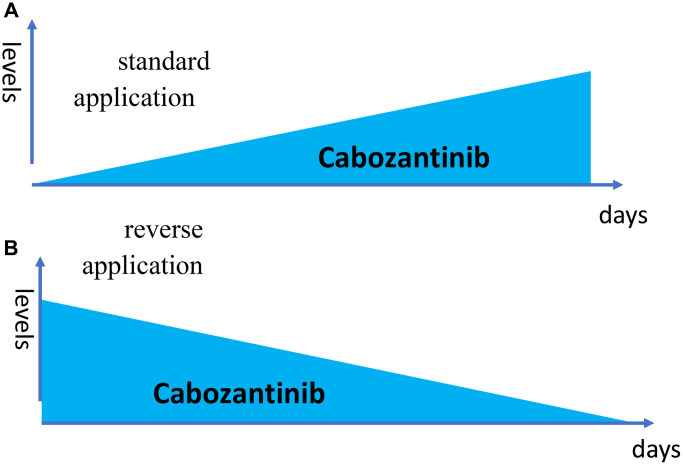 Figure 1
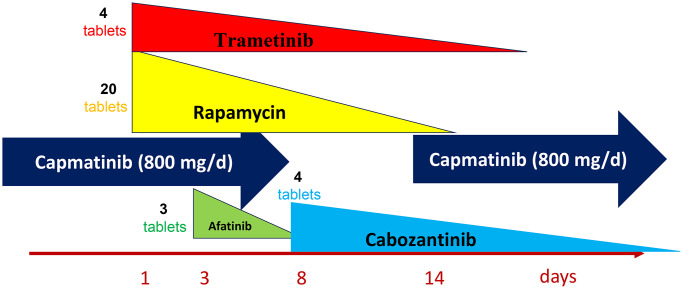 Figure 2
Peer Reviews
No public reviews on file for this paper yet. If you reviewed it on a platform where reviews are public (OpenReview, ICLR, NeurIPS, ICML), you can paste yours below so the community can read it here.
Videos
No videos yet. Explain this paper in a talk, walkthrough, or lecture? Add one.
Taxonomy
TopicsLung Cancer Treatments and Mutations · Cancer Genomics and Diagnostics · PARP inhibition in cancer therapy