Randomized experimental population-based study to evaluate the acceptance and completion of and preferences for cervical cancer screening
Marcela Vieira Lordelo, Cleyton Zanardo Oliveira, Luisa Aguirre Buexm, Rui Manuel Vieira Reis, Adhemar Longatto-Filho, Júlio César Possati-Resende, Fabiana de Lima Vazquez, José Humberto Tavares Guerreiro Fregnani, Farzad Taghizadeh-Hesary, Lucy W. Kivuti-Bitok

TL;DR
This study explores how different cervical cancer screening methods are accepted and completed by women in Brazil, finding that home-based options may improve participation.
Contribution
The study introduces a community trial comparing four cervical cancer screening methods and a choice-based group to assess acceptance and completion rates.
Findings
Methods allowing sampling near the home (urine and vaginal self-collection) had high acceptance rates.
Only 84% of eligible women completed the collection step, indicating challenges in follow-through.
Women’s choice group preferred hospital-based exams over self-collection methods.
Abstract
Cervical cancer has high incidence and mortality rates, especially in less-developed countries. Prevention methods are well established, but there are still barriers preventing some Brazilian women from undergoing a Pap sample. The objective of the study was to evaluate the acceptance, preferences and completion of four screening methods. This has an experimental design (community trial). A total of 164 participants who had never had a Pap sample or had not had one for more than three years were included. The city’s urban area was stratified by census tracts and divided according to income and education levels. Women belonging to the lower-income strata were considered in the study. Random blocks were numbered into five intervention groups (Group 1- Pap sample at the hospital; Group 2- Pap sample in the mobile unit; Group 3- urine self-collection; Group 4- vaginal self-collection; Group…
Genes, proteins, chemicals, diseases, species, mutations and cell lines named across the full text — each resolved to its canonical identifier and authoritative record.
Click any figure to enlarge with its caption.
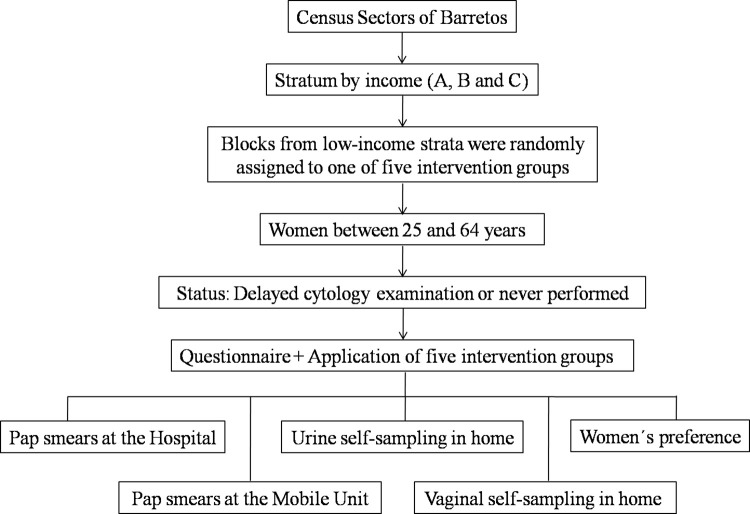 Figure 1
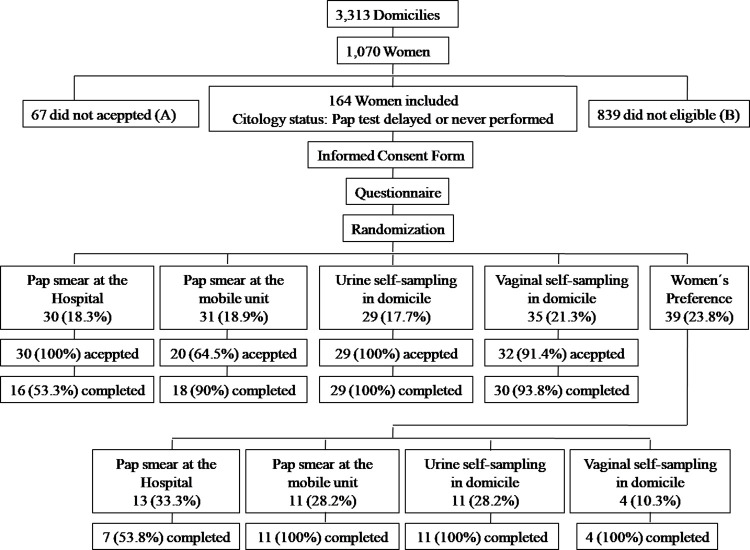 Figure 2
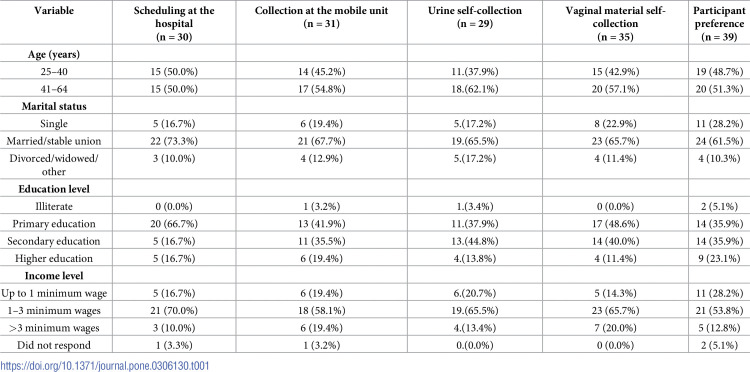 Figure 3
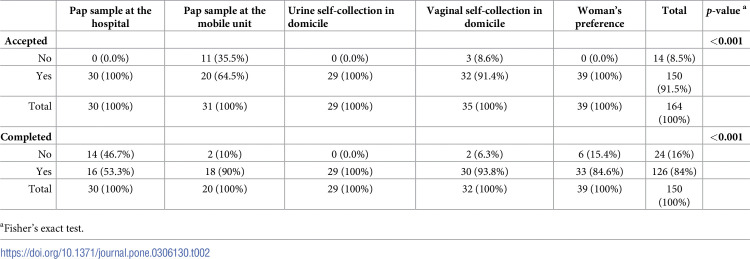 Figure 4
Peer Reviews
No public reviews on file for this paper yet. If you reviewed it on a platform where reviews are public (OpenReview, ICLR, NeurIPS, ICML), you can paste yours below so the community can read it here.
Videos
No videos yet. Explain this paper in a talk, walkthrough, or lecture? Add one.
Taxonomy
TopicsCervical Cancer and HPV Research · Global Cancer Incidence and Screening · Colorectal Cancer Screening and Detection