Inertial Sensor-Based Quantification of Movement Symmetry in Trotting Warmblood Show-Jumping Horses after “Limb-by-Limb” Re-Shoeing of Forelimbs with Rolled Rocker Shoes
Craig Bark, Patrick Reilly, Renate Weller, Thilo Pfau

TL;DR
This study uses sensors to measure how re-shoeing affects movement symmetry in show-jumping horses, finding changes in push-off and weight-bearing depending on ground type.
Contribution
The study introduces a novel 'limb-by-limb' re-shoeing approach to assess movement symmetry in horses using inertial sensors.
Findings
Re-shod limbs showed increased push-off on the inside of the circle during trot.
Weight-bearing decreased with the re-shod limb and the ipsilateral hind limb on hard ground.
Rolled rocker shoes improve push-off on soft ground during circular trotting.
Abstract
Hoof care providers are pivotal for implementing biomechanical optimizations of the musculoskeletal system in the horse. Regular visits allow for the collection of longitudinal, quantitative information (“normal ranges”). Changes in movement symmetry, e.g., after shoeing, are indicative of alterations in weight-bearing and push-off force production. Ten Warmblood show jumping horses (7–13 years; 7 geldings, 3 mares) underwent forelimb re-shoeing with rolled rocker shoes, one limb at a time (“limb-by-limb”). Movement symmetry was measured with inertial sensors attached to the head, withers, and pelvis during straight-line trot and lunging. Normalized differences pre/post re-shoeing were compared to published test–retest repeatability values. Mixed-model analysis with random factors horse and limb within horse and fixed factors surface and exercise direction evaluated movement symmetry…
Genes, proteins, chemicals, diseases, species, mutations and cell lines named across the full text — each resolved to its canonical identifier and authoritative record.
Click any figure to enlarge with its caption.
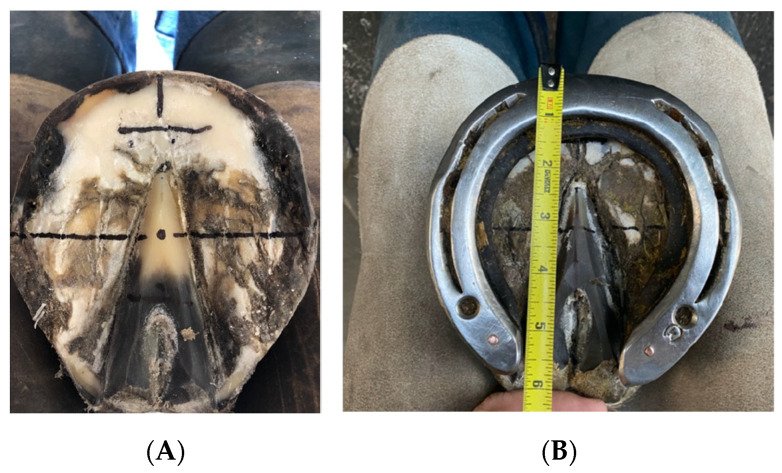 Figure 1
Peer Reviews
No public reviews on file for this paper yet. If you reviewed it on a platform where reviews are public (OpenReview, ICLR, NeurIPS, ICML), you can paste yours below so the community can read it here.
Videos
No videos yet. Explain this paper in a talk, walkthrough, or lecture? Add one.
Taxonomy
TopicsVeterinary Equine Medical Research · Winter Sports Injuries and Performance · Mechanics and Biomechanics Studies