Toxoplasma gondii in Wild Boars (Sus scrofa) in Germany: Serological Screening from Thuringia
Zaida Rentería-Solís, Paul Deutschmann, Thomas W. Vahlenkamp, Kristin Heenemann

TL;DR
This study found that nearly 40% of wild boars in Germany had antibodies against Toxoplasma gondii, suggesting a risk of infection for people who eat undercooked game meat.
Contribution
The study reports a 37.5% seroprevalence of T. gondii in wild boars from Thuringia, Germany, highlighting a public health risk.
Findings
18 out of 42 wild boars tested positive for T. gondii antibodies.
Higher seroprevalence was observed in adult wild boars.
The study emphasizes the need for a nationwide database to assess infection risks.
Abstract
Parasites can be transmitted from animals to humans by consumption of undercooked meat. One of these parasites is Toxoplasma gondii, a unicellular parasite that could cause severe disease in immunocompromised patients and foetal problems during pregnancy. T. gondii can be found in wild boar meat and be a source of infection for humans, particularly hunters and their inner circle of acquaintances. We tested serum samples of 42 free-ranging wild boars from Thuringia in central Germany during the hunting season of 2017/2018 and were able to detect antibodies against T. gondii in 18 of these animals (37.50%). The explicit prevalence of T. gondii specific antibodies points towards a risk of toxoplasmosis for people consuming game meat, particularly when it is not properly cooked. The hunting community as well as authorities should be aware of such possible exposures and infections.…
Genes, proteins, chemicals, diseases, species, mutations and cell lines named across the full text — each resolved to its canonical identifier and authoritative record.
Click any figure to enlarge with its caption.
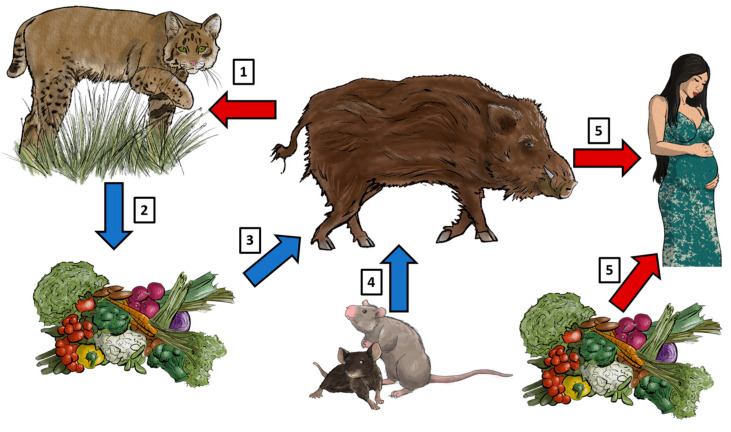 Figure 1
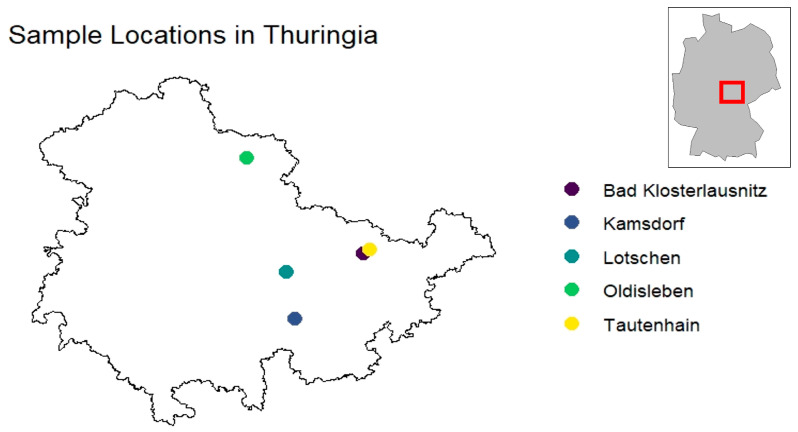 Figure 2
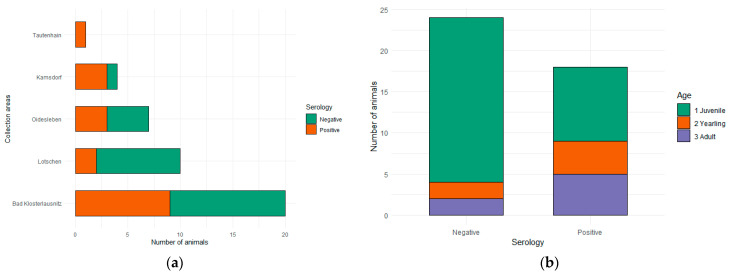 Figure 3
- —“Freundeskreis Tiermedizin”, the Faculty of Veterinary Medicine, and Ceva Santé Animale
Peer Reviews
No public reviews on file for this paper yet. If you reviewed it on a platform where reviews are public (OpenReview, ICLR, NeurIPS, ICML), you can paste yours below so the community can read it here.
Videos
No videos yet. Explain this paper in a talk, walkthrough, or lecture? Add one.
Taxonomy
TopicsSecond Language Acquisition and Learning · Linguistics, Language Diversity, and Identity · EFL/ESL Teaching and Learning
1. Introduction
Meat borne parasites are an often neglected source of zoonotic disease [1]. This disregard can be in part due to the current intensive livestock production methods, which are considered to have significantly reduced the presence of food borne parasites in the meat industry [2]. Intensive animal production sites could limit the access to potential hosts that facilitate the parasite’s completion of its life cycle. Game, conversely, is not submitted to the same anthropogenic stress and the main pressure for the parasite’s survival, including host infection, comes primarily from the ecological variations in the natural environment of its host(s) [3].
Game meat is, therefore, commonly found to be at higher risk of parasite contamination than livestock [4,5]. In Germany, its consumption amongst the general population is low in comparison with livestock meat. However, the intensive consumer, namely hunters, their family and acquaintance circle, consumes game meat around 60 times per year [4,6]. This is in part because it is considered a lean meat and source of proteins and other nutrients, like healthy fatty acids [7]. Game meat includes different species of wild animals, including cervids such as roe deer (Capreolus capreolus), lagomorphs like hares (Lepus spp.), or even omnivores like raccoons (Procyon lotor) [8].
An important omnivore regularly hunted for its meat is the wild boar (Sus scrofa). Wild boars are widely found in Eurasia and north Africa and have been introduced to the Americas and Oceania. They can adapt, not only to different ecosystems but also to the use of anthropogenic resources [9]. Their omnivore diet and adaptability make them a common host for several zoonotic meat borne parasites. Including helminths and their larval forms of importance in meat hygiene and public health such as Trichinella spp. [10], Taenia spp. [11], Echinococcus spp. [12], and Alaria alata [13].
A major zoonotic parasite found in wild boar meat is Toxoplasma gondii, an apicomplexan protozoon with global distribution. Around a quarter of the global human population is seropositive to T. gondii [14], with the highest seroprevalence found in Africa (61.40%) while 29.60% of the population of Europe is reported to be seropositive [14]. T. gondii’s final host are all members of the Felidae family in which the parasite can produce oocysts that are shed in the faeces [15]. Intermediate hosts, namely all warm-blooded vertebrates, can become infected by ingestion of oocysts in water, food or contaminated surfaces. After entering the intermediate, T. gondii will colonize different organs and finally develop into an encysted resting stage called bradyzoite. Bradyzoites can further reach cats and other intermediate hosts (including humans) by predation of infected prey, or by consumption of undercooked meat in the case of humans and domestic carnivores [16]. Toxoplasmosis in humans is of particular importance for immunosuppressed and pregnant patients. In the former, it can be manifested as a neurological disease mainly due to the reactivation of encysted bradyzoites; also in immunocompromised patients, multiple organs can be compromised when the infection is acute [17]. During pregnancy, congenital problems for the foetus or neonate are seldom but can occur in the form of neurological disorders such as hydrocephalous or microcephalus [18].
Wild boars can be infected through T. gondii in different routes (Figure 1). They can accidentally ingest sporulated oocysts through contaminated water, soil, or food sources [19,20]. Moreover, intake of bradyzoite cysts can happen by predation or ingestion of infected prey, for example, small rodents. Wild boars can also play a role in keeping the T. gondii cycle by acting as source of infection to the final host (e.g., Felis silvestris) [21] (Figure 1).
In Central Europe, T. gondii seroprevalence in wild boars is reported between 16.80% to 48.00% [22,23,24,25]. With the highest percentage of seropositive animals found in Poland (48.00%) [25]. In Germany, a prevalence of T. gondii antibodies in wild boars has been reported only in animals from the Federal state of Brandenburg [22,26]. The objective of this investigation is to expand the current knowledge by reporting the seroprevalence of T. gondii in free-ranging wild boars from the Federal State of Thuringia, in central Germany.
2. Materials and Methods
2.1. Area of Study and Sample Collection
Legally hunted animals were collected in the Federal State of Thuringia, in central Germany, from December 2017 to February 2018. The animals were from 5 municipalities in the eastern (Bad Klosterlausnitz, Lotschen, Tautenhain), southern (Kamsdorf), and the northern part of the state (Oldisleben) (Figure 2). The landscape of these areas consists of mixed forests and rural regions with human recreational activities. Cardiac blood was collected from the animals immediately after they were shot during hunts and stored at 4 °C until further investigation. Centrifugation was performed within 48 h (h) at 1600× g and 4 °C for 10 min. Subsequently, the serum samples were stored at −80 °C.
2.2. Serological Testing
Antibodies against T. gondii were detected in serum using the ID Screen^®^ Toxoplasmosis Indirect Multi-species (ID.Vet Innovative diagnostics, Grabels, France) according to the manufacturer’s instructions. Optical densities (OD_450mm_) were measured using a microplate reader 800 TS (Biotek Instruments, Winooski, VT, USA). The results were presented as S/P ratios using the following formula provided by the kit’s manufacturer:
The interpretation of the results was also conducted according to the manufacturer’s guidelines whereby samples with an S/P ratio ≤ 40% were considered negative, samples with an S/P ratio higher than 40% but lower than 50% were registered as doubtful, and samples with an S/P ratio ≥ 50% were positive.
2.3. Statistical Analysis
Data were presented as percentages (%) with their respective confidence intervals (95% CI). Seroprevalence was compared with wild boars’ collection area (municipalities) and age, using the Fisher’s exact tests (α = 0.05). Statistical analysis and data visualisation were performed in R (version 4.3.2, Vienna, Austria) [27] using the RStudio environment (Boston, MA, USA) [28].
3. Results
In total, sera from 42 wild boars were collected. Most of the animals were from Bad Klosterlautsnitz (n = 20) and only a single serum sample was from Tautenhain. The distribution of sample origins to the individual locations is shown in Table 1. Twenty-nine of the samples were juveniles (animals younger than 1 year of age), six animals were yearlings (between 1 and 2 years old), and seven were adults (older than 2 years).
Overall, T. gondii antibodies (Immunoglobulin G, IgG) were successfully detected in 18 serum samples (37.50%, CI: 25.19–51.67%). In Bad Klosterlausnitz, 45.00% of the samples were positive (CI: 25.81–51.67%). The rest of the municipalities showed prevalences between 20.00% and 75.00%, with the exception of Tautenhain, where the only sample collected was positive (Table 1, Figure 3a). Seroprevalences per age were as follows: 31.03% (CI: 17.14–49.37%) in juveniles, 66.67% (CI: 29.57–90.75%) in yearlings, and 71.49% (CI: 35.24–92.44%) in adults (Table 1, Figure 3b). Seropositivity did not vary significantly across state districts (p = 0.25) or ages (p = 0.08) (Table 1). A summary of the results can be found in Table 1.
4. Discussion
We report for the first time the seroprevalence of T. gondii in free-ranging wild boars from Thuringia in central Germany. To the authors’ knowledge, two studies from the same research group in the north eastern part of the country precede our efforts [22,26]. In one of these studies, Bier et al. [22] reported seroprevalences of 24.14% and 25.00% in wild boars from the Federal State of Brandenburg, eastern Germany, during the hunting seasons of 2017/2018 and 2018/2019, respectively. We found a higher seroprevalence (37.50%) in the Thuringia animals during the same time point, namely the hunting season of 2017/2018; however, our sampled population is smaller than the one investigated in Brandenburg. A larger sample size, if possible, should be considered for future investigations in the area.
Spatial and temporal variations in parasite prevalence are not a rarity, even within the same country. This is particularly true for multi-host parasites like T. gondii [29]. One example of this can be found in Italy. Ranucci et al. [30] reported a seroprevalence of 14.00% in collected wild boars from the central part of the country. During the same time frame, 16.19% of the sampled wild boars in northern Italy were seropositive to T. gondii [31]. Around 10 years later in 2023, Villa et al. [32] reported a 53.10% seroprevalence in wild boars collected also in the north of Italy. Interestingly, another recent study from the Emilia-Romagna region (also northern Italy) reported 22.60% of seropositive animals [33].
In Germany, a less dramatic variation was found in Brandenburg. After Bier et al. showed the seroprevalences previously mentioned (24.14% and 25.00%) during the hunting seasons of 2017/2018 and 2018/2019 [22], the same group reported a seropositivity of 14.30% in wild boars collected in the exact same areas from Brandenburg during the following hunting seasons of 2019/2020 and 2020/2021 [26]. In our study, we only had access to samples from a single hunting season. However, given the previous record of temporal differences in T. gondii seropositivity in wild boars from Brandenburg, an expansion of the current dataset across later hunting seasons in Thuringia should be pursued.
In humans, the overall Toxoplasma seropositivity in Germany is higher than the global mean with around half of the adult population showing antibodies against T. gondii [34]. Moreover, a difference between the eastern and western part of Germany seems evident, with the eastern area showing a significantly higher number of seropositive inhabitants than the western region [35]. The federal state of Thuringia is located in the eastern part of Germany. The collection of samples in a previous study in Germany took place in the federal state of Brandenburg [22,26], which is also situated in the eastern part of the country.
In Germany, one of the main factors associated with T. gondii infection in humans is high meat consumption [35]. Current meat hygiene regulations in Europe neglect T. gondii meat infection [4]. Moreover, they focus on the detection of macroscopic findings such as Cysticerci in tissue, nematode larvae or young Fasciola spp. or Ascaris suum larvae migration lesions in some organs such as the liver. Additional tests include the official Trichinella meat inspection which can help to identify not only Trichinella spp. larvae but also Alaria alata mesocercariae [4]. However, none of these techniques can be used for the diagnosis of T. gondii. Approaches such as PCR or real-time polymerase chain reaction (PCR) or serological tests, for example, ELISA, can identify T. gondii antibodies in meat [26]. However, their use in routine meat hygiene means is cost and time intensive and requires trained personnel. Instead of this, simple common practices such as proper cooking of meat between 60 °C and 70 °C or freezing the game at −20 °C for at least 3 days can inactivate the parasite, and thus make the meat safe for human consumption [36].
In order to increase the efforts to educate the public regarding the proper way to handle and cook meat to inactivate T. gondii, efforts need to be first directed to elucidate the prevalence of T. gondii in game. The information currently available is insufficient. We hope that our study can attract more investigations like ours and, thus, increase the database available to accurately evaluate the risk game meat consumption possesses for the general population. This could also help to enhance strategies and policies to inform the consumer about the urgency of properly handling game meat in order to inactivate T. gondii.
5. Conclusions
The present study is a presentation of T. gondii seropositivity in free-ranging wild boars from Thuringia, central Germany. The seroprevalence in this small database is higher than the previously reported data in another region in the country. Nevertheless, the reduced sample size of our study should be taken into consideration before drawing strong conclusions. We highlight the importance of further studies with a larger number of animals and a country-wide investigation aimed to explicate the prevalence, and its possible variations, of T. gondii in wild boars across Germany. With this, a risk analysis program could be developed. This is of particular importance for sectors of the population who regularly consume wild boar meat: hunters, their inner circle and other game meat enthusiasts. We also hope to bring T. gondii into the spotlight as a present but sometimes neglected meat borne parasite.
The reference list from the paper itself. Each links out to its DOI / PubMed record.
- 1Gabriël S. Dorny P. Saelens G. Dermauw V. Foodborne Parasites and Their Complex Life Cycles Challenging Food Safety in Different Food Chains Foods 20221214210.3390/foods 1201014236613359 PMC 9818752 · doi ↗ · pubmed ↗
- 2Davies P.R. Intensive Swine Production and Pork Safety Foodborne Pathog. Dis.2011818920110.1089/fpd.2010.071721117987 · doi ↗ · pubmed ↗
- 3Cable J. Barber I. Boag B. Ellison A.R. Morgan E.R. Murray K. Pascoe E.L. Sait S.M. Wilson A.J. Booth M. Global Change, Parasite Transmission and Disease Control: Lessons from Ecology Philos. Trans. R. Soc. B Biol. Sci.20173722016008810.1098/rstb.2016.008828289256 PMC 5352815 · doi ↗ · pubmed ↗
- 4Bundesinstitut für Risikobewertung Game Meat: Health Assessment of Human-Pathogenic Parasites: Bf R Opinion No 045/2018 of 21 December 2018 Bf R-Stellungnahmen Bundesinstitut für Risikobewertung Berlin, Germany 2018 Volume 2018 no. 04510.17590/20190627-084353 · doi ↗
- 5Olsen A. Berg R. Tagel M. Must K. Deksne G. Enemark H.L. Alban L. Johansen M.V. Nielsen H.V. Sandberg M. Seroprevalence of Toxoplasma gondii in Domestic Pigs, Sheep, Cattle, Wild Boars, and Moose in the Nordic-Baltic Region: A Systematic Review and Meta-Analysis Parasite Epidemiol. Control 20195 e 0010010.1016/j.parepi.2019.e 0010030906889 PMC 6411595 · doi ↗ · pubmed ↗
- 6Hedman H.D. Varga C. Duquette J. Novakofski J. Mateus-Pinilla N.E. Food Safety Considerations Related to the Consumption and Handling of Game Meat in North America Vet. Sci.2020718810.3390/vetsci 704018833255599 PMC 7712377 · doi ↗ · pubmed ↗
- 7Valencak T.G. Gamsjäger L. Ohrnberger S. Culbert N.J. Ruf T. Healthy N-6/n-3 Fatty Acid Composition from Five European Game Meat Species Remains after Cooking BMC Res. Notes 2015827310.1186/s 13104-015-1254-126116375 PMC 4483215 · doi ↗ · pubmed ↗
- 8Engel L. Hamedy A. Kornacka-Stackonis A. Langner T. Birka S. Koethe M. Toxoplasma gondii in Raccoons (Procyon lotor) in Germany: A Serosurvey Based on Meat Juice Parasitol. Res.20221213417342510.1007/s 00436-022-07646-w 36149498 PMC 9653337 · doi ↗ · pubmed ↗