Differences in Squamous Epithelium Coverage of Barrett's Esophageal Adenocarcinoma Before, During, and After Antacid Use
Yohei Ikenoyama, Kyosuke Tanaka

Abstract
Genes, proteins, chemicals, diseases, species, mutations and cell lines named across the full text — each resolved to its canonical identifier and authoritative record.
Click any figure to enlarge with its caption.
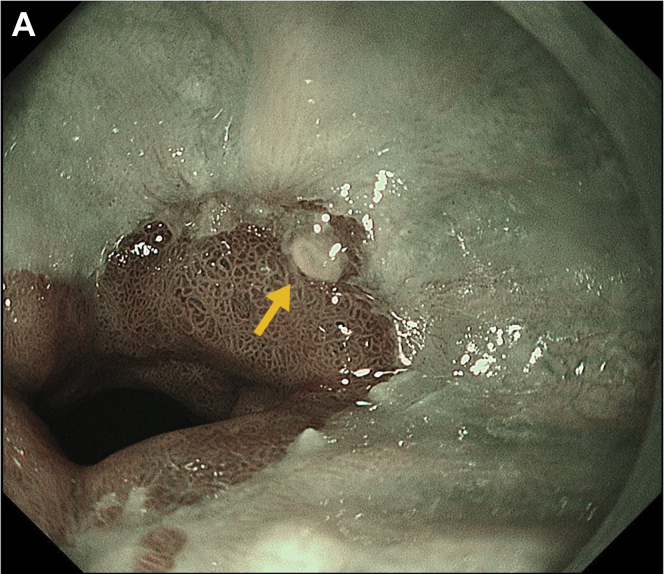 Figure 1
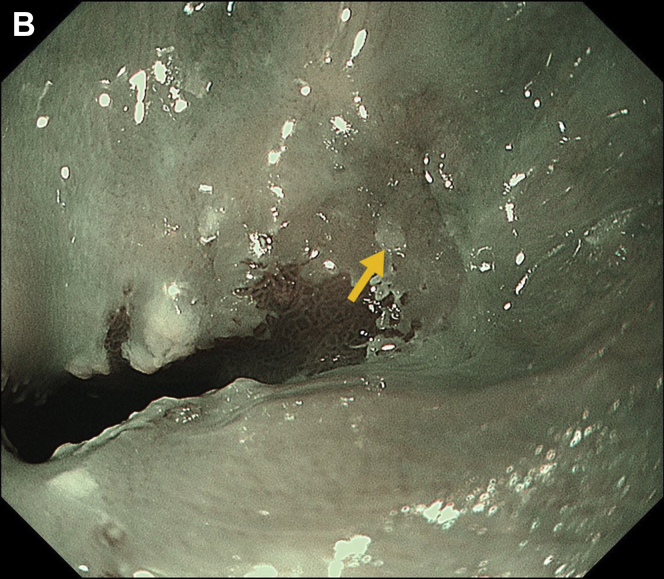 Figure 2
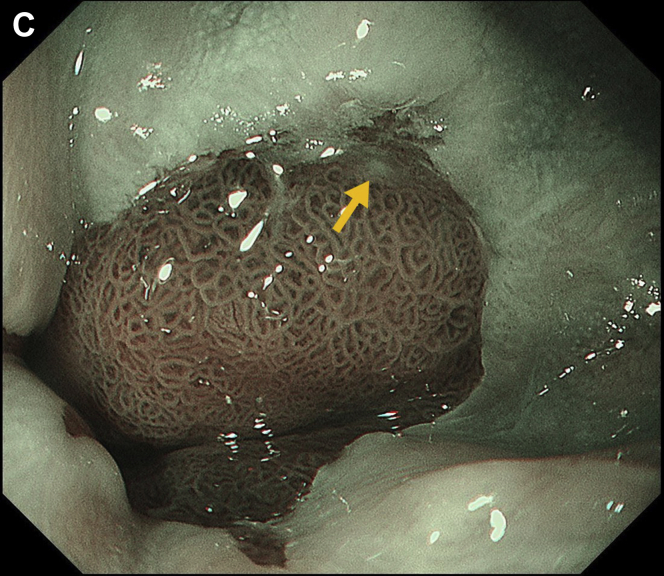 Figure 3
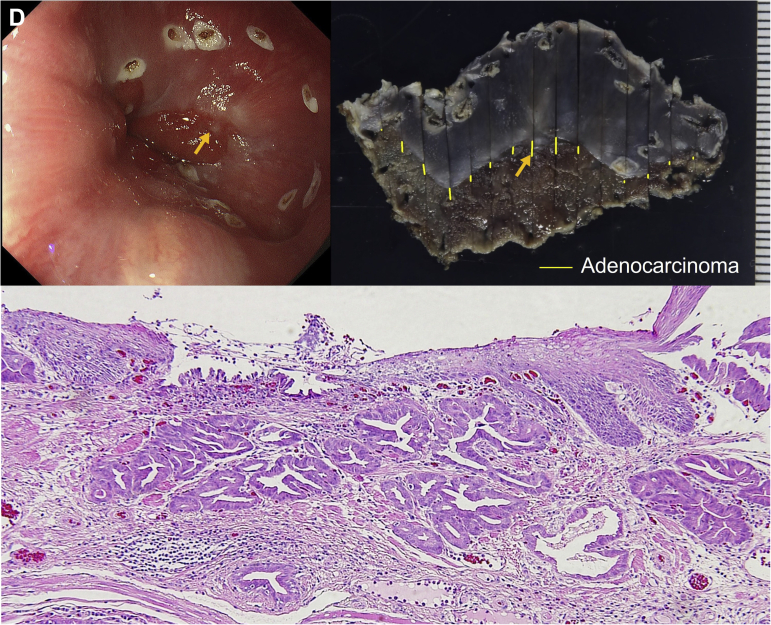 Figure 4
Peer Reviews
No public reviews on file for this paper yet. If you reviewed it on a platform where reviews are public (OpenReview, ICLR, NeurIPS, ICML), you can paste yours below so the community can read it here.
Videos
No videos yet. Explain this paper in a talk, walkthrough, or lecture? Add one.
Taxonomy
TopicsEsophageal Cancer Research and Treatment · Gastric Cancer Management and Outcomes · Helicobacter pylori-related gastroenterology studies
An 89-year-old man underwent esophagogastroduodenoscopy. Endoscopy revealed a depressed lesion partially covered with squamous epithelium (SE) on the squamocolumnar junction in Barrett’s esophagus (Figure A, arrow). Earlier, pathologic results of biopsies showed changes indefinite for neoplasia. Vonoprazan, a potassium-competitive acid blocker (P-CAB), was administered for 2 months, and the patient was re-examined. An endoscopy revealed SE covering a wide area, and the lesion became more difficult to recognize (Figure B). Pathologically, a biopsy specimen showed changes indefinite for dysplasia. Hence, vonoprazan administration was discontinued.
After 4 months, third endoscopy showed SE covering receded to the oral side, and a portion of the lesion was exposed (Figure C). Biopsy of the lesion revealed well-differentiated adenocarcinoma. Endoscopic submucosal dissection was performed, and histopathology of the resected specimen revealed Barrett’s esophageal adenocarcinoma (BEA) in contact with the SE (Figure D).
The use of proton pump inhibitors or P-CAB often masks BEA with SE and makes diagnosis difficult. However, it was unclear whether BEA, once covered with SE, would be re-exposed after discontinuing proton pump inhibitor/P-CAB. This is a valuable case because changes in the SE covering BEA before, during, and after taking P-CAB were observed. Hence, discontinuation of antacid could be helpful for the recognition of BEA.