Ectopic Pancreas in the Small Intestine
Sachiyo Onishi, Takashi Ibuka, Masahito Shimizu

Abstract
Genes, proteins, chemicals, diseases, species, mutations and cell lines named across the full text — each resolved to its canonical identifier and authoritative record.
Click any figure to enlarge with its caption.
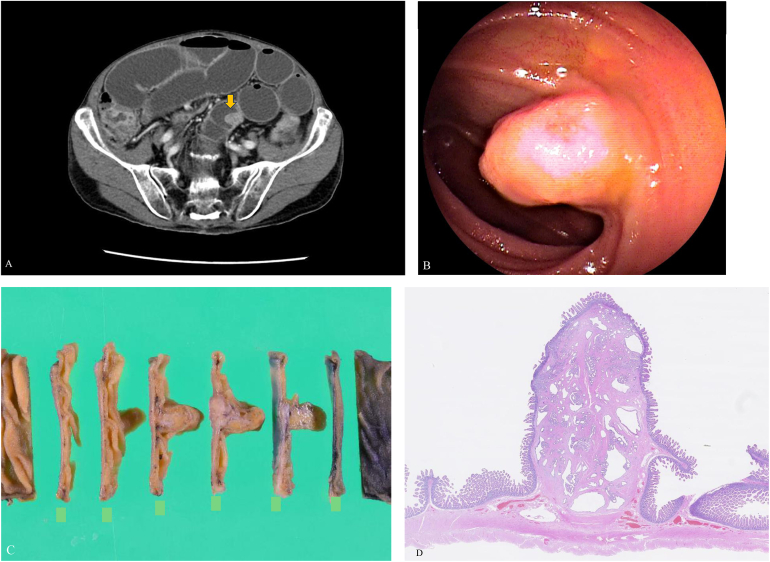 Figure 1
Peer Reviews
No public reviews on file for this paper yet. If you reviewed it on a platform where reviews are public (OpenReview, ICLR, NeurIPS, ICML), you can paste yours below so the community can read it here.
Videos
No videos yet. Explain this paper in a talk, walkthrough, or lecture? Add one.
Taxonomy
TopicsGastrointestinal disorders and treatments · Intestinal Malrotation and Obstruction Disorders · Pancreatitis Pathology and Treatment
A 72-year-old male was diagnosed with intestinal obstruction due to a groin hernia. A CT scan at that time incidentally revealed a small intestinal tumor (Figure A). The patient was asymptomatic, and no abnormal values were pointed out in blood tests, including tumor markers. After the hernia was treated, a 10 mm submucosal tumor was identified in the ileum by double-balloon endoscopy (Figure B). Endoscopic findings suggested a gastrointestinal stromal tumor-like submucosal tumor. A partial resection of the small intestine was then performed (Figure C). Pathology revealed a Heinrich type III ectopic pancreas (Figure D). The patient is currently under outpatient observation.
Isolated ectopic pancreas of the ileum is extremely rare and has not been reported, as ectopic pancreas of the ileum occurs in only 2.5% of cases, and most of them occur within Meckel's diverticulum.