Correction to “The neoteny goldilocks zone: The evolution of neoteny in Ambystoma”

Abstract
Genes, proteins, chemicals, diseases, species, mutations and cell lines named across the full text — each resolved to its canonical identifier and authoritative record.
Click any figure to enlarge with its caption.
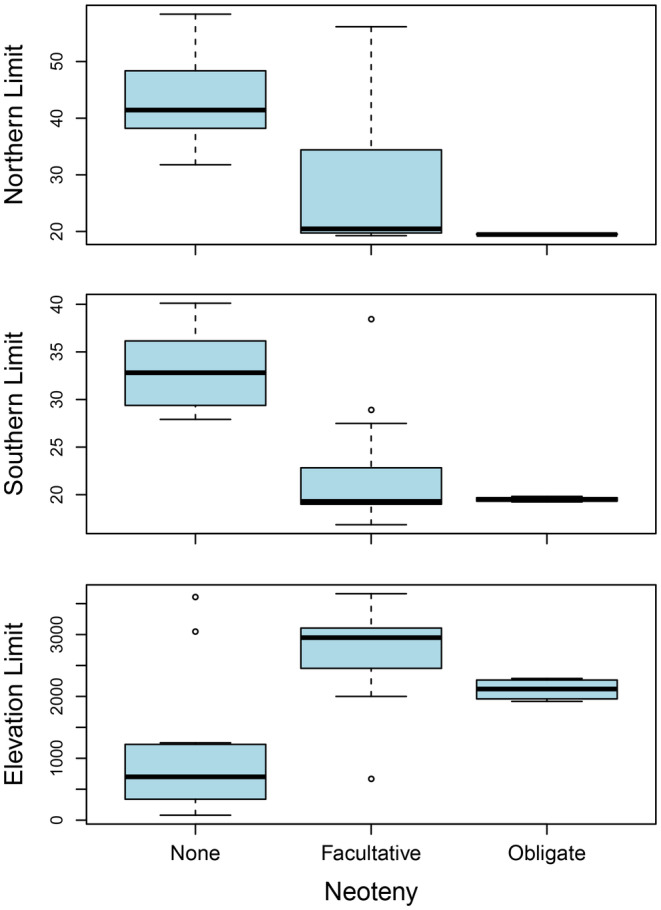 Figure 1
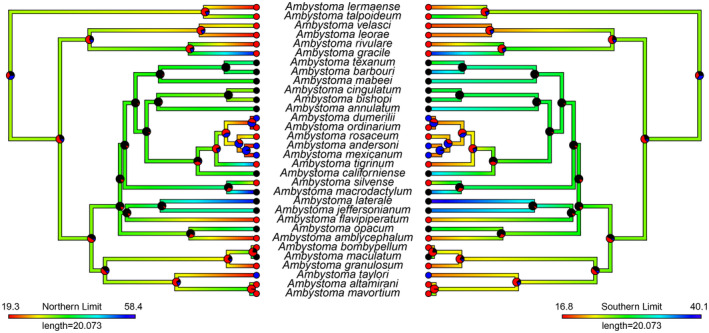 Figure 2
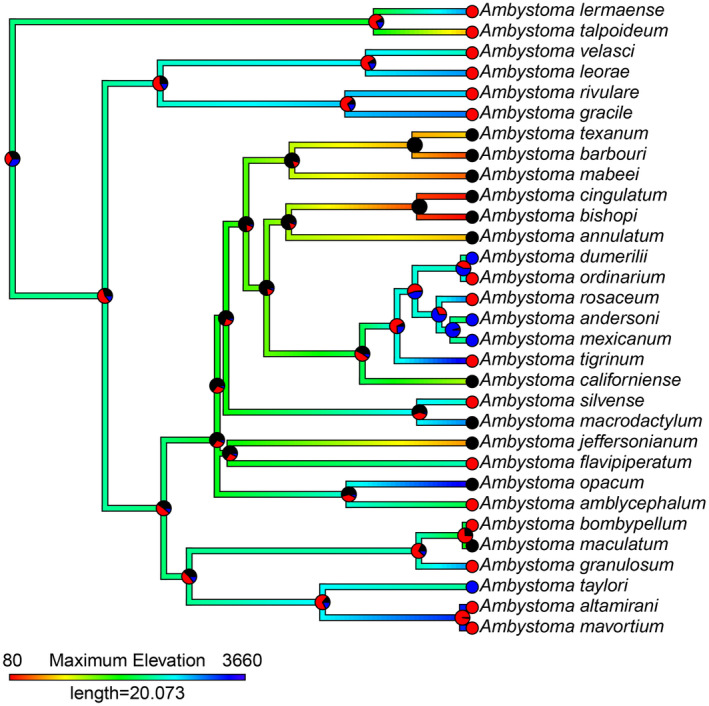 Figure 3
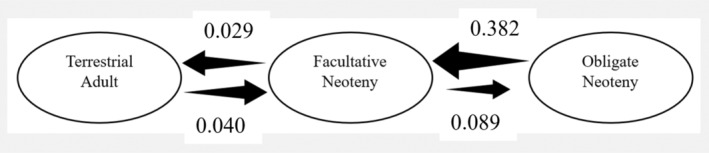 Figure 4
Peer Reviews
No public reviews on file for this paper yet. If you reviewed it on a platform where reviews are public (OpenReview, ICLR, NeurIPS, ICML), you can paste yours below so the community can read it here.
Videos
No videos yet. Explain this paper in a talk, walkthrough, or lecture? Add one.
Taxonomy
TopicsUrinary and Genital Oncology Studies · Urologic and reproductive health conditions
Lyons, T. A., & Arbuckle, K. (2024). The neoteny goldilocks zone: The evolution of neoteny in Ambystoma. Ecology and Evolution, 14, e11240. https://doi.org/10.1002/ece3.11240
Following publication of Lyons and Arbuckle (2024), an error in the coding of a key variable (neoteny) for a single species was made known to us. Specifically, the species Ambystoma gracile is facultatively neotenic but was incorrectly coded as non‐neotenic in our dataset. We have corrected this error and re‐run all analyses exactly as described in the original paper to check that our results are robust to this error. In all cases the change makes only a minor quantitative, not qualitative, difference to our results and does not change the interpretations or conclusion presented in the paper. In fact, in most cases the corrected dataset strengthens our conclusions, including providing better resolution for many internal nodes in our ancestral state estimation of neoteny. Nevertheless, we here provide the corrected figures and tables to ensure these are available.
The one slight change necessary to our descriptions of results relates to the transition rate estimates (shown in Figure 3 in the original manuscript and below). Our key results from this analysis remain correct as originally described, but one sentence describing the relation between some transition rates in the Results needs updating. Originally we wrote the following in the Results concerning the transition rate estimates (sentence requiring correction in italics):
“The estimated transition rates for neoteny recovered facultative neoteny as an evolutionary ‘stepping stone’ between a non‐neotenic state and obligate neoteny (Figure 5). Specifically, despite the model being free to estimate direct transitions between no and obligate neoteny, the inferred transition rate was 0 in either direction between these states. While transitions between no neoteny and facultative neoteny were relatively frequent and approximately equally likely regardless of direction, transitions from facultative to obligate neoteny were less common. Moreover, once gained, obligate neoteny is prone to be lost (rate of loss of obligate neoteny is >4 times higher than the rate of gain), which is consistent with its rarity across the clade.”
The italicised sentence should now read as follows:
“Transitions between no neoteny and facultative neoteny were approximately equally likely (slightly more likely from no to facultative neoteny), whereas transitions from facultative to obligate neoteny were slightly more common, suggesting a tendency towards increasing degree of neoteny over time in lineages.”
Note that this does not alter our discussion as our key results were the non‐italicised sections, that is, that neoteny evolution is constrained to follow a ‘stepping stone’ model and obligate neoteny is lost at a rate > four times higher than it is gained. Hence despite the corrections given here, the interpretation, discussion and conclusions in the original manuscript remain unchanged.1, 2, 3, 2, 3, 4, 5