Visualized Efficacy of Andexanet Alfa in an Elderly Trauma Patient with an Unstable Pelvic Fracture
Junya Tsurukiri, Takeo Nagura, Takashi Kanemura, Kenji Isaka, Hidefumi Sano

Abstract
Genes, proteins, chemicals, diseases, species, mutations and cell lines named across the full text — each resolved to its canonical identifier and authoritative record.
Click any figure to enlarge with its caption.
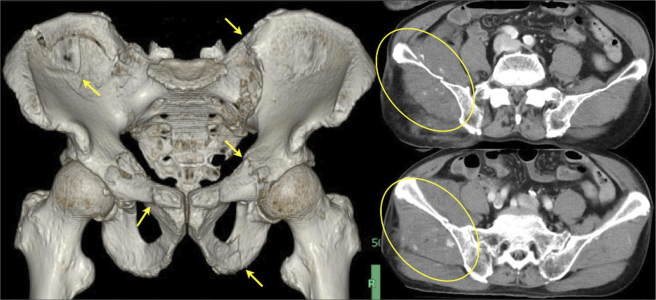 Figure 1
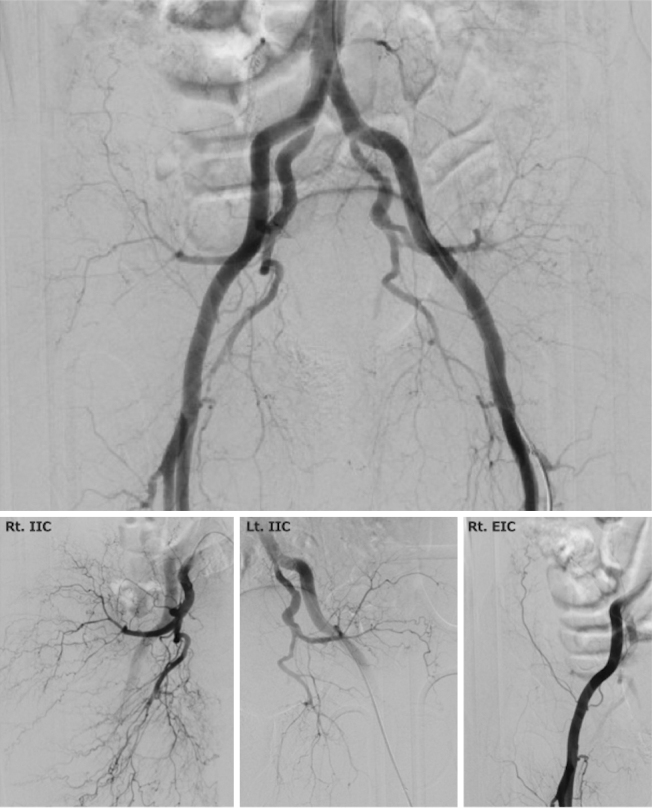 Figure 2
Peer Reviews
No public reviews on file for this paper yet. If you reviewed it on a platform where reviews are public (OpenReview, ICLR, NeurIPS, ICML), you can paste yours below so the community can read it here.
Videos
No videos yet. Explain this paper in a talk, walkthrough, or lecture? Add one.
Taxonomy
TopicsPelvic and Acetabular Injuries · Trauma and Emergency Care Studies · Hip and Femur Fractures
An 89-year-old man taking rivaroxaban, an oral, direct Factor Xa inhibitor, for arterial fibrillation was referred to our department with hemorrhagic shock after falling accidentally. Pelvic images revealed a pelvic fracture classified as LC-III according to the Young-Burgess classification with active bleeding in the pelvic muscles (Figure 1). Therefore, an intravenous injection of 400 mg was administered at a rate of 30 mg/min, followed by an infusion of 4 mg/min of andexnet alfa for 2 h. After 15 min of starting injection, emergency angiography revealed the disappearance of bleeding (Figure 2). Embolization was discontinued, and 1,960 mL of erythrocytes and 1,680 mL of fresh frozen plasma were administered within 24 h. Although andexanet alfa can reduce antifactor Xa activity during administration, its role in trauma patients has not been sufficiently studied. Given its specific mechanism of action, andexanet alfa may be advantageous for improving hemostatic performance in major trauma patients ^(1), (2), (3)^.
Article Information
Conflicts of Interest
None
Acknowledgement
The authors would like to thank Enago (www.enago.jp) for the English language review.
Author Contributions
Conceived and designed the experiments: TJ
Contributed to the interpretation of data: NT, KT, and IK
Approved the final version to be submitted: SH
Informed Consent
Written informed consent was obtained from the patient for the publication of this case report and any accompanying images.
The reference list from the paper itself. Each links out to its DOI / PubMed record.
- 1Milling TJ Jr, Middeldorp S, Xu L, et al. ANNEXA-4 Investigators. Final study report of andexanet alfa for major bleeding with factor Xa inhibitors. Circulation. 2023;147(13):1026-38.36802876 10.1161/CIRCULATIONAHA.121.057844 · doi ↗ · pubmed ↗
- 2Toyoda K, Arakawa S, Ezura M, et al. Andexanet alfa for the reversal of factor Xa inhibitor activity: prespecified subgroup analysis of the ANNEXA-4 study in Japan. J Atheroscler Thromb. 2024;31(3):201-13.37635060 10.5551/jat.64223 PMC 10918051 · doi ↗ · pubmed ↗
- 3Momin JH, Candidate P, Hughes GJ. Andexanet alfa (AndexxaⓇ) for the reversal of direct oral anticoagulants. P T. 2019;44(9):530-49.31485144 PMC 6705484 · pubmed ↗