
TL;DR
This paper explores how Spinocerebellar Ataxia Type 3 disrupts brain connectivity using gradient analysis.
Contribution
The study provides new insights into structural and functional connectivity disruptions specific to Spinocerebellar Ataxia Type 3.
Findings
Gradient analysis revealed distinct patterns of connectivity disruption in Spinocerebellar Ataxia Type 3.
The findings highlight the potential of gradient-based methods for understanding neurodegenerative diseases.
Abstract
The cover image is based on the article Exploring Functional and Structural Connectivity Disruptions in Spinocerebellar Ataxia Type 3: Insights from Gradient Analysis by Xingang Wang et al., https://doi.org/10.1111/cns.14842.
Genes, proteins, chemicals, diseases, species, mutations and cell lines named across the full text — each resolved to its canonical identifier and authoritative record.
Click any figure to enlarge with its caption.
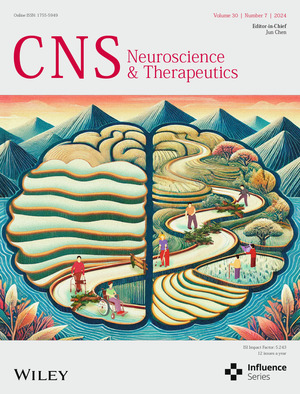 Figure 1
Peer Reviews
No public reviews on file for this paper yet. If you reviewed it on a platform where reviews are public (OpenReview, ICLR, NeurIPS, ICML), you can paste yours below so the community can read it here.
Videos
No videos yet. Explain this paper in a talk, walkthrough, or lecture? Add one.
Taxonomy
TopicsGenetic Neurodegenerative Diseases · Vestibular and auditory disorders · Fetal and Pediatric Neurological Disorders