Quantifier processing and semantic flexibility in patients with aphasia
Birte Reißner, Wiebke Grohmann, Natalja Peiseler, João Pinho, Katja Hußmann, Cornelius J. Werner, Stefan Heim

TL;DR
This study explores how people with aphasia process quantifiers like 'many' and 'few', finding that fluent aphasia patients can adapt their understanding with feedback, but non-fluent patients cannot.
Contribution
The study reveals that semantic flexibility for quantifiers is preserved in fluent aphasia with explicit feedback but not in non-fluent aphasia.
Findings
Fluent aphasia patients showed generalized semantic flexibility for quantifiers after explicit feedback.
Non-fluent aphasia patients did not show changes in quantifier semantics in either experiment.
Explicit feedback was more effective than mere adaptation in altering quantifier meanings in fluent aphasia.
Abstract
Processing of quantifiers such as “many” and “few” relies on number knowledge, linguistic abilities, and working memory. Negative quantifiers (e.g., “few,” “less than half”) induce higher processing costs than their positive counterparts. Furthermore, the meaning of some quantifiers is flexible and thus adaptable. Importantly, in neurotypical individuals, changing the meaning of one quantifier also leads to a generalized change in meaning for its polar opposite (e.g., the change of the meaning of “many” leads to the change of that of “few”). Here, we extended this research to patients with fluent and non-fluent aphasia after stroke. In two experiments, participants heard sentences of the type “Many/few of the circles are yellow/blue,” each followed by a picture with different quantities of blue and yellow circles. The participants judged whether the sentence adequately described the…
Genes, proteins, chemicals, diseases, species, mutations and cell lines named across the full text — each resolved to its canonical identifier and authoritative record.
Click any figure to enlarge with its caption.
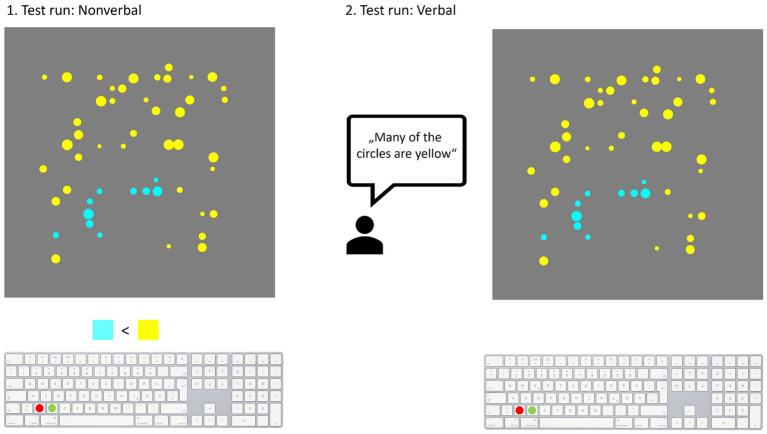 Figure 1
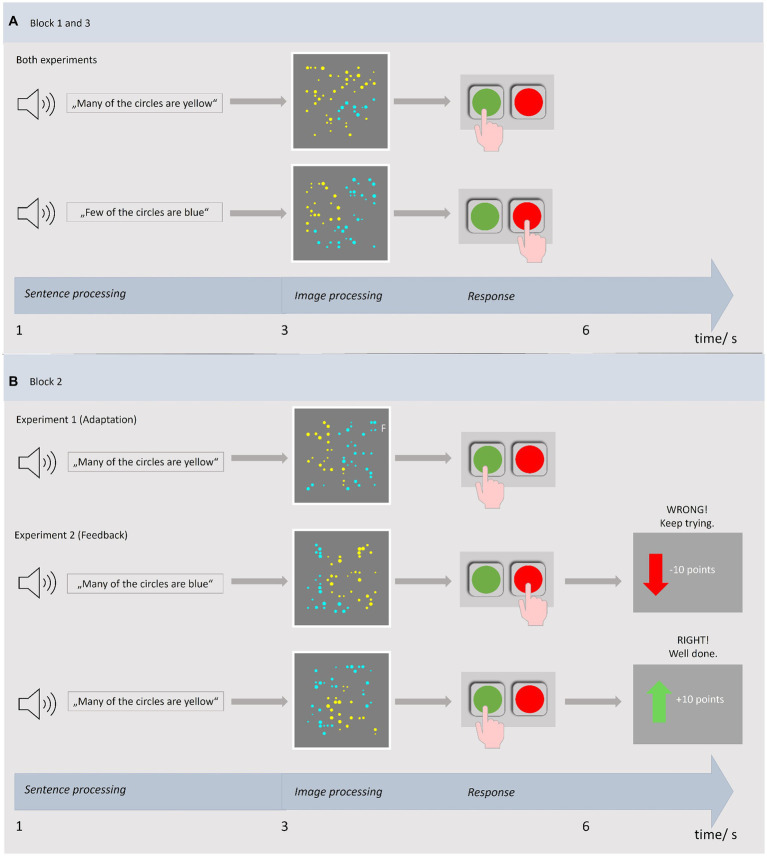 Figure 2
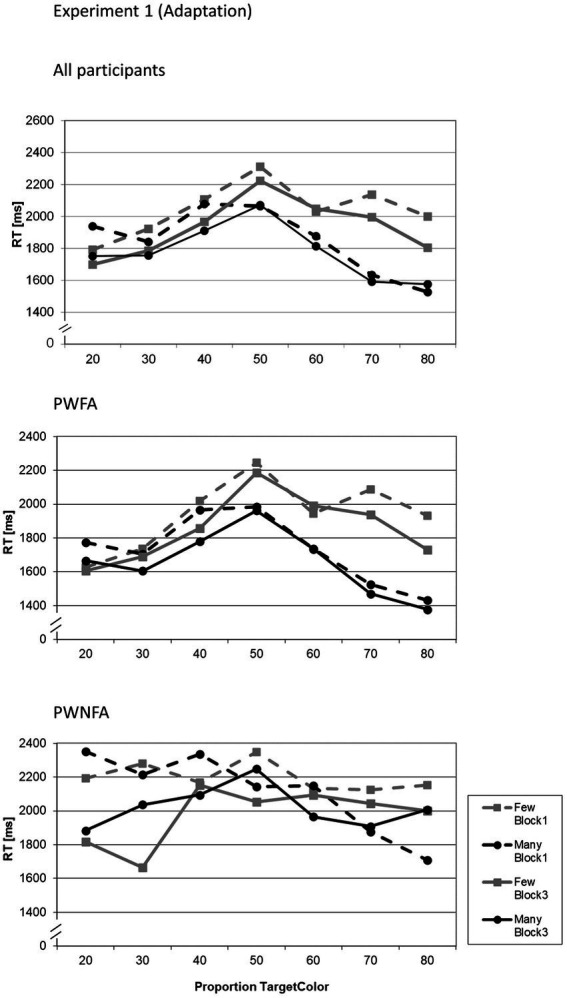 Figure 3
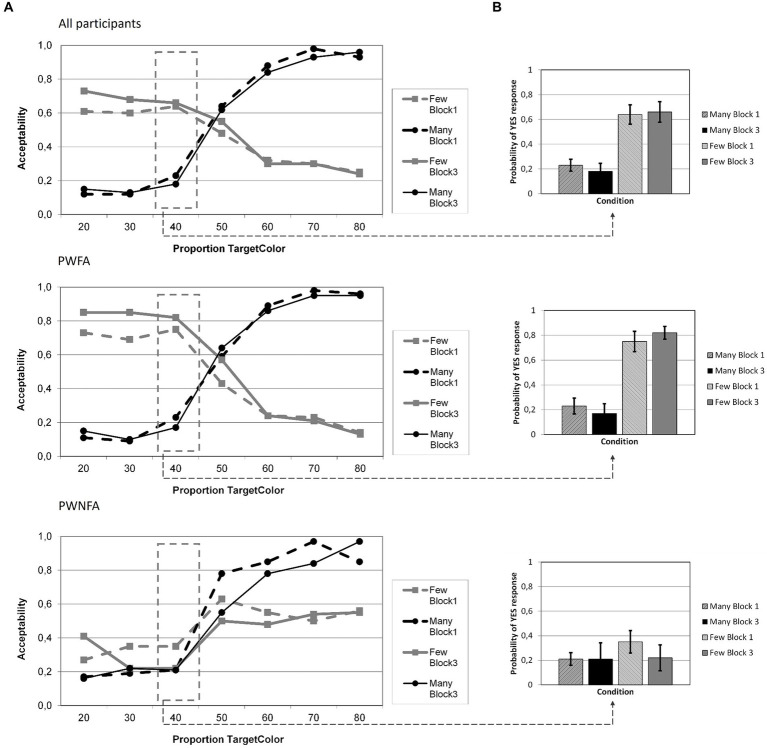 Figure 4
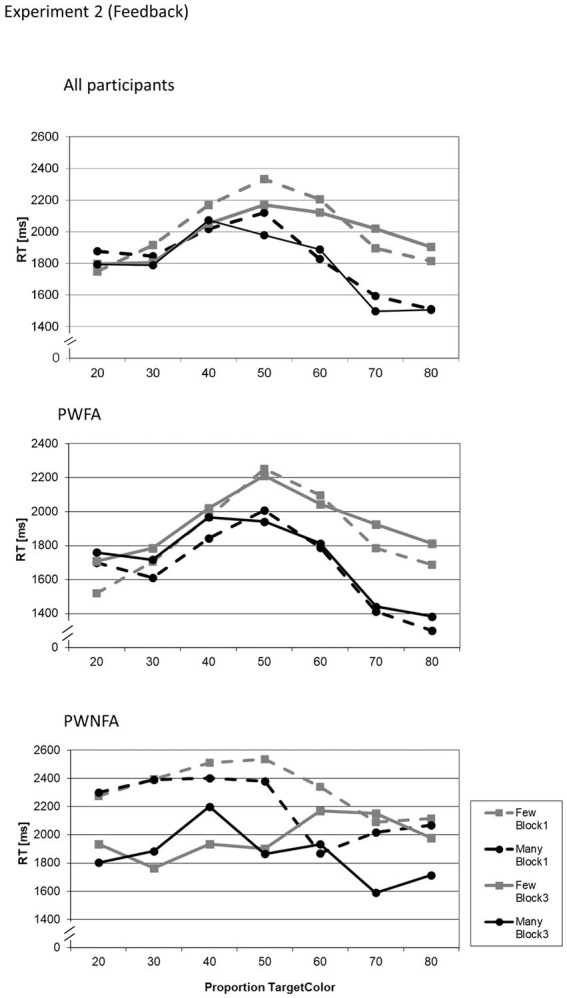 Figure 5
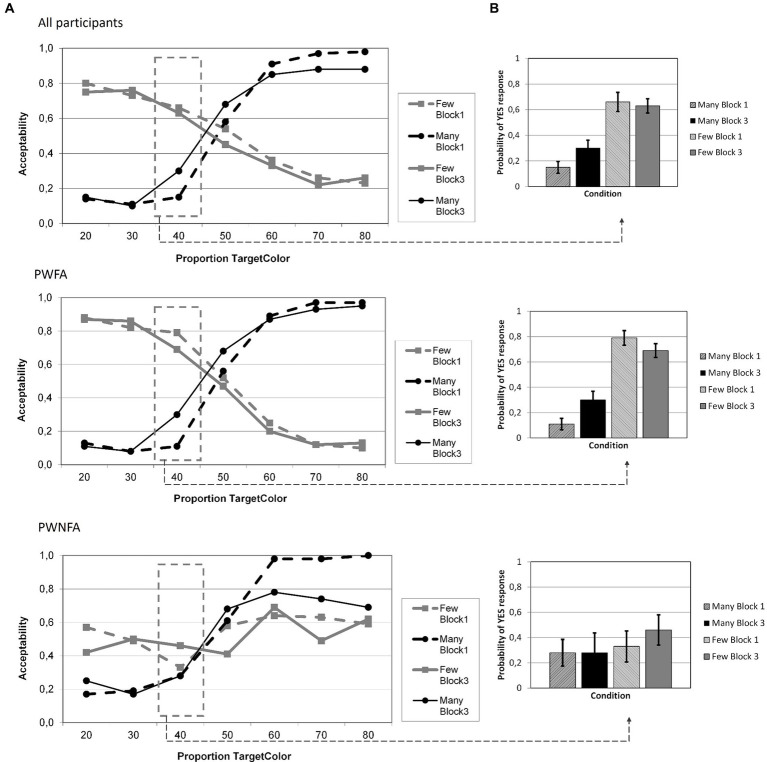 Figure 6
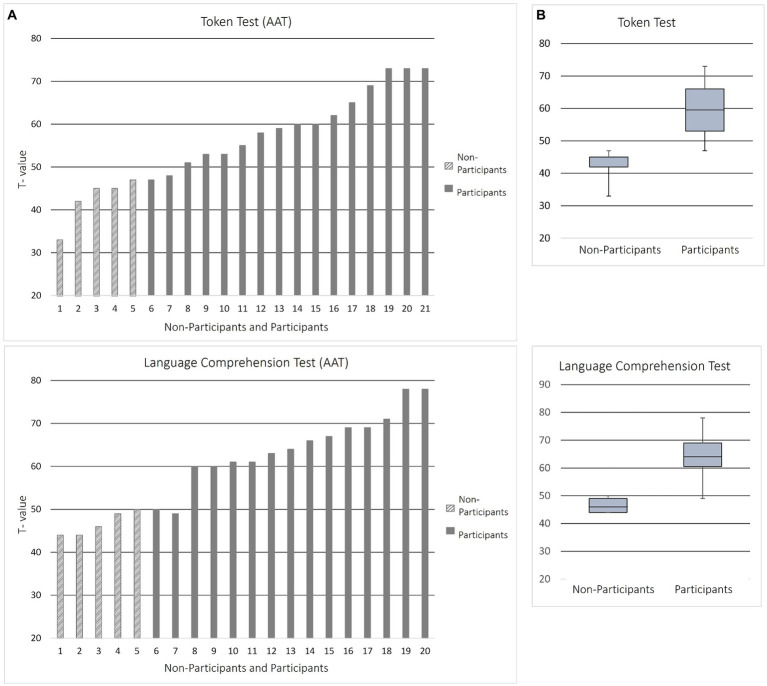 Figure 7
Peer Reviews
No public reviews on file for this paper yet. If you reviewed it on a platform where reviews are public (OpenReview, ICLR, NeurIPS, ICML), you can paste yours below so the community can read it here.
Videos
No videos yet. Explain this paper in a talk, walkthrough, or lecture? Add one.
Taxonomy
TopicsNeurobiology of Language and Bilingualism · Reading and Literacy Development · Cognitive and developmental aspects of mathematical skills