Integration of the landscape of fear concept in grassland management: An experimental study on subtropical monsoon grasslands in Bardia National Park, Nepal
Shyam Kumar Thapa, Joost F. de Jong, Anouschka R. Hof, Naresh Subedi, Yorick Liefting, Herbert H. T. Prins

TL;DR
This study explores how deer species in Nepal's grasslands respond to habitat management practices, revealing that larger plots are preferred due to a perceived sense of safety from predators.
Contribution
The study experimentally integrates the 'landscape of fear' concept into grassland management, revealing species-specific responses to predation risk and habitat treatments.
Findings
Chital and swamp deer prefer larger plots, showing a higher pellet group density in the center of these plots.
Hog deer did not show significant responses to the experimental treatments, indicating species-specific differences in behavior.
Larger plots with mowing and fertilization treatments were more utilized by deer, highlighting the importance of perceived safety.
Abstract
The ‘landscape of fear’ concept offers valuable insights into wildlife behaviour, yet its practical integration into habitat management for conservation remains underexplored. In this study, conducted in the subtropical monsoon grasslands of Bardia National Park, Nepal, we aimed to bridge this gap through a multi‐year, landscape‐scale experimental investigation in Bardia National Park, Nepal. The park has the highest density of tigers (with an estimated density of ~7 individuals per 100 km2) in Nepal, allowing us to understand the effect of habitat management on predation risk and resource availability especially for three cervid species: chital (Axis axis), swamp deer (Rucervus duvaucelii) and hog deer (Axis porcinus). We used plots with varying mowing frequency (0–4 times per year), size (ranging from small: 49 m2 to large: 3600 m2) and artificial fertilisation type (none, phosphorus,…
Genes, proteins, chemicals, diseases, species, mutations and cell lines named across the full text — each resolved to its canonical identifier and authoritative record.
Click any figure to enlarge with its caption.
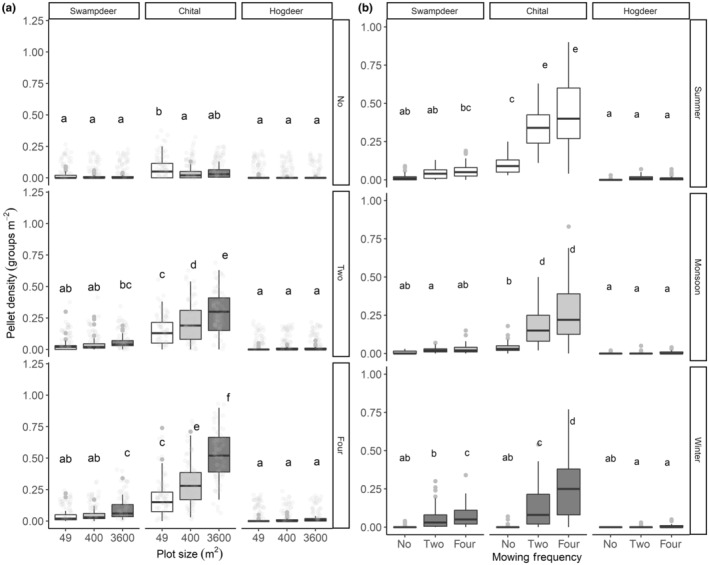 Figure 1
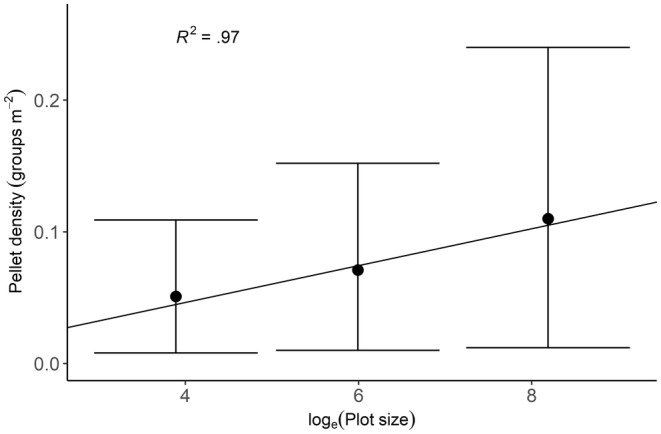 Figure 2
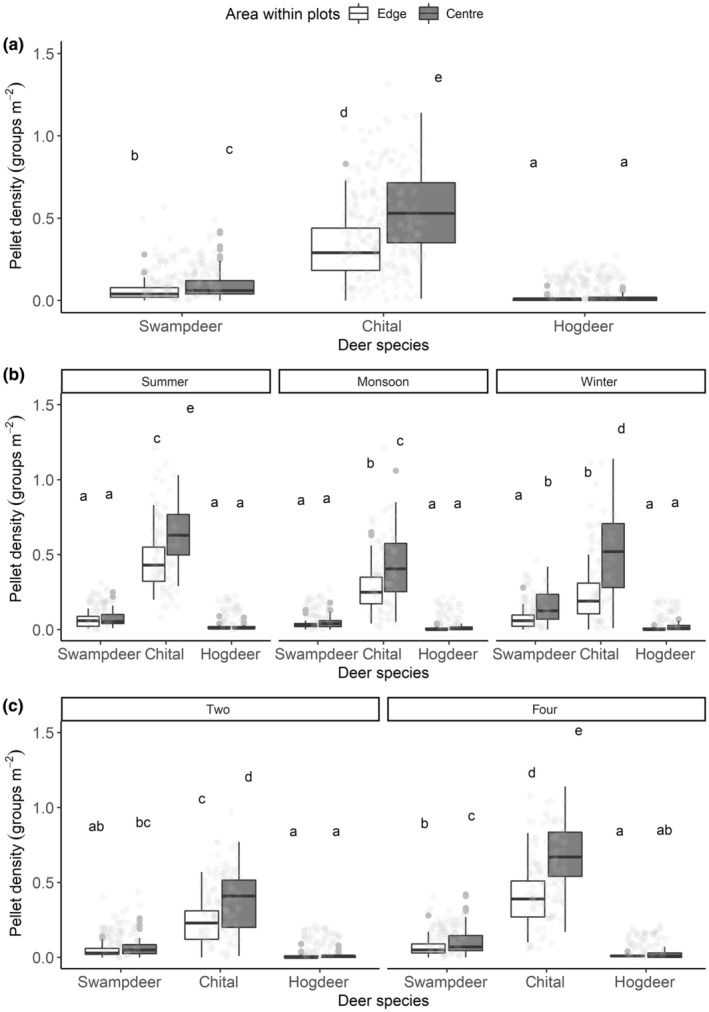 Figure 3
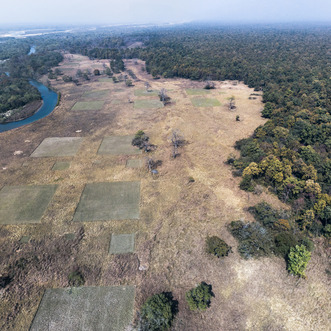 Figure 4
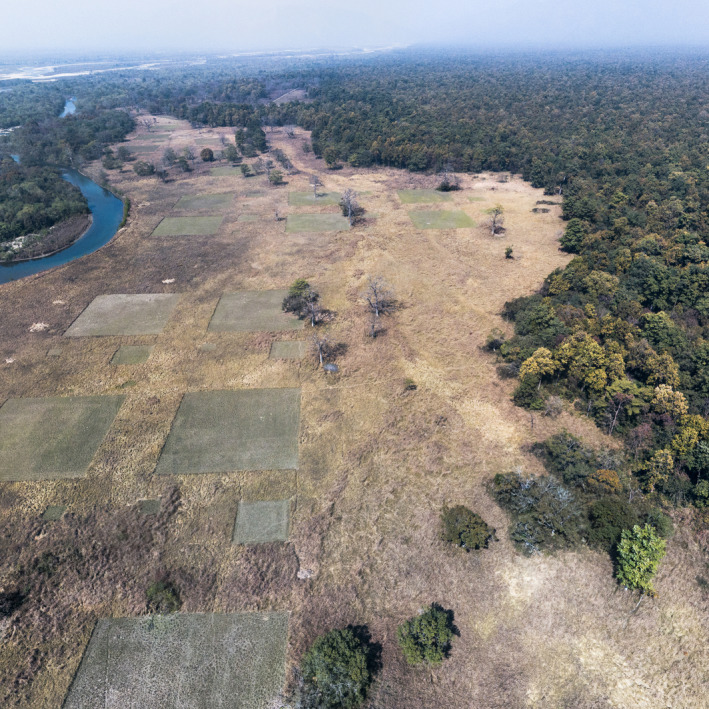 Figure 5
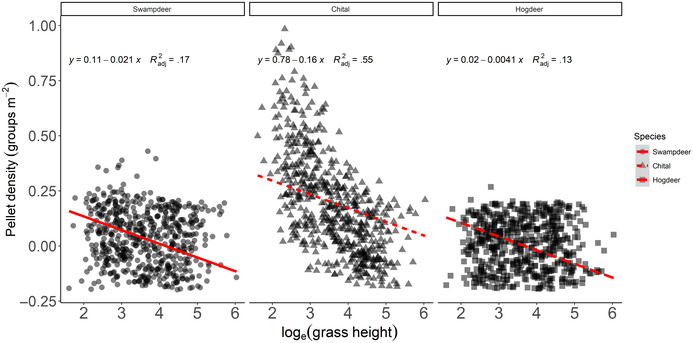 Figure 6
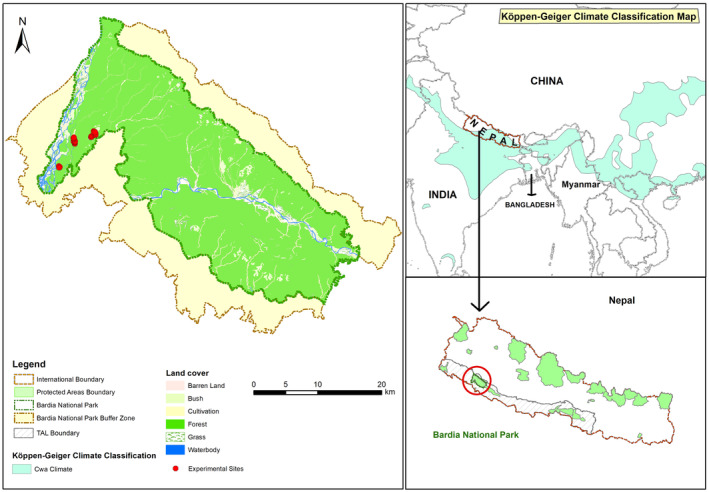 Figure 7
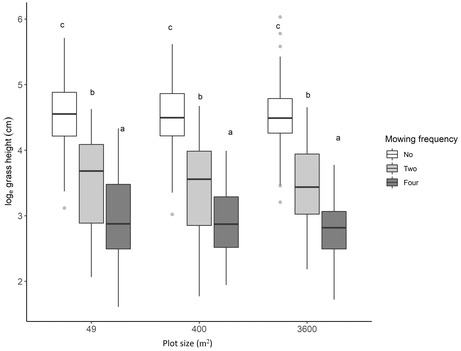 Figure 8
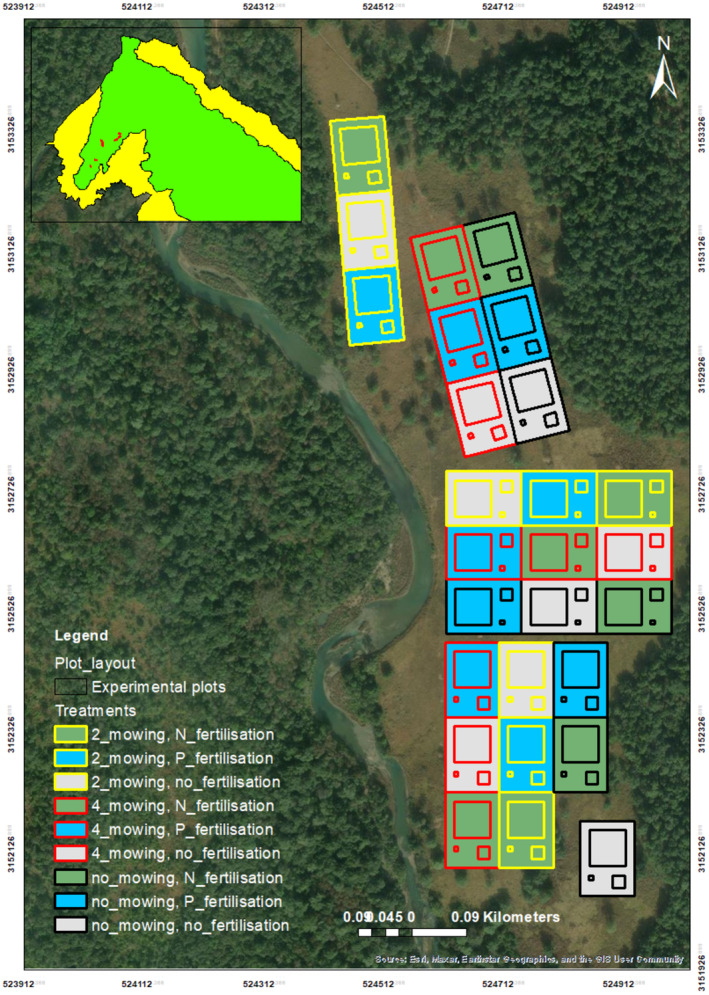 Figure 9
Peer Reviews
No public reviews on file for this paper yet. If you reviewed it on a platform where reviews are public (OpenReview, ICLR, NeurIPS, ICML), you can paste yours below so the community can read it here.
Videos
No videos yet. Explain this paper in a talk, walkthrough, or lecture? Add one.
Taxonomy
TopicsWildlife Ecology and Conservation · Primate Behavior and Ecology · Ecology and Vegetation Dynamics Studies